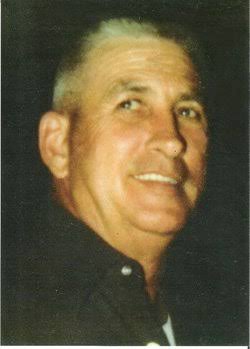
Robert Lee Hoffman, a 53-year-old Senior Officer Specialist with the Federal Bureau of Prisons, was a married man and a dedicated public servant with 13 years of experience. His life was a testament to courage, a quality he would display in its most profound form on the last day of his life, October 22, 1983. That day, inside the walls of the United States Penitentiary in Marion, Illinois, then the highest-security prison in the federal system, a wave of violence erupted that would not only
claim his life but would also permanently alter the course of the American correctional system.
The morning had already been marked by tragedy. At around 10:15 a.m., another correctional officer, Merle Clutts, was brutally stabbed to death by Thomas Silverstein, a leader of the Aryan Brotherhood prison gang. The prison, a facility designed to house the "worst of the worst," was on high alert. The tension was palpable as the day wore on, culminating in a second, unrelated attack that evening. At approximately 8:30 p.m., in the same control unit where Officer Clutts was killed, inmate Clayton Anthony Fountain was being escorted from a recreation cage back to his cell.
Fountain, a U.S. Navy military prisoner already serving two life sentences for murder, was a notoriously violent inmate who had been responsible for multiple killings while incarcerated. In a well-coordinated move, Fountain broke free from his two escorts after another inmate passed him a shank and unlocked his handcuffs. He immediately began a frenzied attack on the officers. Officer Hoffman was in a secure area and witnessed the assault unfolding. Without hesitation, he left his position of safety to aid his colleagues.
His bravery was extraordinary. Officer Hoffman managed to drag one of the wounded officers to safety before turning back into the fray to rescue the second, who was still under attack. As he saved the second officer, Fountain turned his weapon on him, stabbing him repeatedly. Officer Hoffman succeeded in getting his second colleague out of immediate danger before he collapsed. Tragically, his son, who was also a correctional officer at the facility, was there to reach his father in his final moments. Because of Robert Hoffman's selfless actions, the other two officers survived their serious injuries.
Clayton Anthony Fountain, a serial killer with a history of extreme violence that began during his time in the U.S. Marines, was a member of the Aryan Brotherhood. He had murdered a staff sergeant in 1974 and had killed multiple fellow inmates during his incarceration. For the murder of Officer Hoffman, Fountain received an additional life sentence. He was eventually transferred to the United States Medical Center for Federal Prisoners in Springfield, Missouri, where he remained until his death on July 12, 2004.
The murders of Officer Robert Hoffman and Officer Merle Clutts on the same day sent shockwaves through the federal prison system and the nation. U.S. Attorney General William French Smith condemned the killings, noting that inmates already serving maximum sentences were effectively killing "for sport" with impunity. The events served as a brutal lesson for corrections officials: maximum security was not enough.
In the immediate aftermath, USP Marion was placed on an unprecedented lockdown that would last for 23 years. This lockdown became the blueprint for a new chapter in American corrections, leading to the development and rise of the "supermax" prison model, exemplified by facilities like ADX Florence in Colorado. The core philosophy shifted to extreme control, centered on prolonged solitary confinement and severely restricted movement to prevent any opportunity for violence. While Robert Hoffman's life was tragically cut short, his heroic sacrifice on that dark day in Marion left a lasting and complex legacy on the very system he died serving.