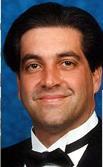
James Lynn “Sonny” Buchanan was out working in the cool morning air on October 3, 2002, at the Fitzgerald Auto Malls in North Bethesda, near Rockville, Maryland, when a single shot ripped through the ordinary rhythm of the day. He was a White 39-year-old male. Within moments, the scene turned frantic—an abrupt, bewildering act of violence in an open, public place, with no obvious argument, no confrontation, and no clear direction for fear to point itself.
The shooting wasn’t followed by a shouted threat or a visible escape. It was the kind of attack that made witnesses doubt their own senses—one second a worker moving across a stretch of property, the next a sudden collapse and the realization that someone had been struck from a distance. Police rushed in, searched for anything that might explain what had happened, and found themselves staring at the same troubling blankness: no suspect in sight, no immediate motive, and no easy perimeter to seal when the danger could have been anywhere beyond the lot.
As the morning unfolded, the horror didn’t stay isolated. The killing of Buchanan became the first of several shootings that day in the Washington region, a pattern that quickly suggested something colder than a single, personal crime. Investigators began looking for connections—timing, ballistics, geography—while the public began changing routines in real time, scanning parking lots and gas stations and any open space where a person might pause and become a target.
In the days that followed, the case was pulled into a widening dragnet as the attacks continued and law enforcement coordinated across jurisdictions. Leads poured in, and the investigation expanded into a multi-state effort, with authorities following evidence wherever it pointed as they tried to identify who was behind the shootings and how they were moving without being seen.
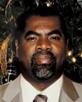
The break came on October 24, 2002, when police arrested two suspects—John Allen Muhammad and Lee Boyd Malvo—at a Maryland rest area, ending the three-week siege and giving a name and a face to what had felt like a faceless threat. With the arrests, the focus shifted from the terrifying unknown to the methodical work of proving responsibility for specific murders, including Buchanan’s.
Years later, the legal system anchored Buchanan’s death to those defendants in court. John Allen Muhammad was convicted in Montgomery County, Maryland, of first-degree murder for the killing of Buchanan as part of a set of six Maryland sniper convictions, following a month-long trial in 2006, and he received multiple life sentences there. In a separate Virginia case tied to the broader spree, Muhammad was sentenced to death and was executed in Virginia in 2009.
Lee Boyd Malvo’s case followed a different arc because he was a juvenile at the time of the attacks, but Maryland also secured six murder convictions connected to the Montgomery County killings, including Buchanan’s. In recent years, Malvo has pursued post-conviction challenges, and a Maryland judge has declined to vacate those Maryland murder convictions, keeping the legal findings in place even as broader resentencing issues have been argued elsewhere.