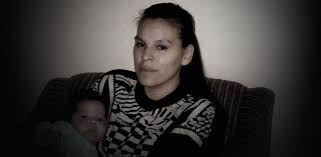
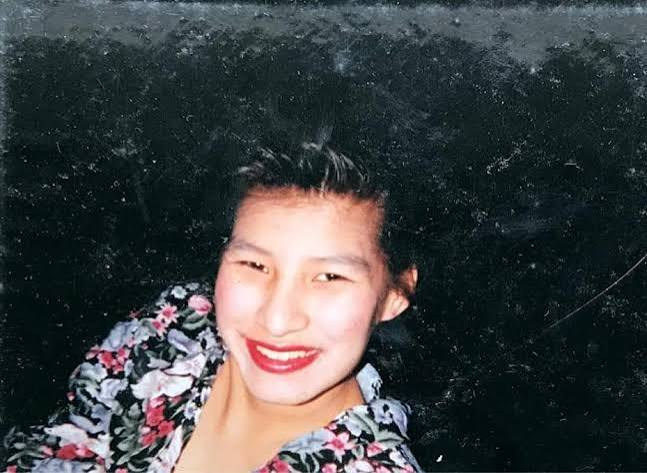
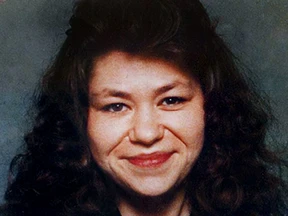
Mary Jane Serloin, a 35-year-old woman from the Peigan reserve near Fort MacLeod, Alberta, spent her final hours in a bar in Lethbridge. It was there, in December 1981, that she met 19-year-old John Martin Crawford. The two were seen drinking together before leaving the establishment late in the evening. It was the last time Mary Jane was seen alive.
Her life would end that night in a brutal act of violence that marked the beginning of Crawford's long and horrific history as a serial killer.
On Christmas Day, a transient seeking shelter made a gruesome discovery behind the old Number 1 firehall in Lethbridge. In an alcove littered with garbage, he found the nude and battered body of Mary Jane Serloin. She had been beaten, and her body was covered in bruises, lacerations, and deep bite marks. The violence of the crime shocked even seasoned investigators. The Lethbridge police acted quickly, and within eight hours of the discovery, they arrested John Martin Crawford at his parents' home. He was described as quiet and subdued, offering no resistance.
Despite the brutality of the murder, the initial legal proceedings did not bring justice for Mary Jane. Though initially charged with first-degree murder, Crawford pleaded guilty to the lesser charge of manslaughter. In 1982, he was sentenced to just ten years in prison. He was granted day parole after five years, but it was revoked when he broke the terms of his release. He was ultimately freed in March 1989 under mandatory supervision, having served about seven years for taking Mary Jane's life.
For Mary Jane’s family on the Peigan reserve, the grief of her death was compounded by a sense of deep injustice and neglect. Her sister, Justine English, was shattered by the loss and the official indifference that followed. She recalled that authorities never contacted her or other family members about the case. The news coverage was minimal, with only a couple of brief reports buried deep inside the local newspaper. The lack of attention led her to believe that her sister's life was not valued. "It seems any time a Native is murdered, it isn't a major case," English later stated. "It's just another dead Indian."
After his release, John Martin Crawford, who became known as "The Lady Killer," moved to Saskatoon, Saskatchewan, and his violence escalated. In 1992, he murdered three more Indigenous women: Eva Taysup, 30, Calinda Waterhen, 22, and 16-year-old Shelley Napope. He raped and beat his victims, killing them by methods that included stabbing and strangulation. In October 1994, a farmer discovered the remains of the three women in a brushy area outside the city, leading to a new investigation that would finally expose Crawford's true nature.
The investigation into the Saskatoon murders led police back to Crawford. He was arrested in January 1995 and, in 1996, was convicted of one count of first-degree murder for the death of Shelley Napope and two counts of second-degree murder for Eva Taysup and Calinda Waterhen. He was sentenced to three concurrent life sentences with no possibility of parole for 25 years. This conviction ensured that the man who began his killing spree with Mary Jane Serloin would never be free to harm women again. Crawford died in custody at the Regional Psychiatric Centre in Saskatoon on December 16, 2020.
The case of Mary Jane Serloin highlights a painful and persistent issue regarding how crimes against Indigenous women are treated by the justice system and the media. Her sister's words echo the frustration and sorrow of many families whose loved ones have been lost to violence, their cases receiving little attention and their lives seemingly forgotten. While her killer was eventually brought to justice for his later crimes, the initial handling of Mary Jane's murder left her family with a profound sense that her life, and their loss, had been dismissed.