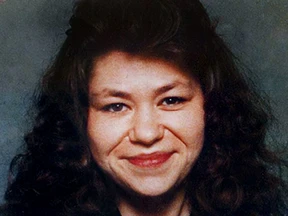
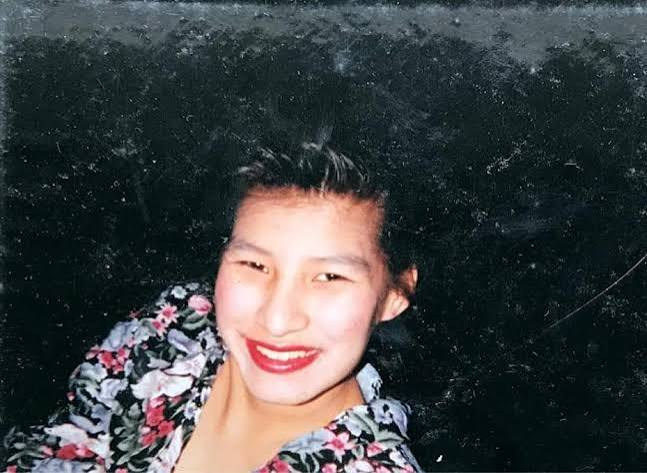
In her youth, Corrie Renee Ottenbreit was a gifted figure skater, a talent that hinted at a life of grace and promise. Those who knew the 27-year-old woman described her as striking and unforgettable. To her family, she was much more: a loving daughter, partner, sister, and friend. Her life, however, took a difficult turn, and she found herself in the vulnerable world of street-level sex work in Edmonton, Alberta.
It was from this life that she would vanish, becoming another victim in a string of unsolved murders that have haunted the region for decades.
On the evening of May 9, 2004, a Sunday, Corrie was last seen by a family member at her Edmonton home. At around 10 p.m., she left with the intention of going to work along the 118th Avenue corridor. At the time of her disappearance, Corrie stood 5-foot-5, weighed about 120 pounds, and had her naturally red hair dyed blonde. She may have been wearing a black leather jacket, jeans, and black FILA running shoes. Months passed with no word, and her family was left to grapple with her absence, a period of agonizing uncertainty that would stretch on for more than a decade.
The breakthrough in Corrie's case came with a grim discovery on April 19, 2015. A landowner walking in a rural, wooded area in Leduc County, southeast of Rollyview, stumbled upon human remains. The Royal Canadian Mounted Police (RCMP) initially identified the remains as belonging to Delores Brower, another woman who had vanished from Edmonton just days after Corrie in May 2004. As investigators continued to search the property, they found more remains. Forensic analysis would later confirm they belonged to Corrie Ottenbreit.
The identification was made possible by Corrie's own foresight. In December 2003, just six months before she disappeared, she had voluntarily provided a hair sample to Project KARE, an RCMP-led task force established to investigate the deaths and disappearances of women living high-risk lifestyles. She knew the dangers she faced, and this simple act provided the DNA needed to finally give her family a measure of certainty, however painful. Her death was immediately ruled a homicide.
The discovery of Corrie's and Delores's remains together in the same location confirmed a chilling pattern for investigators. Their bodies were found within an eight-kilometer radius of where the remains of at least three other missing women had been recovered over the years: Katie Sylvia Ballantyne in 2003, Amber Tuccaro in 2012, and Edna Bernard in 2002. This cluster of homicides, often referred to as the "Edmonton Killing Fields," led police to publicly acknowledge the strong possibility that a serial predator was responsible. "One of the investigative theories in relation to these deaths is that we may be dealing with a serial predator," an RCMP inspector stated in 2015.
In a statement released through the RCMP, Corrie's family expressed their profound grief. "Today, we are mourning the loss of our beloved Corrie," they wrote. "Since May 2004, we have struggled with her absence from our lives. Today, we struggle with the sad news that we will never see her again... Nothing can ever change that or the fond memories we have of our happy times together." Their only remaining hope, they said, was that they might one day learn what led to her death.
To date, no one has been charged in the murder of Corrie Renee Ottenbreit. Her case remains unsolved, as do the murders of the other women found in the fields of Leduc County. Investigators have looked at convicted killers Thomas Svekla and Joseph Laboucan, both imprisoned for murdering other women from the Edmonton area, but no definitive link has been announced. The RCMP Historical Homicide Unit continues to investigate, and police have asked anyone with information, no matter how small, to come forward. They hope that someone holds the key to ending the decades of silence and bringing a measure of justice to Corrie and her family.