Lucky Ward: The Houston Strangulation Murders
Overview
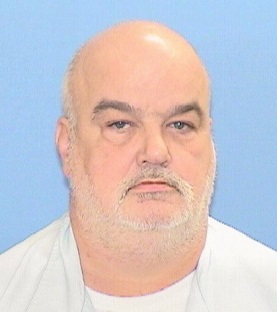
Lucky Ward is an American convicted murderer who was sentenced to death for strangling two people in Houston, Texas, during September 2010. Investigators also examined his possible involvement in several other strangulation deaths, causing police and prosecutors to describe him as a serial killer. However, Ward was convicted only of the murders of Carlos “Gypsy” Rodriguez and Reita Lafaye Long. He was never convicted of the additional deaths discussed during the investigation and trial.
The known and suspected cases connected to Ward involved people living in particularly vulnerable circumstances, including homeless women and transgender women. Several victims were found in isolated outdoor locations or in areas of downtown Houston frequented by people without permanent housing. Strangulation was a recurring feature of the cases, but the strength of the evidence differed considerably from one investigation to another.
Early Life and Criminal History
Lucky Ward was born on November 1, 1964, in Brazoria County, Texas. His life before the murders included a lengthy history of criminal behavior and incarceration. His prior convictions included robbery, aggravated assault with a deadly weapon, possession of cocaine and possession of a deadly weapon while confined in a penal institution.
Ward spent substantial periods of his adult life in the Texas prison system. After his release, he experienced homelessness and struggled with crack cocaine addiction. Records and testimony from his later proceedings also described serious mental-health problems. By 2010, he was living in and around downtown Houston, where he became acquainted with other homeless residents and people who visited the neighborhood’s shelters, churches, clubs and public spaces.
The Murder of Carlos “Gypsy” Rodriguez
On September 13, 2010, 46-year-old Carlos Rodriguez, widely known as “Gypsy,” was killed inside a North Houston apartment. Rodriguez was a transgender woman who worked as a hairdresser and shared the residence with roommates. Rodriguez was found unclothed and had been strangled. Investigators reported no conclusive evidence of sexual assault.
Police discovered photographs of Ward on Rodriguez’s digital camera. Ward acknowledged that he was the person shown in the images and told detectives that he had met Rodriguez while watching her vehicle outside a club. According to Ward, Rodriguez photographed him so there would be a record of the person responsible for watching the car. Ward admitted knowing Rodriguez but consistently denied killing her.
Prosecutors nevertheless argued that the evidence connected Ward to the apartment and that Rodriguez’s killing resembled the strangulation of Reita Long later that month. The state treated the two deaths as murders committed as part of the same scheme or course of conduct, allowing prosecutors to pursue a capital-murder conviction.
The Murder of Reita Lafaye Long
Reita Lafaye Long, a 52-year-old former teacher who was homeless at the time of her death, was killed on September 30, 2010. She was found on or near the steps of the Co-Cathedral of the Sacred Heart in downtown Houston. A security guard discovered her body during the morning hours.
Long had suffered fatal neck trauma and was strangled with a black bra. Investigators learned that she knew Ward and had interacted with him before the killing. During a police interrogation following his arrest, Ward admitted responsibility for Long’s death. He described an argument that became violent while he was under the influence of crack cocaine. He claimed that he had not planned to kill Long and said he panicked during the confrontation.
Ward’s statement became a central part of the prosecution’s case. Although he attempted to characterize Long’s death as an unintended result of an altercation, prosecutors argued that the manner of strangulation demonstrated an intentional killing. They also presented the similarities between Long’s death and Rodriguez’s murder as evidence that the two crimes were connected.
Other Deaths Investigated in Connection with Ward
Following Ward’s arrest, Houston investigators reviewed additional unsolved strangulation cases. Some of these deaths occurred during 2010, while another dated back to 1985. Prosecutors introduced evidence concerning several of these cases during Ward’s trial or punishment proceedings, even though he had not been convicted of them.
The evidence in the suspected cases was disputed. Some DNA and fingerprint findings were described as possible inclusions rather than definitive matches. In several instances, other evidence excluded Ward or pointed toward alternative suspects. These distinctions are important because the additional victims are sometimes incorrectly presented as people Ward was legally proven to have murdered.
Known and Suspected Victims
- Birdell Louis — 1985, Houston, Texas: Louis was found strangled behind a gas station near downtown Houston. Investigators reportedly examined Ward as a possible suspect many years later after reviewing older strangulation cases committed during periods when he was not incarcerated. A partial palm print recovered from glasses near the scene was described as not excluding Ward, but it was not established as an individual identification. Ward was never charged with Louis’s murder, and an abusive former boyfriend had originally been investigated.
- Myra “Chanel” Ical — found January 10, 2010, Houston, Texas: Ical, a 51-year-old transgender woman, was found partially clothed in a grassy field in the 4300 block of Garrott Street. She had been strangled. Later DNA analysis indicated that Ward could not be excluded from one complex mixture containing material from several contributors. Other tested evidence reportedly excluded him. Ward was never charged or convicted in Ical’s death.
- Raquel Antoinette Mundy — found June 18, 2010, Houston, Texas: Mundy, a 24-year-old mother from Galveston, was found in a grassy area near railroad tracks in the 300 block of St. Charles Street. She had become stranded in Houston after her car was towed while she was helping family members reach a bus station. Before disappearing, she reportedly sent a message expressing fear of a Hispanic man whose vehicle she had entered. Ward was considered during the broader investigation but was never charged with Mundy’s murder.
- Carlos “Gypsy” Rodriguez — September 13, 2010, North Houston, Texas: Rodriguez, a 46-year-old transgender hairdresser, was strangled inside an apartment. Photographs placed Ward in Rodriguez’s company before the murder. Ward admitted meeting Rodriguez but denied committing the killing. A Harris County jury convicted him of capital murder based on the deaths of Rodriguez and Reita Long.
- Reita Lafaye Long — September 30, 2010, downtown Houston, Texas: Long, a 52-year-old former teacher experiencing homelessness, was strangled with a bra near the Co-Cathedral of the Sacred Heart. Ward admitted causing her death during a recorded police interrogation but claimed that he had not intended to kill her. Her murder was one of the two killings for which Ward was convicted.
- Carol Elaine Flood — found October 10, 2010, downtown Houston, Texas: Flood, a 62-year-old homeless woman, was found on an exterior stairway at a YMCA building. She had been strangled with a scarf and had injuries to her face. Ward was initially indicted in connection with her death, but the charge was later dismissed. DNA testing did not identify him conclusively, and he was excluded from several tested samples. He was never convicted of Flood’s murder.
Arrest and Interrogation
Police arrested Ward on November 4, 2010. During questioning, detectives confronted him with information about Reita Long’s death. Ward eventually admitted that he had strangled her during a confrontation, although he denied acting with a prior intention to kill. He blamed his behavior in part on drug use, emotional instability and being without prescribed psychiatric medication.
Investigators also questioned Ward about the deaths of Rodriguez, Flood and other victims. He denied responsibility for those killings. Prosecutors later relied on his admitted association with Rodriguez, the photograph found on Rodriguez’s camera, the similar strangulation methods and the temporal proximity of the September murders to build their capital case.
A Decade of Delays
Ward’s prosecution lasted nearly ten years. The case was repeatedly delayed by legal disputes, additional forensic testing, questions concerning Ward’s mental condition and interruptions associated with Hurricane Harvey. During his years in the Harris County Jail, Ward reportedly displayed severe behavioral and psychiatric problems. At one stage, he attempted to represent himself, leading to further litigation over whether he was competent to make legal decisions and participate meaningfully in his defense.
Prosecutors continued testing evidence from the suspected murders while Ward awaited trial. The state intended to show that the deaths reflected a broader pattern of predatory strangulation. Defense attorneys challenged the reliability and relevance of this evidence, particularly when the forensic findings did not conclusively identify Ward or when other possible suspects had not been eliminated.
Capital-Murder Trial
Ward’s trial began in Harris County in 2020. He was prosecuted for capital murder under the allegation that he killed Rodriguez and Long during separate criminal acts committed as part of the same scheme or course of conduct. The prosecution argued that both victims belonged to vulnerable communities, knew or encountered Ward in Houston and died by strangulation within approximately two weeks of each other.
The defense emphasized the differences between the cases and disputed whether the evidence proved that Ward killed Rodriguez. Ward’s attorneys noted that he openly admitted appearing in the photograph on Rodriguez’s camera and had voluntarily explained the circumstances under which it was taken. They also challenged the state’s use of evidence from uncharged or dismissed cases.
After deliberating for approximately five hours, the jury found Ward guilty of capital murder. The verdict legally established his responsibility for the deaths of Rodriguez and Long. Evidence concerning Ward’s criminal history, conduct in confinement and alleged connection to other strangulation deaths was then presented during the punishment phase.
Death Sentence
On March 10, 2020, the Harris County jury sentenced Ward to death. He was formally received into the Texas Department of Criminal Justice death-row system on March 13, 2020. He was assigned inmate number 999621 and confined at the Allan B. Polunsky Unit, where Texas houses male death-row prisoners.
The death sentence reflected the jury’s determination that Ward presented a continuing danger and that the mitigating evidence offered by the defense did not justify a sentence of life imprisonment without parole. Prosecutors described the case as the work of a serial predator, while the defense maintained that the unadjudicated cases had been used to portray Ward as responsible for murders that had never been proven beyond a reasonable doubt.
Questions Surrounding the Suspected Cases
Ward is frequently described as having killed four, five or six people, but those numbers combine convictions with allegations. He was convicted of murdering two victims: Carlos “Gypsy” Rodriguez and Reita Lafaye Long. He was not convicted of killing Birdell Louis, Myra “Chanel” Ical, Raquel Mundy or Carol Flood.
The suspected cases remain controversial because forensic evidence may show that a person cannot be excluded without proving that the person deposited the evidence during a murder. A mixed DNA sample can contain material from several individuals, and a partial print that cannot exclude a suspect is not necessarily a confirmed match. Some of the victims had contact with numerous people because they lived, worked or socialized in public and transient environments.
At the same time, investigators considered the similarities significant. Multiple victims were strangled, several were homeless or transgender, and four of the deaths occurred within a ten-month period in Houston. The locations also fell within areas Ward was known to frequent. These circumstances led authorities to investigate him aggressively and to present the suspected crimes as evidence of a larger pattern.
Legacy of the Case
The Lucky Ward case illustrates both the danger faced by people living on society’s margins and the difficulty of prosecuting crimes committed against transient or socially isolated victims. Homeless people and transgender individuals may have limited protection, unstable living arrangements and frequent contact with strangers. When they disappear or are killed, investigators can face delays in identification, incomplete witness information and complicated forensic evidence.
Ward remains one of Houston’s most notorious convicted murderers because of the two strangulation convictions and the cluster of additional deaths examined during his prosecution. His legal guilt is established for the murders of Rodriguez and Long. His responsibility for the other deaths remains unproven, and those victims should be remembered as individuals whose cases deserve conclusions based on reliable evidence rather than assumption.