The Bigfoot Killer: Detroit's Unidentified Cass Corridor Serial Killer
The "Bigfoot Killer," also called the "Cass Ripper," was the name given to an unidentified serial killer and sexual predator who terrorized women in Detroit, Michigan, during 1975. The murders were concentrated in and around Detroit's Cass Corridor, an inner-city neighborhood that at the time contained bars, inexpensive hotels, abandoned buildings, and a visible street prostitution trade. The killer deliberately targeted women who were vulnerable and whose disappearances or deaths he may have believed would receive less attention from authorities.
At least seven women and girls were ultimately associated with the series, with the accepted murder dates running from February 16 through October 19, 1975. Several women also survived sexual assaults believed to have been committed by the same man. Their descriptions gave investigators one of their most important sources of information about the unidentified offender, including his unusual physical size, his vehicle, and the methods he allegedly used to approach his victims.
The Origin of the "Bigfoot" Name
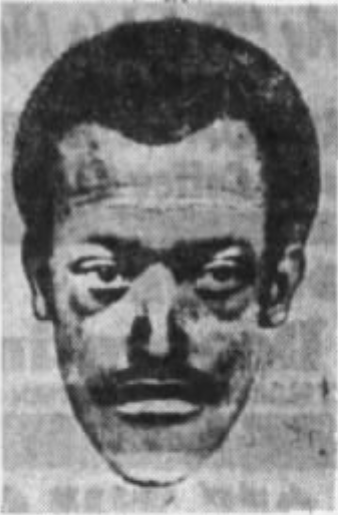
The nickname did not come from any connection to the legendary creature. Survivors and witnesses described the attacker as an unusually large and powerfully built Black man with exceptionally large hands and feet. Contemporary reports described him as tall and muscular, with facial hair and an Afro hairstyle, and investigators believed he was approximately 30 to 35 years old during the 1975 attacks.
Police reportedly considered whether the man's unusually large physical features might have resulted from acromegaly, a medical condition that can cause enlargement of the hands, feet, and facial features. His distinctive build became so important to the investigation that he became known simply as "Bigfoot."
How the Killer Approached His Victims
The attacks appeared to follow a recognizable pattern. The offender sought women working in prostitution in the Cass Corridor and was reported to approach them while driving a beige Oldsmobile. Accounts from surviving victims indicated that he would offer approximately $15 for sexual services, giving the encounter the appearance of an ordinary transaction before isolating the woman inside or near his vehicle.
Once the victim was under his control, the situation changed violently. Survivors described being threatened with a knife, beaten and sexually assaulted. Several of the murder victims were strangled, although the series was not completely uniform. Naomi Hall was reported to have been beaten to death, while Eoria Dick was stabbed. The sexual violence, victim selection, geographic concentration, and descriptions supplied by survivors led investigators to believe that the crimes were connected.
The importance of the surviving victims cannot be overstated. Before investigators had identified the full scope of the murders, women who escaped similar attacks were already describing a large man with highly distinctive physical characteristics. Their accounts allowed police to develop a composite description and provided information about the offender's vehicle and behavior.
The Victims
- Valinda Brown — February 16, 1975 — Detroit, Michigan: Brown is generally listed as the earliest known murder victim attributed to the Bigfoot Killer. She was killed in the Detroit area associated with the Cass Corridor series. Published accounts identify strangulation as the cause of death. Her murder established the beginning of what would become a months-long series of killings targeting vulnerable women.
- Julie Brown — April 24, 1975 — Detroit, Michigan: Julie Brown was 16 years old. She was sexually assaulted and strangled, and her death was subsequently included among the murders attributed to the Bigfoot Killer. Her youth demonstrates that the offender's victim selection extended to teenage girls as well as adult women. April 24, 1975 is the date most consistently listed for her death in later compilations based upon the contemporary investigation.
- Regina Foshee — May 1, 1975 — Detroit, Michigan: Nineteen-year-old Regina Foshee was found dead in an abandoned house. She had been strangled. Foshee lived on West Euclid Street in Detroit, and her death became particularly important in the later history of the case. Her family eventually pursued legal action against the City of Detroit, alleging that authorities had failed to adequately warn women about the danger posed by the killer despite having information about earlier attacks.
- Naomi Hall — May 3, 1975 — Detroit, Michigan: Naomi Hall, 22, was from Ashtabula, Ohio. She was found murdered in a Detroit motel room only two days after Regina Foshee's death. Unlike several of the other victims, whose deaths involved strangulation, Hall was reported to have been beaten to death. Her killing occurring so soon after Foshee's reinforced investigators' belief that a highly active predator was operating in the area.
- Eoria Char Dick — June 13, 1975 — Detroit, Michigan: Eoria Dick was found behind a J.L. Hudson Company warehouse in Detroit. She had been stabbed repeatedly. Although her method of death differed from the strangulations associated with several other victims, investigators connected her killing to the same series. Contemporary accounts identify her as one of the women whose murder helped establish that the Cass Corridor crimes represented a continuing pattern rather than isolated acts of violence.
- Andrea Lynn Coxton — July 13, 1975 — Detroit, Michigan: Andrea Coxton, whose name was occasionally rendered differently in contemporary reporting, was found strangled inside an abandoned restaurant. She was described in period reporting as a part-time prostitute. Her murder occurred approximately one month after Eoria Dick's death and further strengthened the belief that the same predator continued to operate around the Cass Corridor.
- Dorothy Holmes — October 19, 1975 — Detroit, Michigan: Dorothy Holmes, 43, is generally identified as the final confirmed victim in the 1975 Bigfoot series. She was sexually assaulted and strangled. Her age made her older than most of the women commonly associated with the earlier murders, demonstrating that the offender was not restricted to one narrow age group. Her death extended the known series from February into October 1975.
A Possible Additional Victim
A 15-year-old girl identified in later accounts as Wendra Curley has also been discussed as a possible victim of the same offender. Her body was found in an alley on July 27, 1975, after she had been beaten and sexually assaulted. The circumstances occurred during the same period in which the Bigfoot Killer was active and bore similarities to the larger series. However, she has not traditionally been included among the seven officially recognized victims attributed to the Bigfoot Killer, and her death should therefore be regarded as a suspected connection rather than a confirmed one.
The Cass Corridor Investigation
By the summer of 1975, Detroit police were openly investigating the possibility that a single offender was responsible for a series of attacks and murders involving women engaged in prostitution. The killer was sometimes referred to as the "Cass Ripper" before the Bigfoot nickname became widely associated with him.
Police had an unusual advantage for an unidentified serial murder investigation: there were surviving victims. At least four women reportedly survived attacks attributed to the same offender. Their accounts provided investigators with a physical description and information about how the man selected and approached women.
The suspect was described as exceptionally large, athletic and physically powerful. He reportedly had particularly large hands and feet and was believed to drive a beige Oldsmobile. Investigators also learned that he appeared comfortable approaching women in the Cass Corridor, suggesting either familiarity with the neighborhood or confidence that his movements would not attract attention.
The pattern indicated an offender who understood how to exploit the circumstances of his victims. By approaching women as a customer, he could persuade them to enter his vehicle voluntarily. Once isolated, he could use his physical size and a weapon to overpower them. The repeated targeting of women involved in prostitution also reduced the likelihood that anyone would immediately know where a victim had gone or who had picked her up.
Community Anger and Claims of Police Neglect
The investigation became controversial because residents, activists and women in the Cass Corridor believed authorities were not responding urgently enough. The victims were poor and many were engaged in prostitution, leading critics to accuse officials of treating their deaths differently from murders involving women from more socially privileged backgrounds.
Women working in the neighborhood had particular reason for concern because they were potentially encountering the killer every night. Activists argued that authorities possessed information about a suspected serial predator yet had not adequately warned those most likely to encounter him.
Hundreds of residents and activists eventually protested the response to the killings. One source of criticism involved a police information leaflet containing a telephone number for reporting information about the killer. Protesters complained that the number was not available during nighttime hours, precisely when women working on the streets might encounter the suspect or obtain information about him.
Detroit police disputed accusations that they had ignored the crimes and maintained that investigators were actively attempting to identify and capture the offender. Nevertheless, the controversy surrounding the case became part of its history and illustrated the difficulties faced by marginalized victims attempting to obtain attention for violence committed against them.
The Regina Foshee Lawsuit
The death of Regina Foshee eventually produced a significant legal dispute. A representative of her estate sued the City of Detroit, arguing in part that police had obtained information about the serial attacker before Foshee was murdered but had failed to provide an adequate warning.
The litigation reflected a central argument raised by residents during the investigation: if police knew that a man was repeatedly attacking women in a specific neighborhood and understood the population he was targeting, what responsibility did authorities have to warn those women?
The lawsuit did not identify the murderer, but it preserved an important part of the case's history by documenting the concern that existed regarding the handling of the Cass Corridor attacks.
Carl Mayweather Jr. Becomes a Suspect
A potentially dramatic development occurred on January 27, 1976, several months after the last recognized Bigfoot murder. Twenty-nine-year-old Carl Mayweather Jr. was arrested following an alleged attempted rape in River Rouge, Michigan.
Mayweather immediately attracted investigators' attention because his physical appearance reportedly resembled descriptions of Bigfoot. He was tall, athletic, and wore approximately size 12 1/2 shoes. He was a Detroit-area resident and worked in his family's moving and delivery business. Authorities also learned that he had previously faced allegations involving an assault on a female.
Because Mayweather appeared to resemble the composite description, detectives investigated whether forensic or circumstantial evidence could connect him to the Cass Corridor crimes. Contemporary newspaper coverage openly discussed the possibility that police had finally found the man who had terrorized women in Detroit throughout the previous year.
Mayweather Is Eliminated
The apparent breakthrough did not last. Investigators examined Mayweather's whereabouts at the times of the 1975 murders and discovered that he had reliable alibis for at least four of them. That made it impossible for him to have committed the complete series attributed to Bigfoot.
By March 1976, authorities had cleared Mayweather as the Bigfoot murder suspect. Although he continued to face separate allegations involving sexual assaults, no Bigfoot murder charges were filed against him. His elimination returned investigators to their original problem: the actual killer remained unidentified.
Because Mayweather was investigated and then cleared, he should not be identified as the Bigfoot Killer. No person has ever been proven to be the perpetrator of the seven murders.
Why the Killer May Have Been Difficult to Catch
The offender operated in an environment that offered considerable anonymity. The Cass Corridor was densely populated and contained transient residents, inexpensive lodging, abandoned structures and heavy street activity. A man picking up a woman in a car would not necessarily have appeared suspicious, and witnesses might have seen only a vehicle or an unfamiliar customer for a few moments.
The killer's selection of women engaged in prostitution also gave him an opportunity to isolate victims without establishing an obvious prior relationship. Traditional homicide investigations frequently begin with relatives, partners, friends and acquaintances. In these murders, the offender may have been a stranger known to the victim only for minutes before the attack.
Investigators additionally faced the limitations of forensic science in 1975. Modern DNA profiling did not yet exist. Biological evidence that could potentially identify an unknown offender today could not then be searched against national DNA databases. Detectives instead depended heavily upon fingerprints, witness descriptions, physical evidence, conventional laboratory testing, interviews and painstaking investigative work.
An Unidentified Serial Killer
The Bigfoot murders abruptly stopped after Dorothy Holmes was killed in October 1975, at least according to the recognized series. That does not necessarily mean the offender stopped committing crimes. He could have died, been imprisoned for an unrelated offense, moved away from Detroit, changed his behavior, or committed later crimes that were never linked to the Cass Corridor murders.
It is also possible that additional murders before, during or after 1975 were committed by the same person but were never recognized as connected. The known crimes involved different methods of killing, including strangulation, beating and stabbing, making linkage more difficult than in a series in which every victim was murdered in an identical manner.
The surviving victims remain particularly significant because their descriptions provide evidence that the offender was a real, identifiable man rather than merely a theoretical connection created by similarities among unsolved murders. Their accounts described his appearance, physical characteristics, vehicle and method of approaching women.
Legacy of the Bigfoot Killer Case
The Bigfoot Killer remains one of Detroit's disturbing unidentified serial murderers. Seven women are generally recognized as victims of the 1975 series: Valinda Brown, Julie Brown, Regina Foshee, Naomi Hall, Eoria Dick, Andrea Coxton and Dorothy Holmes. A possible additional victim has also been discussed, but the evidence publicly available has not established that connection with certainty.
The case is notable not merely because the murderer escaped identification, but because of the questions it raised about crimes against marginalized women. Women in the Cass Corridor knew that someone was attacking people from their community, and surviving victims provided police with descriptions of the man. Despite those warnings, the murders continued for months.
No arrest has ever resulted in a conviction for the Bigfoot murders. Carl Mayweather Jr., the most publicly discussed suspect, was investigated and eliminated after alibi evidence showed that he could not have committed several of the killings. The identity of the man described by survivors as the extraordinarily large attacker in the beige Oldsmobile therefore remains unknown.
More than five decades after the murders, the most important names associated with the case are not the nickname given to the unidentified killer but the names of the women whose lives were taken: Valinda Brown, Julie Brown, Regina Foshee, Naomi Hall, Eoria Dick, Andrea Coxton and Dorothy Holmes. Their murders remain part of an unresolved chapter in Detroit's history, and the man responsible for the 1975 Cass Corridor killing spree has never been conclusively identified.