James Swann: The Washington, D.C. “Shotgun Stalker”
Background
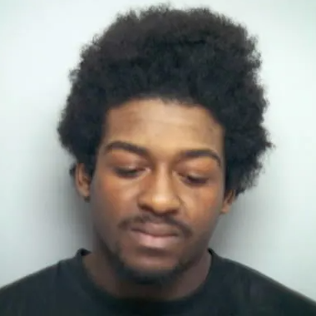
James Edward Swann Jr. was responsible for a terrifying series of apparently random shotgun attacks in Washington, D.C., during the winter and spring of 1993. Newspapers and frightened neighborhood residents came to know the unidentified gunman as the “Shotgun Stalker.” Swann attacked pedestrians without warning, generally firing from a slow-moving automobile before speeding away. His victims appeared to have no personal connection to him, making the shootings especially difficult for investigators to predict or prevent.
Swann was born in 1964 and had lived in New Jersey before the attacks. He reportedly worked occasionally as a security guard. During the crime spree, he traveled into Washington and concentrated his attacks in the Columbia Heights and Mount Pleasant neighborhoods of Northwest Washington. He used a 20-gauge shotgun that had been purchased approximately a year before the shootings.
Between February 23 and April 19, 1993, Swann carried out approximately 14 separate shooting attacks. Four people were killed and five others were wounded. Several additional intended victims escaped injury when his shots missed. Although Swann is frequently described as a serial killer, the brief duration, continuous escalation and concentrated nature of the attacks have also caused him to be classified as a spree killer.
The First Attacks
The series began on the evening of February 23, 1993. At approximately 8:45 p.m., a woman was walking near Holmead Place and Monroe Street in Columbia Heights when a firearm appeared from the window of a slow-moving vehicle. A shot was fired, but the woman was not struck. Police initially treated the incident as possible vandalism involving a pellet gun or as the reckless behavior of teenagers.
Approximately 20 minutes later, another person was attacked nearby on Oak Street. The victim was a 22-year-old man who was struck in the head by shotgun pellets. He survived but suffered devastating injuries, including the loss of an eye and substantial impairment to one arm. Investigators initially considered the possibility that the shooting was connected to neighborhood drug activity, despite the victim’s denial that he was involved in the drug trade.
On February 26, 1993, a gunman entered a barbershop in Columbia Heights and shot a man who was seated in a barber’s chair. The victim died from his wounds. Authorities did not immediately recognize the killing as part of a larger pattern and again considered the possibility of a dispute or drug-related violence. Publicly accessible accounts of the Swann investigation do not consistently identify this victim by name.
Continuing Violence in Columbia Heights
Swann attacked again on March 4, 1993, shooting a 43-year-old pedestrian in the head on Holmead Place. The man survived. As with the earlier attacks, police initially investigated the shooting as an isolated incident rather than the work of a stranger deliberately targeting pedestrians.
The attacks were difficult to connect because Swann had no known relationship with his victims. He did not rob them, confront them or remain at the scene. He simply approached in his vehicle, discharged the shotgun and fled. Shotgun pellets also lacked the distinctive markings investigators commonly use to connect bullets to a specific firearm.
The Mount Pleasant Shooting
On March 17, 1993, a woman in the Mount Pleasant neighborhood was struck by pellets fired from a passing automobile. The attack closely resembled the earlier shootings in Columbia Heights. Because Mount Pleasant was not generally associated with the kind of street violence investigators had initially suspected, authorities began to consider more seriously whether a single gunman was attacking strangers across Northwest Washington.
Six days later, Swann committed one of the best-documented murders in the series. On March 23, 1993, Elizabeth “Bessie” Hutson, 28, was walking her dogs in an alley near Park Road, between 19th Street and Rock Creek Park in the Mount Pleasant area. Swann approached in his vehicle and shot her with the shotgun. Hutson died in the attack.
Hutson’s killing occurred far from the locations normally associated with drug disputes or gang rivalries. Investigators now had stronger reason to believe that an indiscriminate shooter was moving through the neighborhoods and attacking people selected only because they happened to be outside when he passed.
April Attacks and Escalation
On April 4, 1993, Swann returned to Holmead Place and fired at another woman. She survived the attack. The recurring use of Holmead Place demonstrated that Swann was repeatedly returning to familiar streets rather than moving randomly throughout the entire city.
On April 10, Swann attacked three pedestrians in succession near Holmead Place. One of the victims, a 35-year-old man, was killed. The available public accounts of the investigation do not consistently provide his name. The clustered shootings showed that Swann’s attacks were becoming increasingly bold and that he was willing to fire repeatedly during a single trip into the neighborhood.
Residents of Columbia Heights and Mount Pleasant became fearful of walking outdoors. Unlike many violent crimes in which the victim and offender have some connection, Swann’s shootings gave the public no identifiable behavior to avoid. His victims were engaged in ordinary activities such as walking home, exercising their dogs or standing along neighborhood streets.
Victims and Fatal Attacks
- Unidentified male victim: Killed on February 26, 1993, while seated inside a barbershop in the Columbia Heights area of Washington, D.C.
- Elizabeth “Bessie” Hutson, 28: Killed on March 23, 1993, while walking her dogs in an alley near Park Road, between 19th Street and Rock Creek Park in Mount Pleasant, Washington, D.C.
- Unidentified 35-year-old man: Killed on April 10, 1993, during a series of attacks near Holmead Place in Columbia Heights, Washington, D.C.
- Unidentified 61-year-old woman: Killed on April 19, 1993, on 13th Street in Columbia Heights, Washington, D.C. Her death was the fourth and final homicide attributed to Swann’s shooting spree.
The Final Murder and Arrest
On April 19, 1993, Swann returned to Columbia Heights in broad daylight. Despite an increased police presence, he fired at three pedestrians. A 61-year-old woman was shot and killed on 13th Street. The attack became Swann’s fourth known homicide and brought the two-month shooting campaign to an end.
As Swann drove away from the area, he ran a red light near Kenyon Street and Sherman Avenue. Off-duty Metropolitan Police Officer Kenneth Stewart noticed the violation and began following the vehicle. Swann drove south toward Florida Avenue and turned into the parking lot of Atlantic Plumbing Supply, where his route of escape was blocked.
Police detained Swann and discovered a shotgun lying on the back seat of his blue Toyota. The vehicle and weapon matched information associated with the attacks. Investigators connected Swann to the series, ending a search that had left residents uncertain whether any pedestrian might become the gunman’s next target.
Motive and Mental Illness
After his arrest, Swann described experiencing severe hallucinations and delusional beliefs. He claimed that voices had commanded him to shoot people in Northwest Washington. One of the voices, according to accounts of his statements, represented what he believed was the spirit of civil-rights leader Malcolm X.
Swann reportedly believed that residents of Northwest Washington’s “civil rights side of town” were somehow responsible for Malcolm X’s 1965 assassination in New York. The belief had no rational connection to the victims or the neighborhoods. Most of the people Swann attacked were Black, and investigators found no evidence that the shootings resulted from personal disputes with any victim.
His statements and psychiatric evaluations indicated that the violence was driven by profound psychosis rather than robbery, revenge or a conventional criminal objective. The random selection of victims, however, made the consequences no less devastating for the people who were killed, the survivors who suffered permanent injuries and the neighborhoods placed under prolonged fear.
Court Proceedings
Swann faced criminal proceedings for the killings and attacks, but questions about his mental competence became central to the case. In September 1994, he was found not guilty by reason of insanity. The ruling did not mean that the shootings had not occurred or that Swann had not committed them. It meant that the court concluded his mental condition prevented him from being held criminally responsible under the applicable legal standard.
Swann was committed to Saint Elizabeths Hospital, a psychiatric institution in Washington, D.C., as a forensic patient. His confinement was subject to continuing judicial and psychiatric review rather than a conventional prison sentence.
Request for Temporary Release
In 2011, Swann sought permission for a supervised 12-hour furlough from Saint Elizabeths so he could visit his father. Supporters of the request argued that he had made progress while hospitalized, had completed an associate degree in computer science and had gone several years without a serious violent episode.
Government attorneys opposed the furlough, emphasizing his history of hallucinations and the extreme danger demonstrated by the 1993 attacks. Evidence presented during the proceedings indicated that Swann had continued to experience hallucinations years after his commitment. A judge denied the temporary-release request, concluding that community safety concerns outweighed the arguments for the visit.
Impact of the Crimes
Swann’s attacks exposed the difficulty of identifying a criminal who chooses victims entirely at random. Early shootings were initially viewed as unrelated neighborhood violence, delaying recognition of the pattern. Once police understood that one offender was targeting pedestrians, the absence of a clear motive, identifiable victim type or personal connection made traditional investigative methods less effective.
The case also generated criticism of the way authorities initially interpreted violence in Columbia Heights. Several early victims were young Black residents, and their shootings were quickly suspected of being connected to drugs or gangs. Only after similar violence reached Mount Pleasant did the possibility of a roaming stranger receive sustained attention.
James Swann’s two-month campaign ended with four people dead, five wounded and additional victims narrowly escaping injury. The murders of Elizabeth Hutson and the three other fatal victims became part of a disturbing chapter in Washington’s criminal history. Swann’s apprehension brought immediate relief, but survivors and victims’ families were left with permanent consequences from attacks that had been sudden, impersonal and entirely unprovoked.