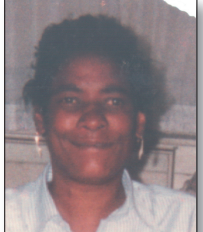
Elizabeth “Bessie” Hutson was a 28-year-old Hispanic woman living in Washington, D.C., whose ordinary evening routine turned into the most terrifying moment of her life and the end of it. On March 23, 1993, she took her dogs out for a walk in the Mount Pleasant neighborhood, following an alley that ran parallel to Park Road NW at the far western edge of the community, between 19th Street and Rock Creek Park.
The alley was the kind of quiet cut-through that residents used without thinking twice, a familiar path framed by houses, trees, and the soft background sounds of city life. That night, though, Mount Pleasant was already on edge. For weeks, people in this part of Northwest D.C. and nearby Columbia Heights had been whispering about a mysterious gunman who seemed to strike without warning, firing from a passing car and disappearing into the dark.
The attacks had started a month earlier, when an unidentified woman walking alone on Holmead Place in Columbia Heights saw a gun barrel protrude from the window of a slow-moving car just before a shotgun blast rang out. The shooter missed her, but twenty minutes later, a 22-year-old man was hit in the head nearby, losing an eye and much of the use of one arm. Police initially treated these shootings as just another symptom of neighborhood drug and gang violence; the victims’ denials and the randomness of the locations were brushed aside. A barbershop killing on February 26 and yet another pedestrian shot on March 4 were also written off as gang-related, even though nothing tied the victims to drug activity.
Everything changed when the shooter crossed into Mount Pleasant. On March 17, a young woman named Hope Hallock was struck by shotgun pellets from a passing car and blinded in one eye. Unlike Columbia Heights, Mount Pleasant had a reputation as an increasingly upscale, lower-crime community, and the idea of a random gunman hunting pedestrians along its tree-lined streets shattered any illusion of safety. Patrols were stepped up, residents altered their routines, and a vague unease settled over the neighborhood. Yet nobody knew when or where the shooter would appear next.
Six days later, the answer came for Elizabeth Hutson. As she moved along the alley with her dogs, a small blue car crept into range. Inside was James Edward Swann Jr., later nicknamed the “Shotgun Stalker,” a man in the grip of severe mental illness who believed he was being commanded by voices—including what he described as the spirit of Malcolm X—to kill people in Northwest Washington. Swann raised a 20-gauge shotgun, aimed from the vehicle, and fired. The blast struck Elizabeth and killed her there in the alley, turning an ordinary neighborhood shortcut into a crime scene and making her his second fatal victim in a spree of seemingly senseless attacks.
Her death was a turning point. Unlike the earlier shootings that police had dismissed as gang-related, Elizabeth’s killing took place far from known drug corners and involved a resident simply walking her dogs in a quiet, residential pocket of Mount Pleasant. That fact forced detectives to reconsider the pattern they had been trying not to see. With Elizabeth’s murder, they finally acknowledged that a random, mobile shooter was stalking the streets, targeting strangers with no apparent motive beyond the distorted commands of his own mind. Fear, already present, hardened into something sharper; for residents who had once believed that avoiding trouble meant staying clear of certain corners or crowds, Elizabeth’s death proved that anyone, anywhere, could be chosen.
The man responsible for her murder did not remain an anonymous shadow. Over the course of roughly two months, Swann’s attacks killed four people and wounded or attempted to kill many others in Mount Pleasant and Columbia Heights, all with the same shotgun and the same drive-by style. On April 19, 1993, shortly after yet another shooting in Columbia Heights that left 61-year-old Nello Hughes dead, Swann ran a red light while fleeing the scene. An off-duty Metropolitan Police officer, Kenneth Stewart, noticed the violation and the car—a now-infamous blue Toyota—and decided to follow. Swann tried to duck into a parking lot near Florida Avenue to escape, but Stewart trapped the car and took him into custody. A 20-gauge shotgun lay on the back seat, matching witnesses’ descriptions and the weapon used in the earlier attacks, including the one that killed Elizabeth.
In the courts, Swann’s case became as much about his mental state as about the staggering violence of his crimes. Psychiatrists testified that he suffered from paranoid schizophrenia and was driven by auditory hallucinations during the shootings. Ultimately, he was found not guilty by reason of insanity and ordered confined to St. Elizabeths Hospital, a forensic psychiatric facility in Washington, D.C., where he has remained under strict institutional care rather than in a traditional prison setting. His arrest and indefinite confinement ended the brief but devastating reign of the “Shotgun Stalker,” but they could not undo the terror his actions had carved into the city—or return Elizabeth Hutson to the life she had been quietly living before a random encounter on a neighborhood walk turned fatal.