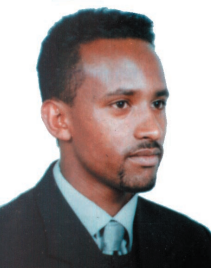
Julius “Jack” Bryant, a 58-year-old male from Washington, D.C., spent his final day in a neighborhood barbershop on 11th Street NW, an ordinary stop in a part of the city he knew, as an extraordinary and terrifying pattern of violence was just beginning to unfold around him. On February 26, 1993, he was inside the Safeway Barbershop when an armed man entered, turned the everyday noise of clippers and conversation into chaos, and fired a shotgun at close range.
Bryant was fatally wounded there in the shop, his life ending in a room that had been, until that moment, a small, familiar refuge in the Columbia Heights area.
At first, his killing might have seemed like a terrible but isolated crime: a single victim, shot inside a barbershop on a winter day. But this attack was not random in the larger sense. It was one of the earliest fatal shootings in a series that would come to be known across the city as the work of the “Shotgun Stalker.” Investigators later tied the barbershop slaying to other seemingly disconnected shootings in the surrounding Columbia Heights and Mount Pleasant neighborhoods, recognizing Bryant not just as a victim of a single gunman but as the first name in a list of people killed during a sustained, city-shaking spree.
In the weeks surrounding his death, residents of those neighborhoods were increasingly on edge. A gunman was cruising the streets, usually after dark, slowing his car beside unsuspecting pedestrians and firing a shotgun before disappearing into the night. The victims differed in age, gender, and background, which made the crimes feel all the more senseless; there was no easy pattern to explain why one life was taken and another spared. As the shootings accumulated, authorities and reporters pieced together a grim tally: multiple attacks beginning in late February, four people killed and several others wounded over roughly two months. Bryant's killing inside the Safeway Barbershop on February 26, a woman walking her dogs in Mount Pleasant, a man on a street corner, another gunned down on 13th Street NW—all became part of the same story of a city held in a kind of nervous suspension, waiting for the next shotgun blast.
The search for the person responsible unfolded in parallel with that fear. Police increased patrols, built a special task force, and eventually circulated a composite sketch of a young Black man and a description of a blue compact car that witnesses said had been seen fleeing scenes of the shootings. Officers stopped cars and questioned drivers who even vaguely resembled the sketch, trying to catch the shooter before he struck again. In mid-April, after more attacks, the break finally came. On April 19, following yet another burst of gunfire that left 61-year-old Nello Hughes dead on a sidewalk, an off-duty officer noticed a blue Toyota driving erratically and running red lights. He followed the vehicle, flagged down an on-duty unit, and helped corner the driver in a parking lot off Florida Avenue. Inside the car, officers found a shotgun that matched the weapon used in the spree. The driver was identified as James Edward Swann Jr., a 29-year-old former security guard from New Jersey, and police announced that they were confident they had arrested the Shotgun Stalker whose attacks included the barbershop killing of Julius Bryant.
In the months that followed, the focus shifted from the hunt for a suspect to understanding who Swann was and why he had turned parts of Washington into hunting grounds. Psychiatric evaluations described him as a deeply disturbed man suffering from paranoid schizophrenia. According to court and media accounts, he told psychiatrists that he heard voices, including that of Malcolm X, ordering him to kill people in Northwest Washington and insisting that residents there were somehow responsible for the civil-rights leader's death. The voices, he claimed, tormented him and only quieted for a short time after he shot someone. When his case came before the court, experts for both prosecution and defense agreed that he was mentally ill. In 1994 he was found not guilty by reason of insanity for four murders and multiple attempted murders connected to the shotgun spree, and instead of a traditional prison sentence he was committed indefinitely to St. Elizabeths Hospital, a psychiatric facility in Washington, where records indicate he has remained under secure treatment.
For Julius “Jack” Bryant, the official records that survive online are brief: a date, a city, a note that he was lost to gun violence, candles lit in his memory on a memorial site, and his name listed among the dead in summaries of the Shotgun Stalker case. They do not reveal his daily routines, his work, or the details of the life he had built in Washington before stepping into the Safeway Barbershop that February day. But they fix him in the history of the city: the man whose killing inside a neighborhood barbershop marked the first acknowledged death in a spree that haunted Columbia Heights and Mount Pleasant, and whose memory now lives on in the quiet spaces where victims' names are preserved, one line at a time.