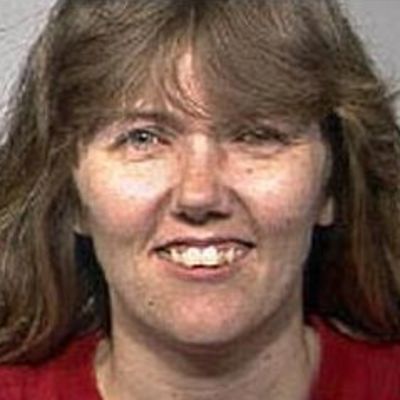
Shela Polly, a 32-year-old Caucasian female from Modesto, California, was murdered on December 30, 2000. At the time of her death, she was staying at the Modesto Gospel Mission and had planned to apply for work at a nearby temporary labor agency called Labor Ready. Witnesses reported seeing Shela Polly speaking with a man named Ronald James Ward between 7:30 and 8:30 a.m. on the morning of her death.
Later that day, around 11:30 a.m., a man walking his dog discovered her partially unclothed body covered with leaves at the base of an oak tree along Dry Creek in Modesto.
An autopsy revealed that the 32-year-old Caucasian female had been stabbed and strangled. Saliva recovered from her breast was submitted for DNA testing, and in May 2003, the California Department of Justice confirmed a match to Ronald Ward. The probability of a random match was calculated at 1 in 43 billion for Caucasians, making the identification conclusive.
Ronald James Ward, a transient serial killer already serving a life sentence in Montana for a separate murder, was linked to multiple homicides across several states. In addition to the murder of Shela Polly, Ward was connected to the killings of Jackie Travis, a 49-year-old woman from Merced, California, and Kristin Laurite, a 25-year-old woman from New Jersey who was murdered in Arkansas. DNA evidence tied Ward to all three cases.
In September 2008, Ward pleaded guilty to the murders of both Shela Polly and Jackie Travis in California. He was sentenced to life imprisonment without the possibility of parole. These sentences were ordered to run concurrently with each other but consecutively to his existing life sentences in Montana and Arkansas. Ward died in his Montana prison cell on April 11, 2014, while serving his sentence. Authorities believe it is unlikely that Ward's killing spree began and ended in 2000, and investigations into other potential victims remain ongoing.