The Cone family had deep roots in the small town of Baldwin, Florida, a community where they were known and respected. The family patriarch, Floyd H. Cone, Sr., was a decorated World War II veteran who had served as a tail gunner on a B-26 bomber, earning a Purple Heart after being wounded over Germany. After the war, he returned home and became a supervisor for the Florida Department of Transportation, a testament to a life of service and dedication. His son, Floyd H.
Cone, Jr., grew up in this close-knit environment. While many details of his personal life have been lost to time, a court record mentioned his enjoyment of hunting with his brother, painting a small picture of a man with a connection to the Florida outdoors.
On Saturday, April 11, 1981, that life was brutally cut short. The day began with a prison break from the nearby Union Correctional Institution. Three inmates escaped, and while two were quickly captured, one remained at large: Edward Dean Kennedy, a man already serving a life sentence for the 1978 murder of a motel clerk in Miami. Known as "Sonny," Kennedy was a serial killer whose violent path was far from over. Fleeing on foot for about 30 miles, he made his way to the rural outskirts of Baldwin, where he sought refuge and resources.
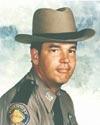
Kennedy broke into the trailer home belonging to Floyd H. Cone, Jr. There, he found a change of clothes and, ominously, armed himself with a shotgun and a rifle he discovered inside the residence. Later that day, Floyd returned home. He was not alone; he was with his cousin, 35-year-old Robert C. McDermon, a Florida Highway Patrol Trooper. Though off-duty, McDermon was in his uniform, having just assisted in the search for the very man who was now inside his cousin's home.
The two cousins walked in on the escaped convict, and the quiet afternoon erupted in violence. When McDermon saw the armed intruder, he drew his weapon and fired. Kennedy returned fire with the stolen guns. In the ensuing gun battle, both Floyd H. Cone, Jr. and Trooper Robert McDermon were shot and killed. The sudden, violent end to their lives sent a shockwave through their family and the entire Baldwin community, which had lost two of its own in a matter of moments.
Kennedy fled the scene, running to a neighboring trailer where he took a woman and her six-month-old baby hostage. As law enforcement surrounded the home, a tense standoff began. Kennedy demanded media attention before eventually releasing the hostages and surrendering to the authorities who had been hunting him. His brief and bloody taste of freedom was over.
The legal process that followed brought Kennedy to justice for his crimes. He was tried and convicted on two counts of first-degree murder for the killings of Floyd Cone and Robert McDermon. The jury recommended the death penalty, a sentence the judge imposed. Kennedy's criminal record ultimately included three proven murders. After years of appeals, his sentence was carried out. On July 21, 1992, Edward Dean Kennedy was executed by electric chair at Florida State Prison. Among the witnesses to the execution was Floyd H. Cone, Sr., who saw the man who murdered his son pay the ultimate price. He later said that while he had forgiven Kennedy, "Justice has finally been carried out after a far too long delay."