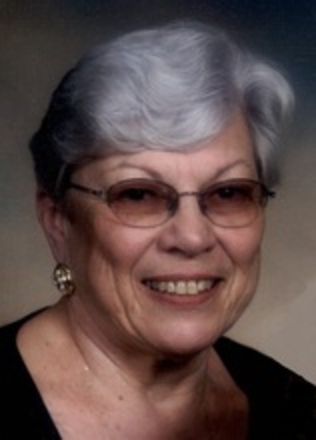
A "true sturdy Scottish lass" with a personality as unique as her life story, Helen Whitelaw Marshall Young was a woman who never hesitated to speak her mind. Born in Edinburgh, Scotland, in 1923, she served her country in the Royal Air Force during World War II, stationed in places like Wick, Scotland, and London, England. It was in London in 1948 that she met and married Peter Sandy Young.
A year later, she crossed the Atlantic to join him in Canada as a war bride, a new chapter in a life already marked by resilience and adventure.
After initially living in Calgary, Alberta, Helen and Peter settled in Southern Ontario, making Woodstock their permanent home in 1971. There, they became active members of their community, dedicating time to the local Lions Club and the Humane Society, a testament to their love for animals. They shared their home with several beloved and spoiled pets and enjoyed summers camping in Golden Lake. After Peter’s death in 1988, Helen, a fiercely independent woman, continued to travel on her own until health issues in her later years curtailed her adventures. In her 91st year, she was a resident at the Caressant Care Nursing Home in Woodstock.
On July 14, 2013, Helen Young, a 90-year-old female, died. Her death was not initially considered suspicious, believed to be a peaceful passing due to her age and health. For years, her family and friends were unaware of the sinister truth. The reality was that Helen was a victim of one of Canada's most prolific serial killers, a registered nurse named Elizabeth Tracey Mae Wettlaufer, who was entrusted with her care. Wettlaufer, who went by "Bethe Parker" in her youth, murdered eight elderly patients and attempted to kill or harm six others between 2007 and 2016.
The horrific truth came to light only after Wettlaufer confessed her crimes to staff at a psychiatric hospital, who then alerted the police. In a two-hour videotaped confession, she detailed her crimes, explaining that she used insulin, a substance difficult to detect in post-mortem examinations, to kill her victims. She described feeling a "red surge" before the murders and a "laughing feeling" afterward, stating she believed God or the devil was telling her to do it. For Helen Young's murder, Wettlaufer administered multiple insulin injections. She later confessed to feeling a pang of guilt after watching Helen suffer a seizure, a moment where she began to doubt the divine nature of her lethal mission.
Wettlaufer's confession launched a massive police investigation that spanned multiple long-term care facilities in southwestern Ontario where she had worked. Helen Young was identified as the sixth of eight murder victims. The investigation revealed a long history of medication errors and suspensions that had followed Wettlaufer throughout her nursing career, yet she had been able to continue working and harming patients.
On June 1, 2017, Elizabeth Wettlaufer pleaded guilty to eight counts of first-degree murder, four counts of attempted murder, and two counts of aggravated assault. Because of her plea, there was no trial. At her sentencing hearing on June 26, 2017, family members of the victims gave emotional impact statements. Wettlaufer offered a brief apology, stating, "Sorry is much too small a word. I am extremely sorry." The judge called her a "shadow of death" and sentenced her to eight concurrent life terms in prison with no possibility of parole for 25 years. Though she will be eligible to apply for parole in 2041, the sentencing judge noted it is unlikely she will ever be granted it. The case triggered a sweeping provincial inquiry into the systemic flaws in Ontario's long-term care system.