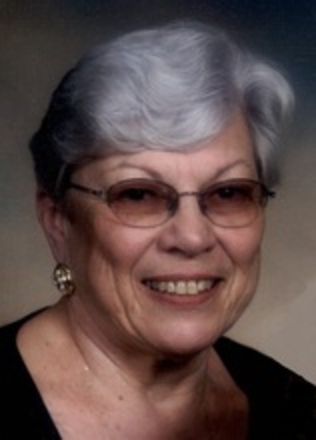
Gladys Jean Millard, an 87-year-old female, was a woman of faith and family who was deeply involved in her community. Born in New Glasgow, Nova Scotia, on October 11, 1924, she eventually settled in Woodstock, Ontario. A widow to her late husband, Henry H. Millard, Gladys was a devoted mother to her two children, Stanley and Sandy, and a loving grandmother and great-grandmother.
She was a longtime, faithful member of Knox Presbyterian Church in Woodstock, where her minister would later say her life was "a sermon on Christian living." Gladys was also an active community member, belonging to the Rose Rebekah Lodge for over 35 years and the local T.O.P.S. club for more than 25 years.
In the fall of 2011, Gladys was a resident at the Caressant Care nursing home in Woodstock. On October 14, 2011, just three days after her 87th birthday, her life was stolen by a registered nurse entrusted with her care. Elizabeth Tracey Mae Wettlaufer, known as Bethe Parker, injected Gladys with a fatal dose of insulin. For years, her family believed she had died of natural causes, mourning the loss of their matriarch without knowing the horrific truth.
The truth remained hidden until 2016, when Wettlaufer, who had since left her nursing career, checked herself into a psychiatric hospital in Toronto and confessed to killing multiple patients under her care. This shocking admission triggered a major police investigation that uncovered a string of murders and assaults spanning from 2007 to 2016. Investigators learned that Gladys Millard was one of eight elderly patients Wettlaufer had murdered with insulin injections in long-term care homes in Woodstock and London, Ontario. In a videotaped confession, Wettlaufer described feeling a "red surge" before killing Millard and a "laughing feeling" after.
The revelation that Gladys was the victim of one of Canada's most prolific serial killers was a devastating blow to her family. They were forced to mourn her all over again, this time with the horrifying knowledge that her life was intentionally taken. At the sentencing hearing, her daughter Sandy Millard spoke of the profound depression she fell into, stating, "Finding out she was killed by a huge injection of medication she did not need broke my heart." Her granddaughter, Shannon Emmerton, told the court through tears, "I don't know if I will ever truly recover." Her niece expressed a similar sentiment, saying it was "like she died twice."
On June 1, 2017, Elizabeth Wettlaufer pleaded guilty to eight counts of first-degree murder, four counts of attempted murder, and two counts of aggravated assault. She admitted in court that she knew injecting the insulin could be fatal. The judge called her a "shadow of death" who preyed on the vulnerable people she was meant to protect.
Wettlaufer was sentenced to eight concurrent life terms in prison with no possibility of parole for 25 years. While the legal proceedings brought a measure of justice, it did little to erase the pain and disbelief of families like the Millards, who had placed their trust in a system that allowed a predator to hide in plain sight. The case prompted a sweeping provincial inquiry into the systemic flaws in Ontario's long-term care system, hoping to prevent such a tragedy from ever happening again.