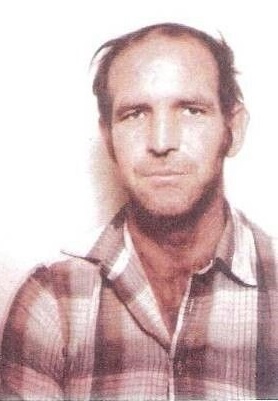
Edwin Dean Richardson: A Violent Drifter Linked to Murders Across the United States
Overview
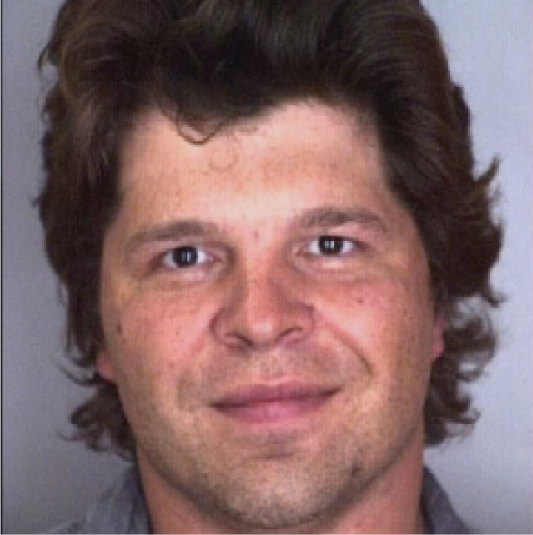
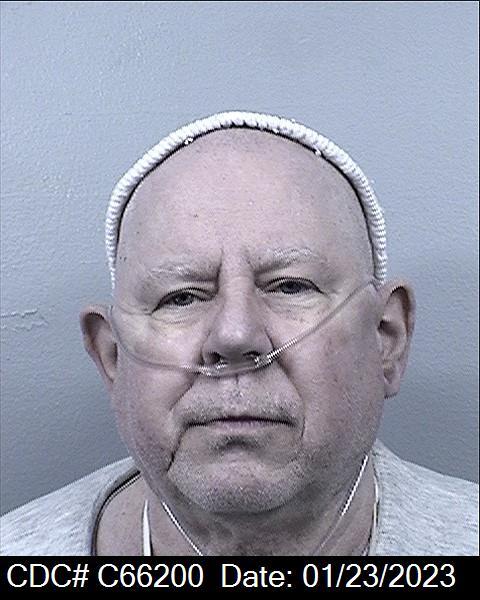
Edwin Dean Richardson was an American serial murderer and repeat violent offender whose known crimes stretched from California to the Ohio Valley. A drifter with a lengthy criminal history, Richardson moved frequently, worked temporary jobs and repeatedly returned to violence after periods of incarceration. He was convicted of murdering two young women and was identified through DNA evidence as the killer of a third. Investigators also considered him a possible suspect in additional unsolved murders.
Richardson’s victims were young women who disappeared while carrying out ordinary activities such as shopping, driving to work or running errands. Their bodies were concealed in vehicles, isolated ravines or remote outdoor locations. Strangulation was a recurring method in the murders attributed to him. Because he traveled between states and committed crimes years apart, investigators believe the full extent of his violence may never be known.
Early Criminal History
Richardson was born in Oklahoma in 1936. His criminal conduct reportedly began during his youth and escalated from theft and burglary to kidnapping, sexual violence and murder. In 1960, he was convicted in San Diego, California, of attempted robbery and kidnapping. He remained imprisoned for approximately eight years before being paroled in April 1968.
Only five months after his release, 22-year-old art student Wendy Jo Halison disappeared in Los Angeles. Although Richardson was not identified as her killer until decades later, the timing placed him in Southern California and free from custody when she was murdered. His movements as a drifter made it difficult for investigators in different jurisdictions to connect him to crimes committed far apart.
Known and Suspected Victims
- Wendy Jo Halison, 22 – September 30, 1968 – Los Angeles, California: Halison left home on a Sunday afternoon to purchase a hair dryer at a Thrifty drugstore near Wilshire Boulevard and Fairfax Avenue. She was later seen filling her green Ford Thunderbird at a nearby service station. When she failed to return home, her family reported her missing. On October 1, her body was discovered inside the trunk of her car only a few blocks from the store. She had been sexually assaulted and strangled. DNA recovered from her clothing was eventually matched to Richardson in 2016, long after his death. Investigators announced the identification in 2017, solving the case after nearly 48 years.
- Margaret Lya “Margie” Schuit, 22 – December 21, 1969 – Los Angeles County, California: Schuit, a Columbia Pictures employee and former Miss San Fernando Valley, disappeared after visiting the same Thrifty drugstore associated with Halison’s disappearance. Her body was later found in the Burbank area. She had reportedly been strangled. Detectives considered Richardson a possible suspect because of the similarities in the victims, locations and methods. However, physical evidence from Schuit’s case was lost, preventing investigators from conducting the DNA comparisons that identified Richardson in the Halison murder. Richardson was never formally charged with Schuit’s death, and the case remained unresolved.
- Marla Jean Hires, 23 – October 29, 1972 – Orange County, California: Hires was a wife and mother of a two-year-old child who lived in Stanton. Before sunrise, she left home in her blue 1971 Mazda RX2 to perform extra work at her job as a claims adjuster for Southern California Edison in Rosemead. She never reached her workplace. Her family reported her missing that evening. On October 30, her body was found in a secluded area near Yorba Linda. She had been sexually assaulted and strangled. DNA testing conducted decades later connected Richardson to the crime. He pleaded guilty to first-degree murder in December 2006.
- Jo Anna Boughner, 21 – Disappeared November 28, 1977; body recovered December 31, 1977 – Belmont County, Ohio, and Dallas Pike, West Virginia: Boughner left her family home in Belmont, Ohio, during the evening to run errands. She did not return. More than a month later, her body was discovered in a ravine near Dallas Pike in Ohio County, West Virginia, concealed beneath branches and debris. Richardson fled the region and remained at large for more than three years. Investigators eventually traced him to a trailer park in Mesa, Arizona. He was returned to Ohio, convicted of Boughner’s rape and murder and sentenced to a prison term of 19 years to life. Because her body was not found until December 31, the precise date of her death could not be independently established; authorities connected the murder to her disappearance on November 28.
The Murder of Wendy Jo Halison
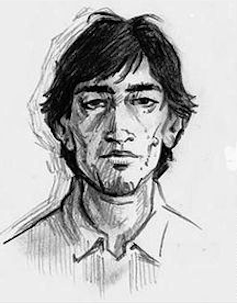
Wendy Jo Halison’s murder became one of the longest-running cold cases in Los Angeles. On September 30, 1968, she telephoned her older sister and mentioned a newspaper advertisement for a discounted hair dryer. Her sister declined an invitation to accompany her, and Halison drove alone to the store. Witnesses later reported seeing a white man near her at the drugstore and again at the service station where she stopped for fuel.
Halison’s disappearance was quickly recognized as unusual because she regularly kept in contact with her family. Her boyfriend eventually located her Thunderbird while searching from a helicopter. Police found Halison inside the trunk. Her jewelry and watch remained with her, leading investigators to reject robbery as the primary motive.
Detectives initially examined several men who knew Halison, including a boyfriend, a former boyfriend, a friend and a relative by marriage. Each was eventually excluded. In 1998, forensic specialists discovered biological evidence on Halison’s clothing and developed a partial DNA profile. The sample was not strong enough to produce a database match at that time.
Investigators preserved the evidence and repeatedly returned to it as forensic technology improved. In 2016, another round of testing produced enough genetic markers to search California’s offender database. The profile matched Richardson, whose DNA had been collected because of his previous convictions. Richardson had already died in an Ohio prison, making prosecution impossible, but detectives formally identified him as Halison’s killer.
The Murder of Marla Jean Hires
Marla Hires left home early on October 29, 1972, dressed for work in a purple blouse, brown flared pants and matching brown shoes. She carried a brown purse and drove toward Rosemead. When she failed to arrive or return home, her parents and husband contacted authorities.
Hires’ body was recovered the following day in an isolated part of Orange County. Investigators collected biological evidence, but DNA testing was not available in 1972. The case remained unsolved for more than 30 years while Richardson continued to live outside the suspicion of Hires’ family and local investigators.
Cold-case detectives later submitted the preserved evidence for modern testing. The resulting DNA profile matched Richardson, who was serving a life sentence in Ohio for murdering Jo Anna Boughner. The Orange County District Attorney charged him with Hires’ murder in November 2004. Richardson was transported from Ohio to California in 2006 and pleaded guilty to raping and strangling her. He received another life sentence.
The Murder of Jo Anna Boughner
Jo Anna Boughner disappeared from Belmont, Ohio, on November 28, 1977. Her vehicle was reportedly found after she vanished, but there was no immediate sign of her. Family members and authorities searched for weeks before her body was located across the state line near Dallas Pike, West Virginia.
Richardson became a suspect but left the area before he could be taken into custody. Former Belmont County investigator Tom McCort pursued him for more than three years. Investigators eventually used information connected to Richardson’s discarded telephone records to locate him in Mesa, Arizona.
Richardson was arrested and transported back to Ohio. During the return journey, he allegedly boasted about killing another woman, wrapping her body in a blanket and throwing it over a cliff. The statement alarmed investigators because it suggested he had committed murders that had not yet been attributed to him.
Richardson was convicted in connection with Boughner’s murder in 1981. He was also convicted of kidnapping two teenage girls in West Virginia. His crimes against those girls demonstrated that his violence extended beyond the women he murdered and that he was willing to abduct victims across state lines.
Possible Additional Murders
Detectives who reviewed Richardson’s history believed three identified victims were unlikely to represent the full number of people he killed. His criminal activity covered many years, and there were substantial gaps between the known murders. During those periods, he traveled extensively and sometimes lived under circumstances that made his location difficult to reconstruct.
Margaret Schuit’s 1969 murder received particular attention because she disappeared from the same Los Angeles drugstore that Wendy Halison visited before her death. Both women were 22 years old, both were attacked approximately one year apart and both were strangled. Richardson had been released from prison before the murders and had connections to the area. Nevertheless, without surviving physical evidence, authorities could not conclusively prove that he killed Schuit.
Investigators also examined other California homicides involving young women. Richardson’s alleged statement about throwing a woman’s wrapped body from a cliff raised the possibility of an unidentified or unsolved victim. No publicly documented prosecution resulted from that statement.
Convictions and Imprisonment
Richardson spent much of his adult life in correctional institutions. His record included attempted robbery, kidnapping, the abduction of teenage girls and multiple murder convictions. His conviction for Jo Anna Boughner’s murder placed him in the Ohio prison system, where he remained when California investigators connected him to Marla Hires.
Richardson’s guilty plea in the Hires case ensured that he would remain imprisoned for life. The case also demonstrated the importance of retaining evidence from unsolved murders. Biological material collected in 1972 remained useful more than three decades later, allowing investigators to establish a link that could not have been scientifically proven when the crime occurred.
The identification in Wendy Halison’s case came too late for a trial. Richardson died while incarcerated in Ohio before the successful DNA comparison was completed. Halison’s parents also died without learning who murdered their daughter, although her surviving sister and other relatives were finally given an official answer.
Legacy of the Investigations
Edwin Dean Richardson’s known murders occurred over a period of at least nine years, beginning with Wendy Halison in 1968 and continuing through Jo Anna Boughner’s disappearance in 1977. His repeated use of strangulation, his attacks on young women and his movement between California, Ohio, West Virginia and Arizona complicated efforts to recognize a pattern.
The investigations illustrate how offenders were once able to exploit the limited communication between distant police agencies. Before computerized databases and DNA profiling, crimes committed in separate states were often treated as unrelated cases. Richardson’s name did not emerge in the Halison and Hires investigations until forensic evidence allowed authorities to compare material collected decades earlier with his offender profile.
Richardson was legally convicted of killing Jo Anna Boughner and Marla Jean Hires. DNA evidence conclusively identified him as Wendy Jo Halison’s killer, although he died before charges could be filed. Margaret Schuit remained a suspected victim rather than a confirmed one. Detectives who studied his history continued to express concern that additional women may have died at his hands, leaving the final number of his victims uncertain.