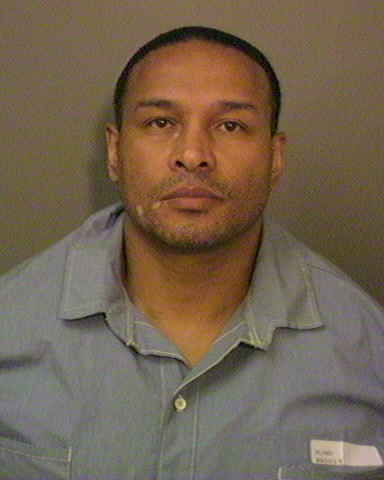
John Peter Malveaux: The Opelousas Serial Killer
Background
John Peter Malveaux is an American serial killer and rapist who murdered four women in and around Opelousas, Louisiana, between February 1996 and October 1997. His crimes were concentrated in St. Landry Parish and neighboring Evangeline Parish. Malveaux sexually assaulted his victims and killed them by strangulation, often abandoning their bodies in secluded or poorly traveled locations.
Born in Opelousas in 1964, Malveaux later lived with his wife and six sons in a trailer park near Lafayette. People who knew him described him as friendly and generally well liked, although he reportedly struggled with alcohol and had experienced conflict with members of a local church. His outwardly ordinary life allowed him to move through the community without attracting the suspicion normally associated with a violent predator.
Malveaux's confirmed series of murders began with the death of Diane Sam in February 1996. More than a year later, he murdered Carolyn Breaux Nichols and Tamika Blake Wilson during the summer of 1997. His final known victim, Tammy Duplechin Smith, was killed in October 1997. Malveaux was arrested less than a week after Smith's disappearance when police found him sleeping inside her automobile.
The Murder of Diane Sam
On February 20, 1996, Malveaux encountered 38-year-old Diane Sam in Opelousas. According to his later confession, Sam refused to have sex with him. Malveaux responded by sexually assaulting and strangling her. He then abandoned her partially unclothed body outside an apartment complex in Opelousas, where she was discovered later that day.
Sam's death was initially attributed to natural causes rather than homicide. Because the true circumstances were not recognized, her case was not immediately connected to Malveaux or to any broader pattern of attacks against women. After Malveaux was arrested in 1997, however, he confessed to killing Sam and reportedly provided information that investigators believed only the killer could have known.
The confession caused authorities to reconsider the original findings concerning Sam's death. Officials discussed exhuming her body in an effort to gather additional evidence and confirm that she had been strangled. Her case demonstrated how Malveaux's crimes could remain hidden when a suspicious death was initially classified incorrectly.
The Murders of Carolyn Breaux Nichols and Tamika Blake Wilson
During July 1997, Malveaux murdered two more women: 26-year-old Carolyn Breaux Nichols and Tamika Blake Wilson. Nichols was an Opelousas resident, while Wilson was reportedly visiting Louisiana from Baltimore, Maryland. Available accounts do not reliably establish separate exact dates of death for the two women beyond July 1997.
Malveaux sexually assaulted and strangled both women. Their bodies were abandoned near the St. Landry Parish Airport outside Opelousas and were later discovered by a passerby. The location was sufficiently isolated to give Malveaux an opportunity to leave the victims without immediately being observed.
The discovery of two strangled women in the same area created a clear indication that a dangerous offender was operating near Opelousas. Investigators eventually connected both murders to Malveaux after his arrest. He admitted responsibility when appearing before a St. Landry Parish grand jury and described details of the killings.
The October 1997 Survivor
Malveaux's series might have continued longer had one of his intended victims not survived. On October 19, 1997, he met a woman at an Opelousas nightclub and took her to a storage shed near Lincoln Street. There, he raped her and attempted to strangle her.
The woman lost consciousness during the attack, and Malveaux apparently believed he had killed her. After he left, she regained consciousness and sought help at a nearby residence. She reported the assault to authorities and later identified Malveaux as the attacker.
Her survival gave investigators a living witness who could describe what had happened and connect Malveaux to an attack bearing the same characteristics as the murders. The assault also showed that strangulation was not simply a means of silencing a particular victim but a repeated feature of his behavior.
The Murder of Tammy Duplechin Smith
On October 29, 1997, Malveaux met Tammy Duplechin Smith at the Charcoal Lounge in Opelousas. Smith was 37 years old, although some contemporary summaries described her as 38. Malveaux left the lounge with her and took her into neighboring Evangeline Parish.
In a rural area, Malveaux sexually assaulted and strangled Smith. He abandoned her body and drove away in her Dodge Dynasty. By keeping the victim's vehicle, he created a direct connection between himself and her disappearance.
Authorities began searching for Smith and her car. On November 4, 1997, police officers in Breaux Bridge located the Dodge Dynasty and found Malveaux sleeping inside it. He was arrested immediately. The recovery of Smith's automobile placed him in possession of highly incriminating evidence only days after she had been killed.
Confirmed Victims
- Diane Sam, 38 — February 20, 1996 — Opelousas, Louisiana: Sam was sexually assaulted and strangled after reportedly refusing Malveaux's sexual demands. Her partially unclothed body was abandoned at an apartment complex in Opelousas. Her death was initially attributed to natural causes, but Malveaux later confessed and supplied details that led investigators to reopen the case.
- Carolyn Breaux Nichols, 26 — July 1997 — Near the St. Landry Parish Airport, Louisiana: Nichols, an Opelousas resident, was sexually assaulted and strangled. Her body was abandoned near the parish airport. Available reliable accounts identify July 1997 as the period of her death but do not consistently establish an exact day.
- Tamika Blake Wilson — July 1997 — Near the St. Landry Parish Airport, Louisiana: Wilson was visiting Louisiana from Baltimore, Maryland. Malveaux sexually assaulted and strangled her before leaving her body near the same airport area where Nichols was found. An exact date of death within July 1997 has not been consistently documented in reliable accounts.
- Tammy Duplechin Smith, 37 — October 29, 1997 — Evangeline Parish, Louisiana: Smith met Malveaux at the Charcoal Lounge in Opelousas. He took her to a rural area in Evangeline Parish, sexually assaulted and strangled her, abandoned her body and stole her Dodge Dynasty. Some records list October 30 as the official date associated with her death, but the fatal encounter and murder were reported as occurring on the night of October 29.
The Melissa Thomas Investigation
Malveaux was initially investigated in connection with the January 31, 1996 murder of 29-year-old Melissa Thomas. Thomas had been strangled and left at Little Zion Cemetery north of Opelousas. Because the crime resembled Malveaux's known methods, authorities considered him a possible suspect after his arrest.
Thomas should not be included among Malveaux's confirmed victims. Years later, serial killer Samuel Little confessed to murdering her. Little's confession and his account of the crime shifted responsibility away from Malveaux. Malveaux's confirmed victim count therefore remains four.
Confession and Expanding Investigation
After Malveaux was arrested on November 4, 1997, investigators from St. Landry and Evangeline parishes coordinated their inquiries. The survivor of the October attack identified him, and detectives questioned him about the murders of Nichols, Wilson and Smith. Two days after his arrest, he confessed to killing Diane Sam.
Another woman subsequently accused Malveaux of raping her in 1995. Although the allegation suggested that his pattern of sexual violence may have begun before the confirmed murders, no criminal charge resulted from that accusation. Authorities also established a special task force to determine whether he could be connected to additional unsolved crimes, but no other murders were conclusively attributed to him.
Malveaux eventually admitted responsibility for the three St. Landry Parish murders. His statements provided investigators with an account of how the women had been assaulted and killed. The survivor's identification, his possession of Smith's car and his confessions created an overwhelming case against him.
Guilty Pleas and Sentencing
Malveaux pleaded guilty to the murders of Diane Sam, Carolyn Breaux Nichols and Tamika Blake Wilson in St. Landry Parish. He received three life sentences without the possibility of parole. The guilty pleas spared the victims' families from prolonged trials while ensuring that Malveaux would remain imprisoned for the rest of his life.
The prosecution of Smith's murder required separate proceedings because she was killed in Evangeline Parish. At one point, Malveaux contradicted his earlier statements and claimed that Smith had actually died in St. Landry Parish. A coroner's findings supported the conclusion that she had been killed in Evangeline Parish, allowing the case there to continue.
Because Malveaux took Smith's automobile after killing her, prosecutors could treat the crime as a murder committed during a robbery, making him potentially eligible for the death penalty under Louisiana law. After consulting Smith's family, prosecutors accepted a plea agreement. In April 1998, Malveaux received a fourth life sentence without parole.
Aftermath
John Peter Malveaux became known as the first identified serial killer in the recorded history of St. Landry Parish. His crimes caused particular alarm because he had maintained the appearance of an ordinary family man while repeatedly targeting women in the same general community.
The case also exposed the importance of carefully investigating unexplained deaths. Diane Sam's murder initially escaped detection because her death had been classified as natural. Only Malveaux's later confession revealed that she had been a victim of the same pattern of sexual assault and strangulation seen in the subsequent cases.
Malveaux ultimately admitted killing four women and received four consecutive life sentences without the possibility of parole. He was imprisoned in the Louisiana state correctional system, ending a series of attacks that had continued for approximately twenty months and might have claimed additional victims had the October 1997 survivor not escaped and Smith's stolen automobile not led police directly to him.