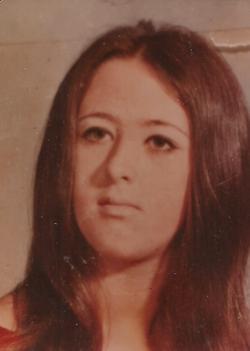
Venora Hyatt, a 44-year-old woman from Mobile, Alabama, was swept into one of the darkest murder cases the Gulf Coast had seen in the mid-1970s. By the time her death was tied to a known killer, the picture that emerged was grim and deeply unsettling. Court records and later reporting describe Hyatt as one of the women Thomas Whisenhant targeted in Mobile after his release on parole.
Those records say that on April 16, 1976, she was kidnapped and murdered, and that the killer returned the next day to mutilate her body, a detail that would later stand out as part of a horrifying pattern in the case.
For a time, her killing appears to have lived in that terrible space between violence and certainty, where a family knows something monstrous has happened but does not yet know who carried it out. Public reporting from October 1976 shows that authorities did not bring charges in Hyatt's death immediately after she was killed. The break came only after Whisenhant was arrested in the separate slaying of Cheryl Payton, another abducted convenience store clerk from the Mobile area. After that arrest, Mobile County authorities charged Thomas Wayne Whisenhant, then 29 and of Irvington, with murder in the deaths of both Cheryl Payton and Venora Hyatt.
What followed gave Hyatt's case a terrible clarity. Federal appellate records tied to later civil litigation state that Whisenhant confessed to the killing of Venora Hyatt, along with other murders committed in Mobile after his parole. Those records place Hyatt's death in the middle of a sequence: Patricia Hitt in November 1975, Venora Hyatt in April 1976, and Cheryl Payton in October 1976. The similarities among the crimes, especially the return to the body after the killing, made it clear that Hyatt had not died at the hands of an unknown drifter passing through town, but as one victim in a serial pattern of predation that investigators only fully understood after Whisenhant was caught.
As for suspects, arrests, and convictions, the online record points overwhelmingly to Whisenhant as the central and ultimately admitted killer in Hyatt's case. I did not find credible online reporting identifying any other enduring suspect who was arrested and prosecuted for her murder. The decisive legal outcome came later: according to court materials from Whisenhant's long appellate history, he pleaded guilty in 1981 to the first-degree murders of Venora Hyatt and Patricia Hitt and received life without parole for each of those killings. His name remained most publicly associated with the death sentence he received in the Cheryl Payton case, but Hyatt's killing was not left hanging as an unsolved accusation. In the end, the record shows that her murder was formally laid at Whisenhant's feet through charge, confession, and guilty plea.