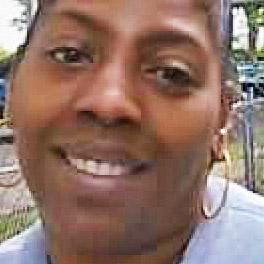
Irene Smith, a 25-year-old Black woman, was killed in Milwaukee on November 28, 1992, in a homicide that would remain unsolved for nearly 17 years. Her body was discovered early that morning inside a trash cart in an alley in the area of the 3000 block of North 6th and North 7th streets. Investigators determined that she had suffered stab wounds to her neck and had also been manually strangled.
Medical findings later cited in court records described her death as resulting from severe blood loss caused by the neck wounds in combination with strangulation.
At the time of the killing, police had no identified offender they could successfully prosecute. Smith's death was added to Milwaukee's unsolved homicide cases. The location would become particularly significant two years later, when Carron Kilpatrick was found stabbed and strangled in another trash cart in essentially the same alley. Investigators did not initially know that the area was close to the home where Walter E. Ellis lived with his mother, and the two murders were not immediately tied to him.
Authorities later reconstructed a disturbing circumstance surrounding Smith's killing. In November 1992, Ellis was confined to a Milwaukee halfway house while serving a sentence connected to a federal drug conviction. Records showed that residents could leave with authorized passes, but investigators later learned that some workers were accepting bribes and allowing inmates to leave without recording the departures. Ellis had an authorized job-search pass on November 27, leaving at approximately 9 a.m. and officially returning by about 3 p.m. Prosecutors later alleged that he bribed his way out of the facility again that night without the unauthorized absence appearing in the records. Smith was found dead the following morning.
The physical evidence preserved from Smith's homicide eventually became the key to identifying her killer. DNA recovered during the investigation remained available as forensic technology advanced. Years later, detectives examining a series of unsolved Milwaukee murders realized that the same male DNA profile was appearing in multiple homicide cases involving women killed over a period spanning more than two decades. In 2009, investigators obtained DNA associated with Ellis, including a sample developed from his toothbrush, and it matched genetic evidence connected to Smith and other victims.
The discovery exposed a major missed opportunity in the investigation. Ellis had been required to provide a DNA sample years earlier while incarcerated, and a sample was collected in 2001 for Wisconsin's state databank. Authorities later determined that his proper DNA profile had not been entered into the system. Reports indicated that another inmate's DNA had been submitted under Ellis's identity, and although discrepancies were noticed, the problem was not corrected. As a result, Ellis's actual profile was unavailable for comparison with evidence from the unsolved murders for years.
Police arrested Walter E. Ellis in the Milwaukee-area community of Franklin in September 2009 after the renewed DNA investigation linked him to multiple killings. Prosecutors initially charged him in two homicides and soon expanded the case, charging him with five additional murders, including Smith's. The amended prosecution alleged that Ellis had killed seven women in Milwaukee between 1986 and 2007. In Smith's case, the combination of preserved forensic evidence and the DNA match provided prosecutors with the evidence that had been unavailable to detectives in 1992.
Ellis was preparing to face a lengthy trial when the case came to an unexpected conclusion on February 18, 2011. He entered no-contest pleas to seven counts of first-degree intentional homicide. Although a no-contest plea did not require him to personally admit the killings, it allowed the court to find him guilty based on the prosecution's evidence. Members of Smith's family were disappointed that the case did not proceed to trial because they had hoped a trial might reveal more about why and how Ellis committed the murders and how he escaped detection for so many years. Smith had three children, the oldest of whom was only seven when she was killed.
On February 24, 2011, Milwaukee County Circuit Judge Dennis Cimpl sentenced Ellis to seven consecutive life terms. Smith's daughter, Dominika Walton, spoke at the sentencing and expressed anger that Ellis had chosen a no-contest plea rather than openly accepting responsibility for what he had done. Ellis declined to explain his crimes or address the families, leaving many questions about his motives unanswered. The conviction nevertheless formally resolved the homicide that had remained on Milwaukee's unsolved list since that November morning in 1992.