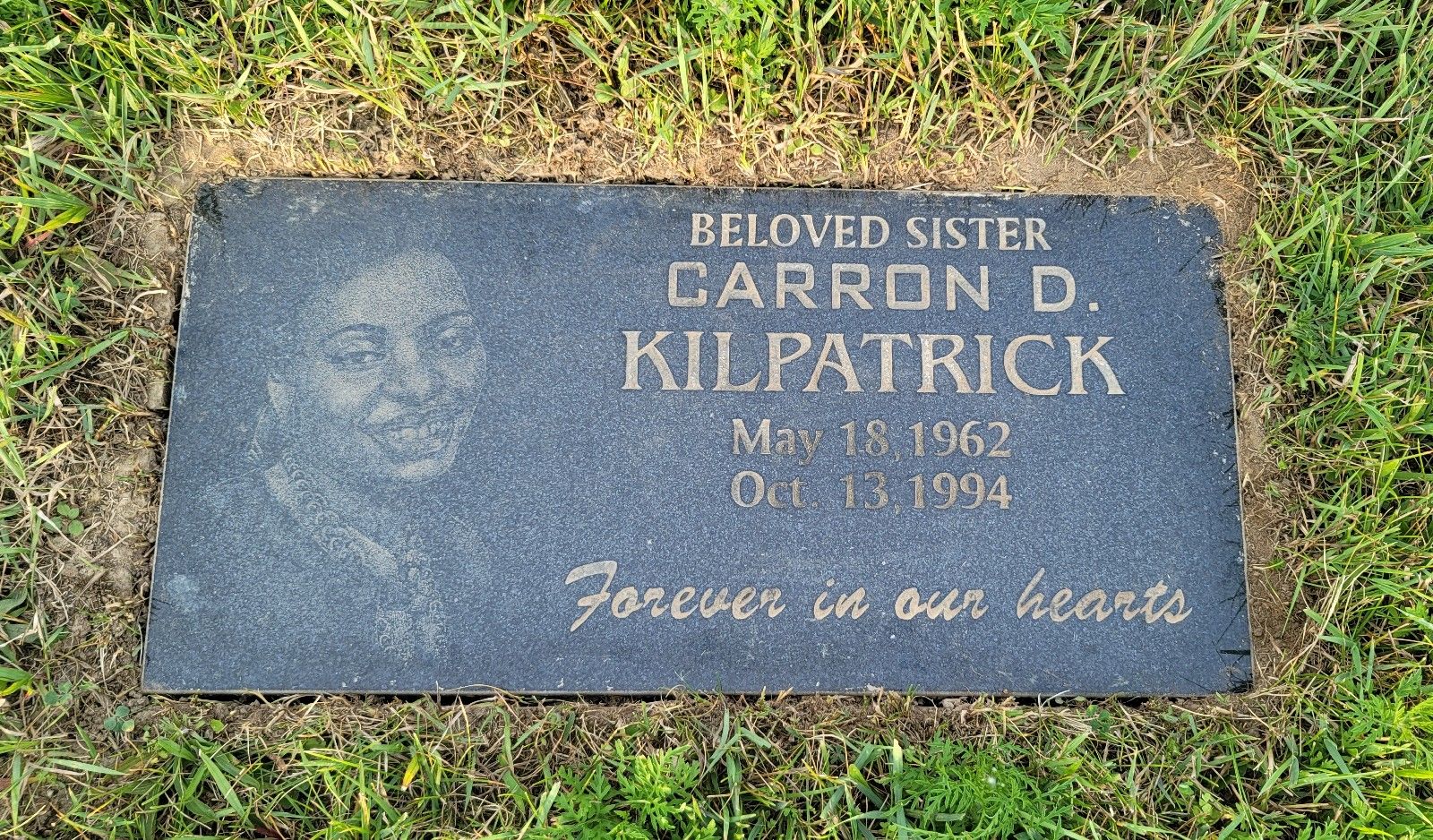
In the autumn of 1994, the life of 32-year-old Carron D. Kilpatrick, a mother of five, came to a brutal and tragic end in Milwaukee, Wisconsin. On October 13, her body was discovered, discarded in a trash cart in an alley. An investigation revealed that she had been both strangled and stabbed. The initial focus of the police investigation quickly centered on her live-in boyfriend, Curtis McCoy.
The evidence against him appeared substantial, with two witnesses and a confession forming the basis of the prosecution's case. In October 1994, McCoy was formally charged with the murder of the mother of his daughter. Despite the seemingly strong case against him, the trial that followed did not result in a conviction. A jury acquitted Curtis McCoy of Carron D. Kilpatrick's murder, leaving the question of her killer officially unanswered. Although acquitted, the accusation had a devastating and lasting impact on McCoy's life; he lost his children, his home was vandalized, and he was left in poor health.
For years, the murder of Carron D. Kilpatrick remained a cold case, a painful and unresolved chapter for her family and the community. The initial investigation had seemingly reached a dead end with the acquittal of the primary suspect. However, advances in forensic science would eventually shed new light on this and other unsolved homicides in Milwaukee. In a turn of events that no one could have foreseen at the time of her death, Kilpatrick's case was re-examined as part of a larger investigation into a series of murders of women in the city. This new investigation utilized DNA technology that was not available in 1994. The analysis of evidence from the crime scene of Kilpatrick's murder would ultimately connect her death to a string of other violent crimes that had plagued Milwaukee for over two decades. This breakthrough would not only reveal the identity of a serial killer but also expose a miscarriage of justice in another case.
The DNA evidence uncovered years after her death linked Carron D. Kilpatrick's murder to Walter E. Ellis, a man who would come to be known as the "Milwaukee North Side Strangler." Ellis was a serial killer responsible for the deaths of at least seven women in Milwaukee between 1986 and 2007. His DNA was found on Kilpatrick's body, definitively connecting him to the crime. Despite this powerful forensic link, prosecutors ultimately decided not to charge Ellis with Kilpatrick's murder, stating that they did not believe they could meet the requisite burden of proof in her specific case. The investigation into Ellis had also exonerated another man who had been wrongfully convicted of one of the other murders. Walter E. Ellis was eventually convicted for the murders of seven other women and sentenced to life in prison, where he died in 2013. While her case was officially linked to a notorious serial killer, the lack of a formal charge and conviction in her specific murder left a lingering sense of incomplete justice for Carron D. Kilpatrick and her family. The case serves as a stark example of how the justice system can both fail and, through scientific advancement, later uncover the truth, even if the final resolution is not what was hoped for.