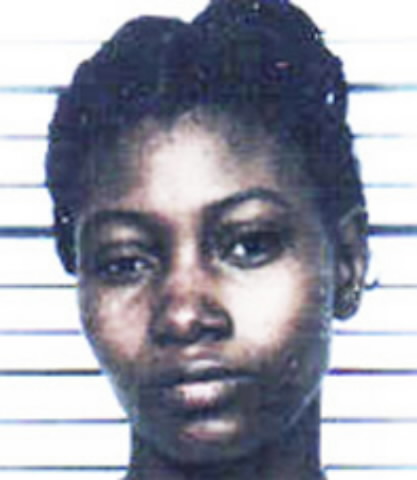
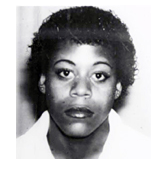
Florence McCormick was a 28-year-old Black/African American woman whose life ended violently in Milwaukee on April 24, 1995. Her body was discovered in the basement of a vacant house in the 600 block of West Locust Street after workers entered the property to perform repairs. The building had been boarded up, although investigators noted that a window was broken. McCormick had been strangled, and what initially appeared to be another isolated Milwaukee homicide would ultimately become part of a much larger series of killings.
Details later recounted from the criminal complaint showed the disturbing circumstances in which police found her. McCormick was lying on her back near the foot of a laundry sink. Her wrists had been secured with rope and she had been tied to the washtub sink, with the rope also extending around her neck. Officers observed that her body was already cold and that rigor mortis appeared to be developing. The physical evidence and the manner of death established that she had been deliberately restrained and strangled.
For years, investigators did not know who had killed McCormick. Her case eventually became important to a developing pattern of unsolved Milwaukee homicides in which victims had been strangled and, in several instances, left in or near vacant properties. Advances in DNA testing gradually allowed investigators to compare biological evidence preserved from the cases. In May 2009, the Wisconsin State Crime Laboratory reported that DNA associated with McCormick matched the same unknown profile already connected to other Milwaukee homicide victims. Her case became the seventh homicide publicly linked to the unidentified suspect. Milwaukee police and prosecutors intensified their investigation, reviewing older cases, examining connections among the victims and pursuing additional DNA testing.
The breakthrough eventually led investigators to Walter E. Ellis, a Milwaukee resident whose name surfaced during the Cold Case Squad's review of the unsolved killings. Detectives Gilbert Hernandez and Katherine Hein and other investigators sifted through thousands of cases and tested DNA from numerous individuals while attempting to identify the person behind the genetic profile. Investigators obtained DNA connected to Ellis and determined that it matched evidence associated with the homicide series. Ellis was taken into custody at a motel in Franklin in September 2009. He was initially charged in two of the killings, and prosecutors subsequently added five more homicide counts, including a charge accusing him of killing McCormick.
The amended criminal case accused Ellis of killing McCormick as well as Deborah Harris, Tanya Miller, Irene Smith, Sheila Farrior, Joyce Mims and Quithreaun Stokes. Prosecutors ultimately charged him with five counts of first-degree intentional homicide and two counts under Wisconsin's earlier first-degree murder statute. Investigators said DNA linked Ellis to all seven cases. At the time the additional charges were filed, prosecutors did not report that Ellis had confessed, and the criminal complaint gave no indication that he had admitted responsibility.
Ellis initially pleaded not guilty and appeared headed toward trial. That changed on February 18, 2011, when he entered no-contest pleas to all seven homicide charges. A no-contest plea resulted in convictions without requiring Ellis to personally admit that he committed the murders. Judge Dennis Cimpl found him guilty on five counts of first-degree intentional homicide and two counts of first-degree murder.
On February 24, 2011, Ellis was sentenced to seven consecutive life sentences with no possibility of parole. The sentencing formally resolved McCormick's homicide more than fifteen years after she was found in the vacant Milwaukee house. DNA evidence that had not been capable of identifying her killer when the crime occurred ultimately connected her death to a series spanning from 1986 through 2007 and provided the evidence that led to Ellis's arrest, prosecution and conviction. Ellis later died while incarcerated on December 1, 2013.