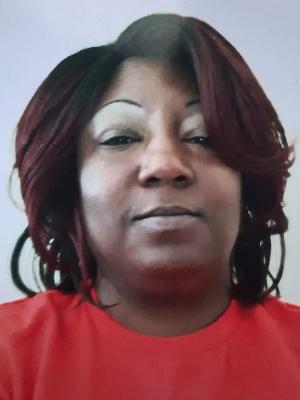
Deborah L. Harris was a 31-year-old Black/African American woman whose life ended violently in Milwaukee in October 1986. Online records consistently place her death and the discovery of her body on October 10, 1986, rather than October 11. Harris had moved to Milwaukee hoping for a better life, and a friend later remembered her as a generous and loving person. Her body was found in the Menomonee River.
Investigators determined that she had been strangled and believed she had been killed somewhere else before her body was placed in the water.
At the time, there was little to reveal that Harris's killing was the beginning of a much larger series of murders. Only one day after her body was discovered, another woman, Tanya L. Miller, was found strangled between a house and a garage in Milwaukee. Over the following two decades, additional women were found murdered, many of them strangled and left in vacant buildings or other isolated locations on Milwaukee's north side. Harris eventually became recognized as the earliest known victim in a series of seven murders for which Walter E. Ellis would ultimately be convicted.
For years, Harris's homicide remained unresolved. The major breakthrough came through cold-case DNA work. By 2009, forensic testing had connected evidence from a series of Milwaukee homicides to the same genetic profile. Investigators began focusing on Walter Earl Ellis, a Milwaukee man with an extensive criminal history. Police obtained a search warrant for his residence and seized a toothbrush identified as belonging exclusively to Ellis. Testing confirmed that DNA recovered from the toothbrush matched genetic evidence associated with the homicide investigation, allowing detectives to connect Ellis to the string of killings that had remained unsolved for years.
The investigation also revealed a major reason Ellis had avoided identification earlier. He had been required to provide a DNA sample while incarcerated, but authorities later said another inmate submitted a sample in his place. That left Ellis's actual genetic profile out of the state database when evidence from unsolved homicides was being compared against convicted offenders. The failure delayed the identification of the man whose DNA was being found in the murder investigations.
Ellis was arrested in September 2009 after authorities confirmed the DNA connection. Prosecutors initially charged him in two murders and soon added five additional homicide charges, including Harris's killing. Because Harris and Miller were killed in 1986, Ellis was charged with first-degree murder under the Wisconsin statute in effect at that time; the later killings were prosecuted as first-degree intentional homicides. The seven charged victims were Harris, Miller, Irene Smith, Florence McCormick, Sheila Farrior, Joyce Mims and Ouithreaun Stokes.
Ellis initially maintained a not-guilty position and was preparing for trial, but on February 18, 2011, he unexpectedly entered no-contest pleas to all seven murders. A no-contest plea did not require him to formally admit committing the killings, but it permitted the court to find him guilty and sentence him as though he had pleaded guilty. Milwaukee County Circuit Judge Dennis Cimpl convicted him on five counts of first-degree intentional homicide and two counts of first-degree murder.
On February 24, 2011, Ellis was sentenced to seven consecutive life sentences without the possibility of parole. During the sentencing proceedings, Patricia Donald spoke in memory of Harris and described the woman she had known before the murder—a person who had come to Milwaukee seeking a better future and whose life instead became the first known chapter in a murder series that would remain hidden for more than two decades. Ellis offered no explanation for the killings. He later died while incarcerated in December 2013.