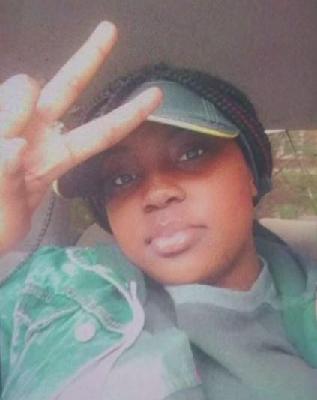
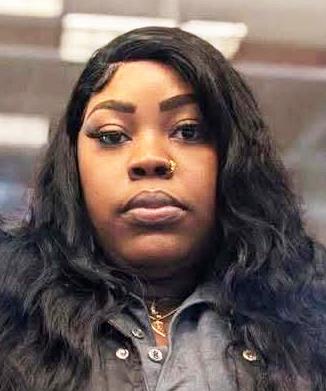
Sharita Barber, a 47-year-old Black woman from Milwaukee, was killed late on February 28, 2026, after what authorities described as a minor vehicle collision escalated into an armed confrontation in Milwaukee’s Deer District. The shooting occurred at approximately 11:34 p.m. near West Vel R. Phillips Avenue and West State Street, an area crowded with people leaving several downtown events.
Barber had attended a BossMan Dlow concert at the newly opened Landmark Credit Union Live venue earlier that evening and had posted on social media from the concert less than an hour before the fatal encounter.
According to the criminal complaint and surveillance evidence described by prosecutors, Barber’s Jaguar was parked in front of a vehicle driven by Demetris A. Riley. As Barber attempted to pull away, her vehicle lightly backed into Riley’s vehicle. Riley and his girlfriend got out, and the three became involved in a confrontation while examining or discussing the vehicles. Investigators said Riley eventually punched and broke a window on Barber’s Jaguar. Barber then went back to her vehicle and retrieved a firearm. Video evidence reportedly showed her pointing the weapon at Riley during the increasingly heated dispute and making a threatening statement concerning the damage to her vehicle.
The confrontation then turned deadly. Prosecutors alleged that Riley’s girlfriend retrieved Riley’s firearm from his vehicle and fired two shots at Barber. Barber fell to the pavement and, according to the complaint’s description of the available video, remained motionless afterward. Investigators said the footage did not show her attempting to retrieve or use her firearm once she was on the ground.
Authorities alleged that Riley then took the firearm from his girlfriend, approached or passed Barber as she lay in the street, and fired at least four additional rounds at her. He then returned to his vehicle and attempted to leave. Prosecutors said Riley backed into another vehicle before driving forward and running over Barber as he fled the area. Forensic investigators determined that six cartridge casings recovered in connection with the shooting had been fired from Riley’s firearm, while investigators reported no evidence that Barber’s firearm had been discharged.
A registered nurse who had been attending an event at nearby Turner Hall heard the gunfire and ran toward the scene. The nurse and another person began providing emergency aid until police and other first responders arrived. Despite those efforts, Barber died at the scene. The medical examiner documented six gunshot wounds along with extensive blunt-force injuries associated with being struck by the vehicle. According to the criminal complaint, medical findings supported investigators’ conclusion that Barber was still alive during the later stages of the attack, including when she was struck by additional gunfire and run over.
Milwaukee police initially announced that they were searching for those responsible. Within several days, investigators reported that two people connected to the case had been taken into custody. Police identified the arrestees at that stage only as a 26-year-old man and a 24-year-old female companion. Riley subsequently emerged publicly as the primary defendant. He turned himself in to Milwaukee police on March 2 and, with an attorney present, provided a statement to investigators.
Riley reportedly acknowledged that his girlfriend had fired first, telling investigators that she had been defending him because Barber had pointed a firearm in his direction. Riley also acknowledged firing additional shots himself. According to the complaint, he said he believed Barber might have other people coming to the scene and claimed he thought she was reaching for her firearm. Prosecutors relied heavily on the collected video evidence in disputing that account, alleging that the footage showed Barber remaining motionless after the initial shots and making no further movement toward her weapon.
Riley also admitted driving over Barber while leaving, according to the complaint. He reportedly told police he feared for his safety and that Barber was lying in the path of his vehicle as he attempted to escape. Prosecutors, however, treated the subsequent shots and the act of driving over Barber as part of an intentional killing rather than a justified response to an immediate threat.
On March 5, prosecutors charged Demetris A. Riley with first-degree intentional homicide. The charge is a Class A felony under Wisconsin law and exposes a defendant to life imprisonment if convicted. Reporting on the case also described a dangerous-weapon penalty enhancer that could affect the eventual sentence. During Riley’s initial court appearance, a Milwaukee County court commissioner set cash bond at $200,000 and imposed a no-contact order. A preliminary hearing was scheduled as the prosecution moved forward.
Riley’s girlfriend was also arrested in connection with the incident, and the criminal complaint attributed the first two shots to her. Early reporting indicated that prosecutors were not planning to charge her, but an amended complaint subsequently removed language explicitly stating that no charges would be filed against her. Publicly available reporting reviewed for the case does not establish that she was later separately charged, and she was not identified as a co-defendant in the homicide charge reported against Riley.
In the days following the killing, Barber’s family and friends gathered to remember her. Relatives described her as an important presence within the family, and a vigil was held in Milwaukee with loved ones, including her two sons, in attendance. Her family also publicly appealed for an end to gun violence, emphasizing that a relatively minor disagreement had escalated into a loss that could not be undone.
As of the most recent online reporting located, Riley remained accused of first-degree intentional homicide in Barber’s death. No reliable online source located documents a completed trial, guilty verdict, acquittal, plea agreement, or sentencing. The allegations against Riley therefore remain criminal accusations unless and until they are resolved through the court process.