Jiverly Wong and the 2009 Binghamton American Civic Association Massacre
Background
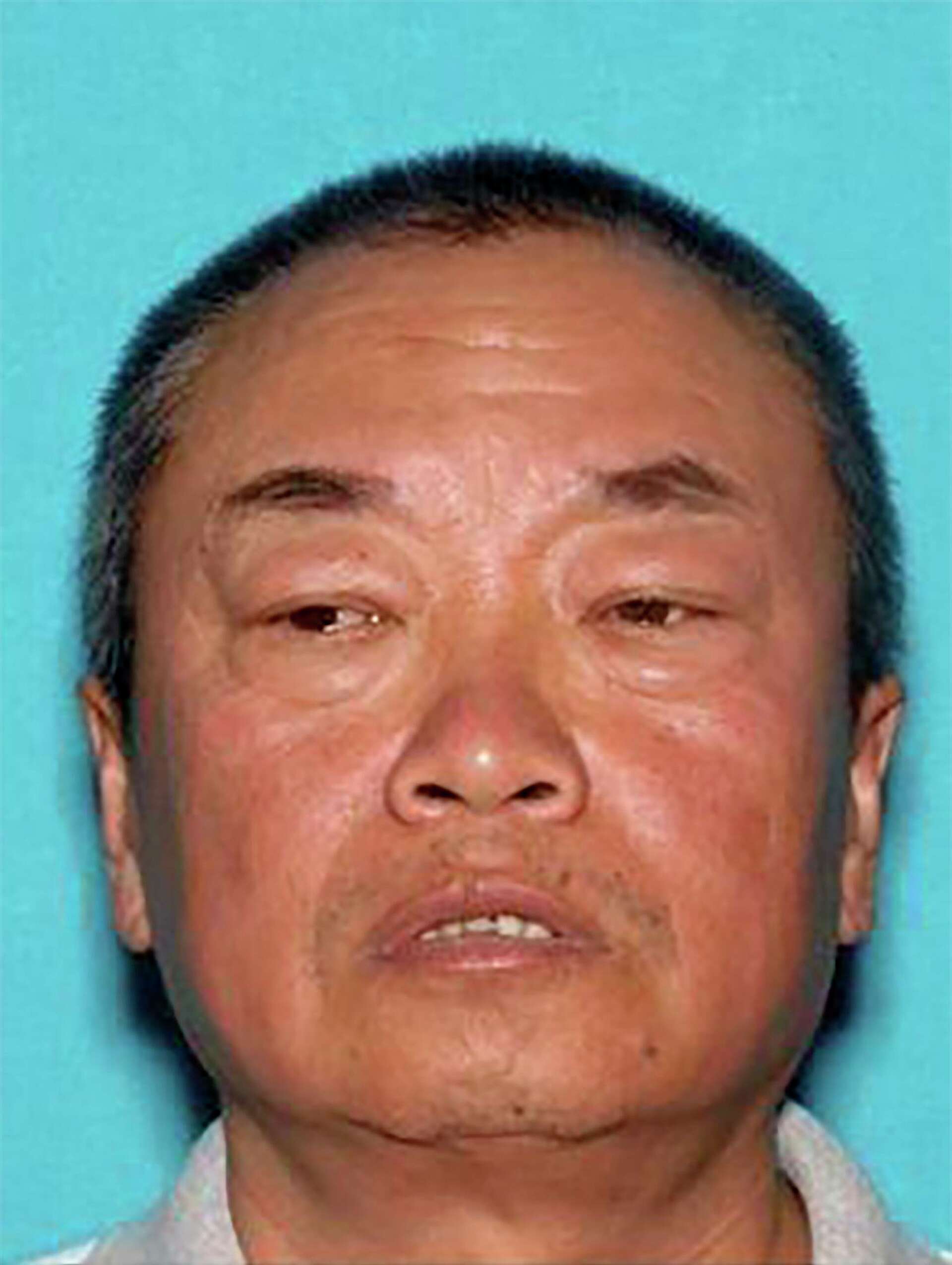
Jiverly Antares Wong was responsible for a mass shooting at the American Civic Association in Binghamton, New York, on April 3, 2009. Wong killed 13 people and seriously wounded four others before taking his own life. The attack occurred inside an organization devoted to helping immigrants and refugees adjust to life in the United States through English-language instruction, citizenship preparation, employment assistance, and other community services.
Wong was born Linh Phat Voong in South Vietnam on December 8, 1967. He immigrated to the United States with his family in 1990 and later became a naturalized American citizen. He legally changed his name to Jiverly Antares Wong, although his surname was sometimes reported as Voong. By 2009, he was living in Johnson City, New York, near Binghamton.
Wong had lived at different times in New York and California and had worked in manufacturing and industrial employment. People who encountered him described a man who struggled to communicate in English and appeared increasingly isolated. He had previously attended English classes at the American Civic Association, but his attendance was irregular, and he stopped going before the massacre.
Employment Problems and Reported Grievances
In the period before the shooting, Wong had lost his job at a vacuum-cleaner manufacturing facility in nearby Endicott. Reports indicated that he had been upset about unemployment, financial problems, and what he believed was disrespectful treatment by other people. He reportedly felt humiliated by his limited English skills and believed that police officers and members of the community had treated him unfairly.
Shortly before the attack, Wong mailed a handwritten letter to a television station. The letter contained disorganized complaints about police, employment difficulties, language problems, and perceived mistreatment. He claimed that police officers had repeatedly harassed him, although investigators did not find evidence supporting the broad accusations contained in the letter.
The letter did not provide a clear or rational explanation for his decision to murder people at the civic center. Authorities ultimately described the precise motive as uncertain. The victims were primarily immigrants, civic-center employees, and students who had no known connection to Wong’s personal grievances.
Preparations for the Attack
On the morning of Friday, April 3, 2009, Wong traveled to the American Civic Association at 131 Front Street in Binghamton. He carried two semiautomatic pistols: a 9-millimeter Beretta 92FS Vertec Inox and a .45-caliber Beretta Px4 Storm. Both weapons were listed on his New York State pistol permit. He also carried additional ammunition and a hunting knife.
Wong wore body armor beneath or with his clothing. He arrived in a vehicle registered to his father and deliberately positioned it against the building’s rear entrance. By blocking that doorway, he restricted one of the primary escape routes available to the people inside.
At approximately 10:30 a.m., Wong approached the front entrance. The building contained students attending English and citizenship classes, instructors, employees, volunteers, and other visitors. Many of the people present had come to the United States seeking security, education, employment, or a better future for their families.
The Shooting Begins
Wong entered through the front of the American Civic Association and immediately began firing. He did not announce a demand or attempt to negotiate. Two receptionists near the entrance were among the first people attacked.
Maria Zobniw, a 60-year-old caseworker and receptionist, was fatally wounded. Shirley DeLucia, a 61-year-old receptionist, was shot in the abdomen. DeLucia remained motionless and pretended to be dead until Wong moved away. Despite her serious injury, she crawled beneath a desk, obtained a telephone, and contacted emergency dispatchers.
DeLucia stayed on the telephone with emergency personnel for approximately 39 minutes. She quietly described what had happened and provided information about the people trapped inside the building. Her call became one of the most important sources of information available to police during the unfolding emergency.
Attack on the Classroom
After firing in the reception area, Wong moved into a nearby classroom where an English-language lesson was underway. Sixteen people were reportedly inside the room. Wong fired repeatedly at the instructor and students, striking 13 people in that classroom.
Roberta Badaines King, a 72-year-old substitute English teacher, was leading the class that morning. King and numerous students were killed. Many of the students had immigrated from countries including China, Haiti, Iraq, Pakistan, Vietnam, Brazil, and the Philippines.
Several people survived by hiding in offices, closets, the basement, and other rooms. Others escaped through available exits or remained silent behind locked doors. Wong’s vehicle prevented people from using the rear doorway he had barricaded.
The shooting itself lasted only a few minutes. Investigators determined that Wong fired 99 rounds, including 88 rounds from the 9-millimeter handgun and 11 rounds from the .45-caliber handgun. Thirteen victims were killed, and four people suffered gunshot wounds.
Police Response and Hostage Situation
The first emergency calls were received shortly after 10:30 a.m. Police officers reached the American Civic Association within minutes and surrounded the building. Because officers initially received information suggesting that hostages remained inside with an armed attacker, they treated the incident as an active hostage and barricade situation.
Dozens of people remained hidden throughout the center. Some were gathered inside a basement area, while more than a dozen people crowded into a closet. Police negotiators attempted to communicate with the attacker, but they received no response.
Tactical officers entered and began clearing the building at approximately 11:13 a.m. Groups of survivors were gradually escorted outside. Officers searched classrooms, offices, hallways, storage areas, and other rooms while attempting to determine whether Wong was still alive.
Wong was eventually found dead inside the first-floor classroom with many of his victims. He had suffered a self-inflicted gunshot wound. Investigators concluded that he killed himself at approximately 10:33 a.m., only minutes after beginning the attack and before police entered the building.
Victims Killed on April 3, 2009
- Parveen Ali, 26 – Killed on April 3, 2009, at the American Civic Association, 131 Front Street, Binghamton, New York. Ali was an immigrant from northern Pakistan who was attending classes to improve her English.
- Almir Olímpio Alves, 43 – Killed on April 3, 2009, inside the American Civic Association classroom in Binghamton. Alves was a Brazilian mathematician, university professor, and visiting scholar at Binghamton University who was studying English.
- Marc Henry Bernard, 44 – Killed on April 3, 2009, at the American Civic Association in Binghamton. Bernard was an immigrant from Haiti and the husband of Maria Sonia Bernard.
- Maria Sonia Bernard, 46 – Killed on April 3, 2009, at the American Civic Association in Binghamton. She was an immigrant from Haiti and the wife of Marc Henry Bernard. The couple died in the same attack.
- Li Guo, 47 – Killed on April 3, 2009, inside the civic-center classroom. Guo was a visiting scholar from China who was attending English instruction.
- Lan Ho, 39 – Killed on April 3, 2009, at the American Civic Association. Ho was a Vietnamese immigrant. Her husband, Long Huynh, attempted to protect her during the gunfire and was seriously wounded.
- Layla Khalil, 53 – Killed on April 3, 2009, in Binghamton. Khalil was an Iraqi immigrant and the mother of three children who was taking English classes at the center.
- Roberta Badaines King, 72 – Killed on April 3, 2009, while teaching an English class at the American Civic Association. King was working as a substitute instructor on the morning of the attack.
- Jiang Ling, 22 – Killed on April 3, 2009, inside the American Civic Association. Ling was a young immigrant from China attending classes at the center.
- Hong Xiu “Amy” Mao, 35 – Killed on April 3, 2009, at the civic center in Binghamton. Mao was an immigrant from China who worked as a nail technician and was studying English.
- Dolores “Doris” Carbonilas Yigal, 53 – Killed on April 3, 2009, at the American Civic Association. Yigal was an immigrant from the Philippines and was attending an English-language class.
- Haihong Zhong, 54 – Killed on April 3, 2009, inside the American Civic Association. Zhong was an immigrant from China who had gone to the center for English instruction.
- Maria “Mima” Zobniw, 60 – Killed on April 3, 2009, near the reception area of the American Civic Association. Zobniw was a part-time caseworker who assisted immigrants and refugees using the organization’s services.
People Wounded
Four people survived gunshot wounds. Among them was receptionist Shirley DeLucia, whose emergency call helped police understand the situation inside the building. Although wounded in the abdomen, she remained conscious and continued communicating with dispatchers while hiding beneath a desk.
Long Huynh, a 42-year-old Vietnamese immigrant, was seriously injured while attempting to shield his wife, Lan Ho. Huynh suffered multiple gunshot wounds, including injuries to his arm, hand, chest, chin, and face. Lan Ho was killed despite his attempt to protect her.
The wounded were transported to Wilson Medical Center in Johnson City and Our Lady of Lourdes Memorial Hospital in Binghamton. Their injuries required emergency treatment, surgery, and extended recovery.
Investigation
Investigators searched Wong’s Johnson City residence, examined his firearms records, interviewed relatives and former coworkers, and reviewed the letter he mailed before the massacre. They found that the handguns used during the attack had been legally registered to him.
Authorities reconstructed the sequence of events through surveillance information, emergency calls, witness statements, ballistic evidence, and the positions of the victims. Evidence showed that the killings occurred rapidly and that Wong had already taken his own life by the time officers were establishing a perimeter around the center.
The investigation found no evidence that the victims had personally harmed Wong or that the American Civic Association had organized any campaign against him. Although he had previously attended classes at the center, the people he attacked were largely strangers who happened to be present that morning.
Questions About the Emergency Response
In the aftermath, some relatives and members of the public questioned why tactical officers did not enter the building immediately. Police officials explained that the information available at the scene was confusing and that officers believed they were confronting an armed hostage taker whose location and condition were unknown.
Later reviews concluded that Wong had already killed the victims and himself before officers could have organized an entry capable of stopping him. An official after-action examination nevertheless analyzed communications, command decisions, medical coordination, tactical procedures, and the management of survivors so agencies could improve their responses to future emergencies.
Community Impact
The massacre devastated Binghamton and the surrounding communities. The American Civic Association had long represented safety and opportunity for newcomers to the United States. The fact that immigrants were murdered while studying English and preparing for citizenship gave the tragedy an especially painful meaning.
The victims came from many nations and cultural backgrounds, but they shared similar goals. They were studying, working, raising families, pursuing academic careers, or helping other immigrants build new lives. Memorial services included religious and cultural traditions reflecting the diverse backgrounds of those killed.
The American Civic Association continued operating after the massacre. Community members, survivors, victims’ relatives, and local organizations worked to ensure that the center’s mission would not be destroyed by Wong’s actions.
Memorial
A permanent memorial was later established in Binghamton to honor the 13 victims. ACA Memorial Park contains individual plaques and symbolic artwork dedicated to those who died. Thirteen memorial elements represent the lives taken during the attack.
Annual observances have been held on or near April 3 to remember the victims, support survivors, and recognize the emergency personnel and community members affected by the tragedy. The memorial focuses on the victims’ lives and the immigrant community they represented rather than on the murderer.
Conclusion
Jiverly Wong’s attack on April 3, 2009, was a planned act of mass murder directed at people gathered inside a community service organization. He blocked an exit, entered with two handguns and additional ammunition, and fired 99 rounds before killing himself. Thirteen innocent people were murdered, four were wounded, and dozens of others experienced the terror of hiding inside the building while police attempted to rescue them.
No grievance expressed by Wong explained or justified his decision to attack immigrants, teachers, and civic-center employees. The lasting history of the Binghamton massacre is found in the lives of Parveen Ali, Almir Olímpio Alves, Marc Henry Bernard, Maria Sonia Bernard, Li Guo, Lan Ho, Layla Khalil, Roberta Badaines King, Jiang Ling, Hong Xiu Mao, Dolores Carbonilas Yigal, Haihong Zhong, and Maria Zobniw, as well as in the survivors and families permanently affected by the violence.