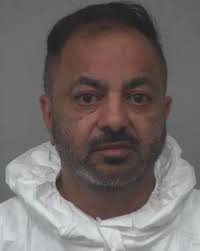
David Mora Rojas and the 2022 Sacramento Church Mass Shooting
Overview
On the evening of February 28, 2022, a father's court-ordered supervised visit with his three young daughters turned into a scene of unimaginable horror inside a church in the Arden-Arcade area of Sacramento, California. David Mora Rojas, 39, used an illegal, untraceable "ghost gun" to murder his children and the man appointed to supervise the visit. After carrying out the killings, Mora Rojas turned the weapon on himself. The tragedy, rooted in a history of domestic violence, mental instability, and legal prohibitions that failed to stop him, left a community devastated and raised urgent questions about gun laws and the enforcement of restraining orders.
The Attack at The Church in Sacramento
The shooting occurred shortly after 5:00 p.m. at The Church in Sacramento, a nondenominational Christian place of worship located on Wyda Way. David Mora Rojas was there for his weekly four-hour supervised visit with his daughters: Samia, 13, Samantha, 10, and Samarah, 9. The visit was chaperoned by Nathaniel Kong, 59, a respected church leader.
At approximately 5:07 p.m., a church worker who was downstairs heard a single gunshot, followed by several more. The employee fled the building and immediately called 911. When deputies from the Sacramento County Sheriff's Office arrived, they discovered a gruesome scene in the church's main sanctuary. Five people were dead. The bodies of the three young girls, their chaperone, and their father were all found inside. Investigators determined it was a murder-suicide, with Mora Rojas as the sole perpetrator.
The Victims
The shooting claimed four innocent lives, leaving a family and community shattered by grief.
- Samia Mora Gutierrez, 13 — The oldest of the three sisters, Samia was a student at Leroy Greene Academy. She and her sisters were described by their aunt as being "loved endlessly by everyone who surrounded them."
- Samantha Mora Gutierrez, 10 — A student at Bannon Creek Elementary, Samantha was remembered as a trusting and kind friend. A classmate recalled filming dance videos with her just days before her death, saying, "if you felt something, you could talk to her."
- Samarah Mora Gutierrez, 9 — The youngest sister, Samarah also attended Bannon Creek Elementary. A school staff member described her and her sisters as "really, really sweet girls."
- Nathaniel Kong, 59 — An executive and elder at The Church in Sacramento, Kong was supervising the visit as a favor to the girls' mother. He was a friend of the family and had previously served Mora Rojas with the restraining order that mandated the supervised visits.
The Perpetrator
David Fidel Mora Rojas, 39, was the father of the three girls he murdered. He was a Mexican national who had entered the United States on a visitor visa in December 2018 and overstayed, making his presence in the country illegal. Friends described him as a hard-working but aggressive and "very emotional" man who struggled with mental health issues and substance abuse.
At the time of the shooting, Mora Rojas had an informal arrangement to live at the church, though his daughters and their mother lived elsewhere. His relationship with the girls' mother, his partner of 15 years, had disintegrated due to his violent and erratic behavior.
A History of Violence and Warning Signs
The massacre was preceded by numerous and clear warning signs. In April 2021, the girls' mother filed for a domestic violence restraining order against Mora Rojas. In her court declaration, she described him as jealous, mentally unstable, and dangerous. "He threatened to kill me if he ever caught me cheating," she wrote. "He has choked me in the past." She stated he had told her the only reason he hadn't killed her was because "he would not know where to go with the children."
The court filing also revealed that Mora Rojas had been hospitalized for a week in April 2021 after expressing suicidal intentions. Following this, a temporary restraining order was granted. On May 19, 2021, a five-year restraining order was put in place. It explicitly prohibited him from possessing a gun or ammunition, required him to take anger management classes, and stipulated that he could only see his daughters during supervised visits.
Despite the restraining order, Mora Rojas's volatile behavior continued. Just five days before the shooting, on February 23, 2022, he was arrested in Merced County, south of Sacramento. He was charged with driving under the influence, resisting arrest, and felony battery on a police officer after assaulting a California Highway Patrol officer. He was released on bail shortly after this arrest.
The Weapon and Investigation
Investigators quickly determined that Mora Rojas used a privately made firearm, often called a "ghost gun." The weapon, an AR-15-style semi-automatic rifle, had no serial number or manufacturer markings, making it untraceable. He was armed with an extended 30-round magazine, and 17 casings were found at the scene. The restraining order legally barred him from owning any firearm, and his ex-girlfriend had stated in court filings that she was not aware of him having any guns. The use of a ghost gun highlighted a growing crisis, as these weapons can be assembled from kits bought online without the background checks required for traditional firearm purchases.
The shooting also brought scrutiny upon California's "sanctuary state" law. U.S. Immigration and Customs Enforcement (ICE) had requested notification of Mora Rojas's release from jail following his Merced County arrest due to his immigration status. However, under California law, which limits cooperation between local law enforcement and federal immigration authorities for non-violent offenses, the Merced County Sheriff's Office did not notify ICE.
Aftermath and Legacy
In the days following the tragedy, a memorial of flowers, stuffed animals, and candles grew outside The Church in Sacramento. The Natomas Unified School District, where the three girls were students, brought in counselors and chaplains to support grieving students and staff. "There are very few words that can give comfort right now for this unspeakable tragedy," the district said in a statement.
The family of the victims released a statement thanking the community for their support while asking for privacy to mourn. The church body expressed its devastation, calling the event a "senseless tragedy."
The murders committed by David Mora Rojas served as a horrific example of the deadly intersection of domestic violence, mental illness, and the accessibility of illegal firearms. The case intensified calls for stricter gun control measures, particularly concerning ghost guns, and sparked debate over the effectiveness of restraining orders and sanctuary state policies in preventing such violent outcomes. For the Sacramento community, it was a heartbreaking loss that underscored the vulnerability of children in the face of domestic turmoil and the catastrophic failure of the systems designed to protect them.