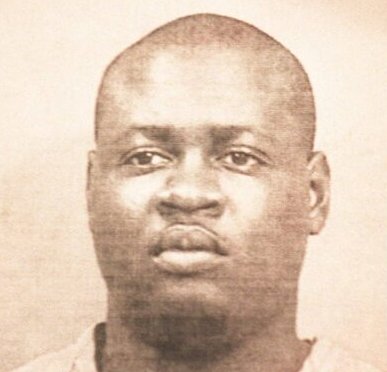
Adam Lanza and the 2012 Sandy Hook Elementary School Massacre
Background
Adam Peter Lanza was a 20-year-old resident of Newtown, Connecticut, who carried out the mass murder at Sandy Hook Elementary School on December 14, 2012. Before taking his own life, Lanza killed 27 people: his mother at their home and 20 children and six educators at the school. The attack became one of the deadliest school shootings in United States history and devastated the close-knit Newtown community.
Lanza was born on April 22, 1992, in Exeter, New Hampshire. His parents later moved to Connecticut, and he attended several schools in the Newtown area, including Sandy Hook Elementary School. People who encountered him during his childhood and adolescence generally described him as intelligent, quiet, socially withdrawn and increasingly isolated. He experienced serious difficulties with communication, anxiety and ordinary social interaction.
Medical and educational records examined after the massacre documented developmental and psychiatric concerns, including severe anxiety, obsessive behavior, sensory difficulties and an autism-spectrum diagnosis. These conditions, however, did not by themselves explain or predict his violence. Investigators found no evidence establishing that autism caused the attack, and experts repeatedly warned against connecting developmental disorders with mass murder.
Increasing Isolation
During his later teenage years, Lanza withdrew almost completely from public life. He communicated with his mother largely through email despite living in the same house and spent much of his time alone with computers. He showed an extensive interest in mass shootings and other acts of mass violence, compiling information about numerous killers and their victims.
Lanza lived with his mother, Nancy Lanza, at 36 Yogananda Street in Newtown. Firearms belonging to Nancy were kept in the residence, and Adam had learned to use guns. Authorities found no criminal record that would have prevented him from possessing or accessing firearms. Evidence collected after the massacre showed that he had access to several weapons and a large quantity of ammunition stored in the home.
Shortly before the killings, Lanza damaged the hard drive from his computer, making it difficult for investigators to recover some of its contents. Although specialists later examined his writings, computer activity, medical history and personal interests, no document was found that clearly explained why he selected December 14 or Sandy Hook Elementary School for the attack.
Murder of Nancy Lanza
On the morning of Friday, December 14, 2012, Adam Lanza entered his mother’s bedroom at their Yogananda Street home. Nancy Lanza, 52, was in bed when he shot her four times in the head with a .22-caliber Savage Mark II bolt-action rifle. She died at the scene.
After killing his mother, Lanza took several of her firearms, ammunition and her black Honda Civic. He drove approximately five miles to Sandy Hook Elementary School at 12 Dickinson Drive in the Sandy Hook section of Newtown. School was already in session, and hundreds of children and staff members were inside.
Arrival at Sandy Hook Elementary School
Lanza arrived at the school shortly after 9:30 a.m. He was dressed primarily in black and carried a Bushmaster XM15-E2S semiautomatic rifle, a Glock 20SF pistol and a SIG Sauer P226 pistol. A Saiga-12 shotgun remained inside the car and was not used during the massacre.
The school’s exterior doors had been locked as part of its security procedures. At approximately 9:35 a.m., Lanza used the Bushmaster rifle to shoot through a glass panel beside the main entrance. He entered through the damaged doorway and immediately encountered school employees who had heard the noise and came to investigate.
Murders in the Hallway
Principal Dawn Hochsprung, school psychologist Mary Sherlach and other staff members had been participating in a meeting near the main entrance. Hochsprung and Sherlach moved toward the disturbance and were fatally shot in the hallway. Other employees were wounded or managed to escape and warn the rest of the school.
Teacher Natalie Hammond was shot and wounded but survived. Another staff member activated or left open the school’s public-address system, allowing the sounds of gunfire to be heard in classrooms. Teachers responded by locking doors, turning off lights and hiding children in closets, bathrooms and corners of their rooms.
Attack on the First-Grade Classrooms
Lanza entered two adjoining first-grade classrooms near the front of the building. The majority of the murders occurred in those rooms within only a few minutes. The victims were primarily six- and seven-year-old children.
In Room 8, substitute teacher Lauren Rousseau and behavioral therapist Rachel D’Avino attempted to protect the children. Rousseau had gathered students toward the rear of the classroom and in a small bathroom area. Lanza entered and opened fire, killing Rousseau, D’Avino and 15 children. One child survived in the room.
Lanza then attacked Room 10, the classroom of teacher Victoria Soto. Soto and other staff members had attempted to conceal students. During the assault, several children escaped from the classroom and ran from the building. Soto, special-education teacher Anne Marie Murphy and five children were killed. Murphy was found shielding six-year-old Dylan Hockley.
Some early accounts of the classroom attack differed regarding the exact order of events and what was said between Lanza, the teachers and the children. The official investigation concluded that the precise sequence inside Rooms 8 and 10 could not be determined with certainty. What was clear was that educators acted quickly to conceal and protect their students, and several died while positioned near the children they were trying to save.
Police Response and Lanza’s Death
The first emergency call reporting gunfire at Sandy Hook Elementary School was received at approximately 9:35 a.m. Newtown police officers immediately traveled to the campus. The shooting inside the school lasted less than 11 minutes, with most of the killings occurring during an even shorter period.
At approximately 9:40 a.m., as police officers reached the school grounds and approached the building, Lanza used the Glock pistol to shoot himself in Room 10. He died before officers entered the classroom. The Bushmaster rifle and pistols were recovered near his body.
Eighteen children and the six adult school employees were pronounced dead at Sandy Hook Elementary School. Two critically wounded children were transported to Danbury Hospital, where they were pronounced dead. Two other people injured during the attack survived.
Victims
- Nancy Lanza, 52 — Adam Lanza’s mother, killed on December 14, 2012, at their home on Yogananda Street in Newtown, Connecticut.
- Charlotte Bacon, 6 — First-grade student killed on December 14, 2012, at Sandy Hook Elementary School in Newtown, Connecticut.
- Daniel Barden, 7 — First-grade student killed on December 14, 2012, at Sandy Hook Elementary School.
- Olivia Engel, 6 — First-grade student killed on December 14, 2012, at Sandy Hook Elementary School.
- Josephine Gay, 7 — First-grade student killed on December 14, 2012, at Sandy Hook Elementary School.
- Dylan Hockley, 6 — First-grade student killed on December 14, 2012, at Sandy Hook Elementary School.
- Madeleine Hsu, 6 — First-grade student killed on December 14, 2012, at Sandy Hook Elementary School.
- Catherine Hubbard, 6 — First-grade student killed on December 14, 2012, at Sandy Hook Elementary School.
- Chase Kowalski, 7 — First-grade student killed on December 14, 2012, at Sandy Hook Elementary School.
- Jesse Lewis, 6 — First-grade student killed on December 14, 2012, at Sandy Hook Elementary School.
- Ana Márquez-Greene, 6 — First-grade student killed on December 14, 2012, at Sandy Hook Elementary School.
- James Mattioli, 6 — First-grade student killed on December 14, 2012, at Sandy Hook Elementary School.
- Grace McDonnell, 7 — First-grade student killed on December 14, 2012, at Sandy Hook Elementary School.
- Emilie Parker, 6 — First-grade student killed on December 14, 2012, at Sandy Hook Elementary School.
- Jack Pinto, 6 — First-grade student killed on December 14, 2012, at Sandy Hook Elementary School.
- Noah Pozner, 6 — First-grade student killed on December 14, 2012, at Sandy Hook Elementary School.
- Caroline Previdi, 6 — First-grade student killed on December 14, 2012, at Sandy Hook Elementary School.
- Jessica Rekos, 6 — First-grade student killed on December 14, 2012, at Sandy Hook Elementary School.
- Avielle Richman, 6 — First-grade student killed on December 14, 2012, at Sandy Hook Elementary School.
- Benjamin Wheeler, 6 — First-grade student killed on December 14, 2012, at Sandy Hook Elementary School.
- Allison Wyatt, 6 — First-grade student killed on December 14, 2012, at Sandy Hook Elementary School.
- Rachel D’Avino, 29 — Behavioral therapist killed on December 14, 2012, while working in a first-grade classroom at Sandy Hook Elementary School.
- Dawn Hochsprung, 47 — School principal killed on December 14, 2012, after responding to the sound of Lanza entering the school.
- Anne Marie Murphy, 52 — Special-education teacher killed on December 14, 2012, in Room 10 at Sandy Hook Elementary School.
- Lauren Rousseau, 30 — Substitute first-grade teacher killed on December 14, 2012, in Room 8 at Sandy Hook Elementary School.
- Mary Sherlach, 56 — School psychologist killed on December 14, 2012, in the hallway near the school’s main entrance.
- Victoria Leigh Soto, 27 — First-grade teacher killed on December 14, 2012, while attempting to protect students in Room 10.
Investigation and Unresolved Motive
Connecticut State Police, the Newtown Police Department and numerous state and federal agencies conducted an extensive investigation. Investigators searched the Lanza residence, examined the weapons and ammunition, reconstructed the movement of the shooter through the school and reviewed medical, educational and digital records.
The evidence demonstrated that Lanza acted alone. Investigators found no indication that another person had participated in planning or carrying out the massacre. Because Lanza killed his mother and then himself, authorities could not interview either person about events inside the home or about his intentions.
Investigators documented Lanza’s intense interest in previous mass killings, his social isolation and his deteriorating ability to function. Nevertheless, the final report did not identify a definitive motive. There was no manifesto clearly explaining the attack, no known personal dispute with the victims and no evidence that he had recently been associated with Sandy Hook Elementary School.
The report concluded that Lanza had planned the violence and had taken weapons and ammunition from his home before driving to the school. It could not conclusively determine why he selected the school, why he chose that particular morning or what final event prompted him to begin killing.
Aftermath and Legacy
The murders produced widespread mourning throughout the United States and around the world. Memorial services were held for the children and educators, while flowers, letters, toys and other tributes arrived in Newtown. Sandy Hook Elementary School remained closed, and its surviving students temporarily attended classes at another school.
The original school building was later demolished. A new Sandy Hook Elementary School was constructed on the property with redesigned security features and opened in 2016. The permanent Sandy Hook Memorial, created to honor the 20 children and six educators killed at the school, opened to the public in Newtown in November 2022.
Families of the victims established charities, scholarship funds and violence-prevention organizations in their loved ones’ names. Several families became prominent advocates for school safety, mental-health awareness and firearm legislation. Sandy Hook Promise, founded by family and community members, developed programs intended to help students and adults recognize warning signs and intervene before violence occurs.
The massacre also led to renewed national debate over background checks, semiautomatic rifles, high-capacity magazines and the safe storage of firearms. Connecticut enacted stricter firearm laws in 2013. At the federal level, major legislation proposed immediately after the attack failed to receive sufficient support in the United States Senate.
In later civil litigation, families of nine victims reached a $73 million settlement with Remington and associated insurers over the marketing of the Bushmaster rifle used in the school. Other families successfully pursued defamation cases against conspiracy theorists who falsely claimed that the shooting had been staged, assertions that caused years of harassment and additional trauma.
Adam Lanza’s death prevented a criminal trial and left many questions permanently unanswered. The central facts, however, were established by physical evidence, emergency recordings, eyewitness accounts and a lengthy official investigation. On December 14, 2012, he murdered his mother, forced his way into an elementary school and killed 20 children and six educators before taking his own life. The names and lives of those killed, rather than the identity of their murderer, remain the enduring focus of Newtown’s remembrance.