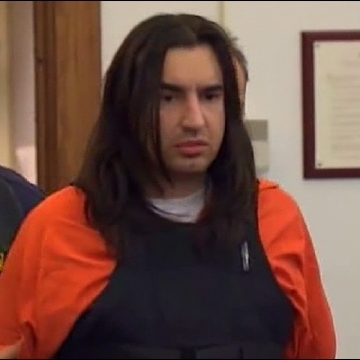
Robert Daigneau and the 1991 Harrodsburg Mass Murder
Background
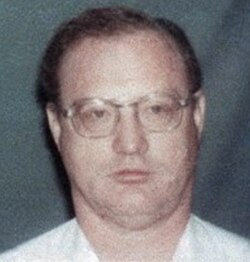
Robert Daigneau was responsible for a mass shooting that killed four people in Harrodsburg, Kentucky, on November 9, 1991. The attack developed from the collapse of his marriage to Donna Fitzgerald Daigneau, his 33-year-old estranged wife. Contemporary accounts described Robert as intensely jealous after Donna separated from him. He reportedly became convinced that she was romantically involved with someone else, although the people traveling with her on the night of the murders were acquaintances and relatives rather than participants in a planned romantic encounter.
The shooting occurred only weeks after Robert had been discharged from a Department of Veterans Affairs medical facility in Togus, Maine. Court records later established that he left the facility on October 18, 1991, approximately three weeks before the killings. His treatment and discharge became subjects of later civil litigation, although no court proceeding could result in a criminal prosecution because Robert died by suicide shortly after committing the murders.
The Victims’ Evening
On the evening of Saturday, November 9, 1991, Donna was traveling through Harrodsburg with five other people. The occupants included Palmer Lee Rousey, Palmer’s wife Anna Rousey, Fred Marion “Junior” Alsman, Thomas Earl Bannister and Rita McGlone. The group was reportedly traveling to a restaurant when they realized that Robert was following them in his pickup truck.
Robert’s presence caused immediate concern. The passengers apparently understood that his pursuit was connected to his anger over the separation from Donna. As he continued following their automobile, the group attempted to find police assistance. They drove toward the location of Harrodsburg’s former police station and sounded the vehicle’s horn in an effort to attract attention. The building, however, was no longer operating as the police station, and no officers were present to intervene.
The Shooting in Harrodsburg
Robert pulled his pickup truck near the victims’ automobile. Armed with a .357 Magnum revolver, he got out and fired repeatedly into the occupied vehicle. Reports indicated that approximately six shots were discharged. The sudden attack left four of the six occupants fatally wounded.
Donna Daigneau, Palmer Rousey, Fred Alsman and Thomas Bannister were killed. Anna Rousey and Rita McGlone survived the shooting. The violence appears to have been directed primarily at Donna because of Robert’s jealousy and inability to accept the separation, but he fired into a vehicle filled with people, killing three others who had become caught in the domestic dispute.
Donna was transported to the University of Kentucky’s Albert B. Chandler Medical Center in Lexington. She was pronounced dead at approximately 10:02 p.m. The other victims were also confirmed dead following the attack. The shooting left families in Kentucky, Illinois and Missouri grieving relatives who had been killed during what had begun as an ordinary evening trip to a restaurant.
Victims
- Donna Fitzgerald Daigneau, 33 — Killed on November 9, 1991, after being shot in Harrodsburg, Mercer County, Kentucky. Donna was Robert Daigneau’s estranged wife and was reportedly employed as an assistant manager at a Walmart in Danville. She was transported to Albert B. Chandler Medical Center in Lexington, where she was pronounced dead.
- Palmer Lee Rousey, 48 — Killed on November 9, 1991, in Harrodsburg, Kentucky. Rousey was a resident of Danville in Boyle County, Kentucky. His wife, Anna Rousey, was inside the vehicle and survived the shooting.
- Fred Marion “Junior” Alsman, 48 — Killed on November 9, 1991, in Harrodsburg, Kentucky. Alsman was from the St. Louis area and was identified in reports as a resident of Webster Groves, Missouri. He was related to surviving passenger Anna Rousey.
- Thomas Earl Bannister, 38 — Killed on November 9, 1991, in Harrodsburg, Kentucky. Bannister was a resident of Cahokia, Illinois.
Survivors
Anna Rousey and Rita McGlone survived the gunfire. Anna was Palmer Rousey’s wife and Fred Alsman’s niece, meaning she lost both her husband and her uncle during the same attack. Their survival provided investigators with eyewitness accounts of Robert’s pursuit and the shooting.
The survivors and relatives of the victims later faced the consequences of a crime for which there could be no criminal trial. Robert’s death prevented prosecutors from questioning him, establishing his complete state of mind in court or seeking punishment through the criminal justice system.
Robert Daigneau’s Death
After firing into the vehicle, Robert fled Harrodsburg in his pickup truck. Authorities began searching for him as information about the four deaths spread among law-enforcement agencies in the surrounding area.
A police officer later spotted Robert’s truck near Lancaster, Kentucky, in neighboring Garrard County. The officer followed the vehicle. Before the officer could approach and take him into custody, Robert used the revolver to shoot himself in the head while seated inside the truck. He died from the self-inflicted wound on the same evening as the murders.
His suicide ended the immediate manhunt but also eliminated the possibility of a criminal trial. Investigators were left to reconstruct the events from physical evidence, witness statements and information about Robert’s behavior before the shooting.
Motive
Accounts from relatives consistently identified jealousy as the central motive. Robert was reportedly unable to accept that Donna had left him. He apparently interpreted her presence in a vehicle with other people as evidence that she was meeting another man. A relative of Palmer Rousey stated after the murders that Robert had been extremely jealous and believed Donna was going on a date.
The available evidence indicates that the attack was an act of domestic violence that expanded into a mass killing. Robert pursued his estranged wife in public, confronted the vehicle carrying her and fired without regard for the other occupants. His actions killed Donna and three people who were accompanying her while placing two additional passengers in mortal danger.
Later Civil Litigation
The case later became the subject of a federal lawsuit involving the Department of Veterans Affairs. Anna Rousey, acting individually and as the administrator of the estates of Palmer Rousey and Fred Alsman, pursued claims against the federal government. The litigation focused on Robert’s treatment at the VA Medical Center in Togus, Maine, and his discharge on October 18, 1991.
The plaintiffs argued that actions connected to Robert’s release contributed to the danger that culminated in the November 9 murders. The federal government disputed liability and challenged whether it owed a legally enforceable duty to the victims. The civil case examined questions concerning medical treatment, foreseeability and governmental responsibility, but it did not change the established finding that Robert alone carried out the shooting.
Aftermath
The Harrodsburg murders devastated several families and communities across three states. Palmer Rousey and Donna Daigneau had connections to central Kentucky, Fred Alsman was associated with the St. Louis area and Thomas Bannister lived in Illinois. The victims had gathered for a social outing and were not expecting to become targets of an armed pursuit.
The case illustrates how possessiveness and escalating domestic abuse can endanger not only a separated partner but also relatives, friends, coworkers and bystanders. Donna’s attempt to establish a life apart from Robert became the focus of his anger. Rather than accept the end of the relationship, he followed her, murdered her and killed three people who happened to be traveling with her.
Robert Daigneau’s suicide meant that he never faced the families of Donna Daigneau, Palmer Rousey, Fred Alsman and Thomas Bannister in court. The four victims remain the central legacy of the November 9, 1991, Harrodsburg mass murder, while Anna Rousey and Rita McGlone survived an attack that permanently altered their lives.