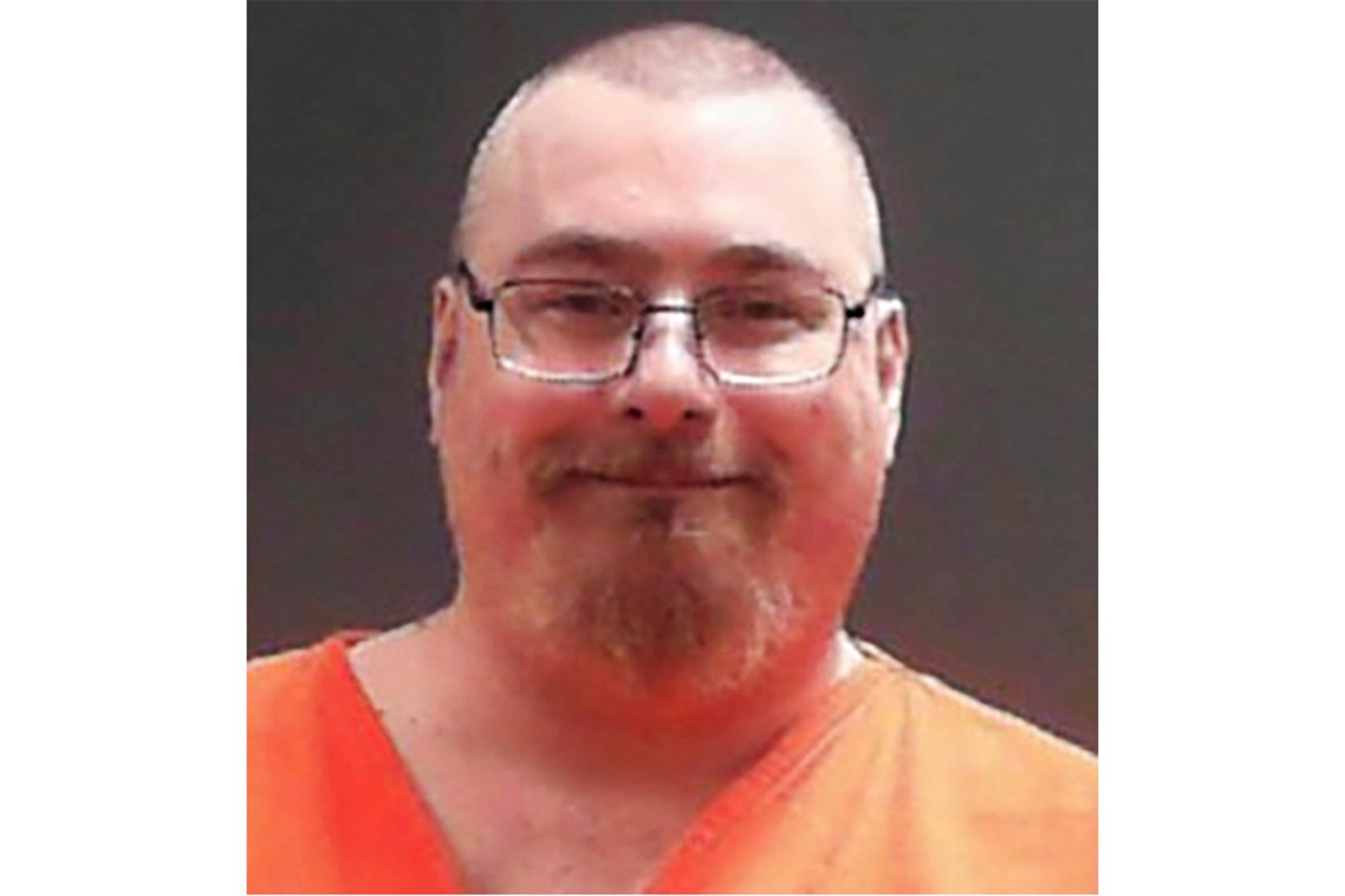
Dylann Roof and the 2015 Charleston Church Massacre
Background
Dylann Storm Roof was a 21-year-old white supremacist from South Carolina when he carried out a racially motivated mass murder at Emanuel African Methodist Episcopal Church in Charleston on June 17, 2015. The historic congregation, commonly known as Mother Emanuel, was one of the oldest and most prominent African American churches in the southern United States.
Before the attack, Roof had become deeply immersed in racist propaganda found on the internet. He created a website containing photographs of himself with white supremacist symbols and a written manifesto expressing hatred toward African Americans. Investigators determined that he selected a Black church because he wanted his violence to attract attention and provoke racial conflict.
Roof had previously been arrested for drug possession and trespassing. On April 11, 2015, he purchased a Glock Model 41 .45-caliber semiautomatic handgun from a firearms dealer in West Columbia, South Carolina. A problem with the federal background-check process allowed the sale to proceed even though information associated with one of his earlier arrests should have prompted further examination.
Planning the Attack
Roof researched African American churches and communities before choosing Emanuel AME Church. Evidence later introduced during his federal trial showed that he had written down the names of several Black churches in the Charleston area. He reportedly selected Mother Emanuel because of its historical importance and its prominent place in Charleston’s African American community.
On June 17, 2015, Roof drove from the Columbia area to Charleston in a black Hyundai Elantra. He was armed with the Glock handgun, several magazines and dozens of rounds of hollow-point ammunition. He arrived at Emanuel AME Church at 110 Calhoun Street and remained in his vehicle for a period of time before entering the building.
The Bible Study Meeting
Roof entered the church during an evening Bible study led by the church’s senior pastor, Reverend Clementa C. Pinckney. Pinckney was also a member of the South Carolina Senate. Roof asked for Pinckney and was welcomed into the meeting rather than treated as an intruder.
The participants gave Roof a Bible and a chair. He sat beside Pinckney and remained with the group for approximately 45 minutes to an hour as they read scripture, prayed and discussed their faith. The worshippers reportedly treated him with kindness and hospitality throughout the meeting.
Roof later admitted that their kindness caused him to hesitate. He nevertheless decided to continue with the attack he had planned. At approximately 9:05 p.m., as the meeting was concluding and the group began to pray, Roof pulled out his handgun and opened fire at close range.
The Massacre
Roof first fired at Reverend Pinckney and then continued shooting the other worshippers. Witnesses described a sudden and prolonged series of gunshots inside the fellowship area. Roof repeatedly fired, reloaded and continued attacking people who were attempting to take cover or protect one another.
Tywanza Sanders reportedly attempted to confront Roof and pleaded with him to stop. Sanders also tried to protect his aunt, Susie Jackson. Both were killed. Felicia Sanders, Tywanza’s mother, survived by lying on the floor and shielding her young granddaughter beneath her body.
Polly Sheppard, another Bible study participant, was deliberately left alive. According to her testimony, Roof told her that he wanted someone to survive and describe what had happened. Statements he made during the attack showed that the victims were targeted because they were Black.
Roof fired more than 70 rounds during the massacre. Eight victims died inside the church. Reverend Daniel Simmons was transported to the Medical University of South Carolina, where he later died. The shooting lasted only several minutes, ending at approximately 9:11 p.m.
Victims of the Emanuel AME Church Shooting
- Reverend Clementa Carlos Pinckney, 41 – Killed on June 17, 2015, inside Emanuel AME Church at 110 Calhoun Street in Charleston, South Carolina. Pinckney was the church’s senior pastor and had served in the South Carolina Senate since 2000. He was married and the father of two daughters.
- Reverend Sharonda Coleman-Singleton, 45 – Killed on June 17, 2015, inside Emanuel AME Church. She was an associate pastor, a speech-language therapist and the girls’ track-and-field coach at Goose Creek High School. She was the mother of three children.
- Cynthia Graham Hurd, 54 – Killed on June 17, 2015, inside Emanuel AME Church. Hurd had worked for the Charleston County Public Library system for more than three decades and was the manager of the St. Andrews Regional Library.
- Susie Jackson, 87 – Killed on June 17, 2015, inside Emanuel AME Church. Jackson was the oldest victim. She was a longtime church member, choir participant and the aunt of Tywanza Sanders.
- Ethel Lee Lance, 70 – Killed on June 17, 2015, inside Emanuel AME Church. Lance was a longtime member of the congregation and had worked as the church’s sexton, helping maintain and care for the building.
- Reverend Depayne Middleton-Doctor, 49 – Killed on June 17, 2015, inside Emanuel AME Church. She was an ordained minister, educator and admissions coordinator at Southern Wesleyan University. She was the mother of four daughters.
- Tywanza Sanders, 26 – Killed on June 17, 2015, inside Emanuel AME Church. Sanders was a recent graduate of Allen University. Witnesses said he attempted to reason with Roof and tried to protect his aunt, Susie Jackson.
- Reverend Daniel Lee Simmons Sr., 74 – Shot on June 17, 2015, at Emanuel AME Church and later pronounced dead at the Medical University of South Carolina in Charleston. Simmons was a retired pastor who continued serving in church ministry.
- Myra Thompson, 59 – Killed on June 17, 2015, inside Emanuel AME Church. Thompson was leading the Bible study that evening after recently receiving authorization to preach in the African Methodist Episcopal Church.
Escape and Manhunt
After the massacre, Roof left the church, returned to his Hyundai and drove away from Charleston. Surveillance images showing him entering the church and photographs of his vehicle were released to the public. Members of his family recognized him and contacted authorities.
A nationwide manhunt began during the night. Roof drove north through South Carolina and into North Carolina. On the morning of June 18, 2015, florist Debbie Dills noticed a black Hyundai Elantra near Kings Mountain, North Carolina. She recognized the vehicle from news reports and followed it while contacting law enforcement.
At approximately 10:45 a.m., officers stopped Roof on U.S. Route 74 near Shelby, North Carolina. He surrendered without a struggle. Officers found the Glock handgun in the vehicle. Roof waived extradition and was returned to Charleston later that day.
Confession and Investigation
During an interview with Federal Bureau of Investigation agents, Roof confessed to carrying out the shooting. He described how he chose the church, sat through the Bible study and fired on the worshippers. He stated that he hoped the killings would help start a race war.
Investigators recovered extensive evidence documenting his racist beliefs and preparation. His website included a manifesto, photographs with Confederate and white supremacist imagery and pictures of Roof posing with the handgun used in the massacre. Materials found in his automobile included ammunition receipts, flags, handwritten notes and a list of additional Black churches.
The attack was investigated as a hate crime, an obstruction of religious worship and an act of racially motivated mass violence. Prosecutors argued that Roof intentionally selected innocent African American worshippers because of their race and chose a church to interfere with their constitutional right to practice their religion.
Initial Charges
On June 19, 2015, South Carolina authorities charged Roof with nine counts of murder and one firearms offense. He appeared at a bond hearing by video from the Charleston County jail. Several relatives of the victims spoke during the hearing, expressing their grief and, in some cases, offering forgiveness while holding Roof accountable for his actions.
A federal grand jury indicted Roof on July 22, 2015. The 33-count indictment included hate crimes resulting in death, hate crimes involving an attempt to kill, obstruction of religious exercise resulting in death, obstruction of religious exercise involving an attempt to kill and firearms offenses resulting in death.
Federal Trial
The federal trial began in Charleston on December 7, 2016, before United States District Judge Richard Gergel. Prosecutors presented surveillance recordings, physical evidence, Roof’s writings and his recorded confession. Survivors described how the Bible study participants welcomed Roof before he turned on them.
Crime-scene evidence demonstrated the calculated nature of the assault. Investigators recovered dozens of cartridge casings, bullet fragments and other ballistic evidence. The prosecution showed that Roof brought multiple loaded magazines into the church and repeatedly reloaded during the shooting.
On December 15, 2016, the jury found Roof guilty on all 33 federal counts. The same jury then heard evidence during a separate penalty phase to determine whether he should receive life imprisonment or death.
Death Sentence
Roof chose to represent himself during portions of the federal penalty proceeding. He did not call witnesses or present substantial evidence asking the jury to spare his life. He continued expressing his racist ideology and did not offer a meaningful apology to the victims’ families.
On January 10, 2017, the jury unanimously recommended the death penalty. On January 11, Judge Gergel formally imposed death sentences for the federal counts involving the nine murders, along with additional prison sentences for the remaining offenses.
South Carolina Convictions
Roof still faced a separate state prosecution in South Carolina. On April 10, 2017, he pleaded guilty to nine counts of murder, three counts of attempted murder and one count of possessing a weapon during the commission of a violent crime.
A state judge sentenced him to nine consecutive terms of life imprisonment without the possibility of parole, along with additional years for the attempted murders and weapons offense. The state sentences ensured that Roof would remain imprisoned for life even if his federal convictions or death sentence were later overturned.
Appeals and Imprisonment
Roof was transferred to the federal penitentiary in Terre Haute, Indiana, where the federal government houses male prisoners sentenced to death. His attorneys appealed, arguing in part that questions about his mental competency and his decision to represent himself had undermined the fairness of the proceedings.
On August 25, 2021, a three-judge panel of the United States Court of Appeals for the Fourth Circuit unanimously upheld Roof’s convictions and federal death sentence. The court concluded that the trial judge had properly handled the competency proceedings and that the evidence supported the verdict and sentence.
In December 2024, President Joe Biden commuted the sentences of most federal death-row prisoners to life imprisonment. Roof was one of three federal prisoners whose death sentence was not commuted. He therefore remained under a federal death sentence in addition to his South Carolina life sentences.
Impact and Remembrance
The victims became collectively known as the Emanuel Nine. Their murders caused national mourning and renewed debate about racism, domestic extremism, gun laws and the display of Confederate symbols. Memorial services and public gatherings were held throughout Charleston and across the United States.
On June 26, 2015, President Barack Obama delivered the eulogy at Reverend Pinckney’s funeral in Charleston. During the service, he spoke about grace, racial hatred and the need to confront injustice. Thousands of people attended or watched the service.
The massacre also intensified pressure to remove the Confederate battle flag from the grounds of the South Carolina State House. On July 10, 2015, the flag was formally removed after state lawmakers approved legislation authorizing its removal.
Emanuel AME Church reopened for worship only days after the shooting. The congregation and the larger Charleston community emphasized remembrance, faith and unity rather than the racial conflict Roof had hoped to create. The names and lives of Clementa Pinckney, Sharonda Coleman-Singleton, Cynthia Hurd, Susie Jackson, Ethel Lance, Depayne Middleton-Doctor, Tywanza Sanders, Daniel Simmons and Myra Thompson remain central to public remembrance of the tragedy.