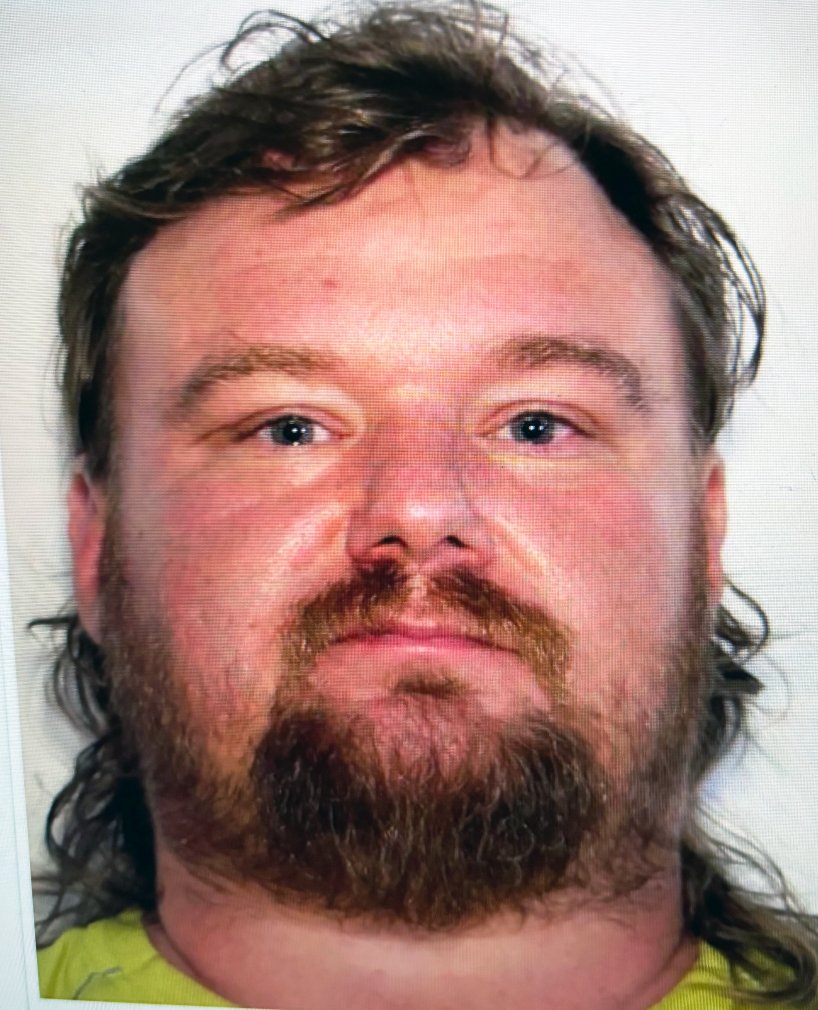
Edwin James Grace and the 1972 Cherry Hill Office Massacre
Background
Edwin James Grace Jr. was a 33-year-old security guard from Brooklyn, New York, whose anger over his employment difficulties culminated in a mass shooting at a New Jersey office building on June 21, 1972. The attack left six men dead and six others wounded. Another man was injured while escaping through a window. Grace later died from a self-inflicted gunshot wound, bringing the total number of deaths connected to the incident to seven.
Grace was born on January 29, 1939, in Brooklyn. He graduated from James Madison High School in 1956 and briefly attended St. Francis College before leaving during his sophomore year. He later served in the United States Army, including a period of duty in Okinawa. During his adult life, he held several security-related positions, including work for the Pinkerton protective organization and the civil court system.
People who knew Grace frequently described him as quiet, reserved and interested in reading. His employment history, however, had become unstable. He was reportedly dismissed from one security position in December 1971 because of repeated absences associated with a family emergency. He later returned to security work, but continued searching for a more permanent position in his preferred field.
Conflict With the Employment Agency
Grace had contacted Key Personnel Incorporated, an employment agency operating from the Heritage Building at 383 Kings Highway North in Cherry Hill, New Jersey. He hoped the agency would help him obtain a security-related job. Investigators later concluded that Grace became deeply resentful because he believed the agency had failed to find suitable employment for him.
There was no indication that the people working in the building expected Grace to become violent. His preparations, however, showed that the shooting was not a spontaneous argument. Grace obtained two .22-caliber Armalite AR-7 semiautomatic rifles and shortened their barrels and stocks. He also assembled a large supply of ammunition and loaded multiple magazines before traveling to Cherry Hill.
Before the shooting, Grace stayed at the Saxony Motel in Turnersville, New Jersey. Investigators later found additional ammunition, gun parts and personal belongings in his room. Police also discovered a map in his automobile on which Cherry Hill and nearby Pennsauken had reportedly been marked. A written passage from the poem “Invictus” was found among his effects, ending with the declaration that the writer was the master of his fate and the captain of his soul.
The Arrival at the Heritage Building
On the afternoon of Wednesday, June 21, 1972, Grace left the motel and drove his Volkswagen to the Heritage Building. The two-story office building contained approximately 16 offices occupied by several businesses, including Key Personnel and the Heil Process Equipment Corporation. About 40 people were believed to be inside when the attack began.
Grace parked behind the building and entered through a rear doorway shortly after 2:30 p.m. He was dressed in clothing that resembled a security or official uniform, including dark trousers, a shirt and tie, a blazer, a gun belt and a straw hat. Beneath or alongside his clothing, he carried the two shortened rifles and approximately 120 rounds of ammunition.
At approximately 2:33 p.m., Grace moved into the office area and began firing. Witnesses reported that he deliberately directed women out of his path while selecting male employees and visitors as his targets. He walked through hallways and offices, shooting men at close range, pausing to reload and then continuing through the building.
The Shooting
One of the first people attacked was Steven Bernard Robinson, the 41-year-old president of Key Personnel. Robinson was shot in the head after Grace entered the employment agency’s office. Grace then continued firing at other men nearby. Employees ran for doorways, hid beneath desks and tables or attempted to escape through windows.
The attack moved from one office to another. Survivors later described a terrifying scene in which gunfire echoed through the building as Grace methodically traveled through the corridors. Some victims had little opportunity to react before he fired. Others were struck while attempting to flee or find cover.
One man escaped by jumping through a window, suffering injuries in the fall. At least one wounded victim managed to telephone police. Officers rushed to the scene, surrounded the building and attempted to determine the gunman’s location while the wounded remained trapped inside.
Grace eventually made his way toward the basement. The firing had lasted only several minutes, but six men had been fatally wounded and six others had been shot. Reports differed over the exact number of rounds discharged, although investigators found evidence that dozens of bullets had been fired throughout the offices.
Victims Killed on June 21, 1972
- Steven Bernard Robinson, 41, of Cinnaminson, New Jersey. Robinson was the president of Key Personnel Incorporated and was among the first men attacked inside the employment agency’s office at the Heritage Building.
- Robert Bertone, 22, of Delanco, New Jersey. Some historical accounts spell his surname Bartone. He was fatally shot inside the Heritage Building during the June 21 attack.
- Joseph A. DiPalma, 44, of Cherry Hill, New Jersey. His surname has also appeared in some records as DePalma. He was killed during the shooting inside the office building.
- Joseph Boyd, 48, of the Mount Laurel or Moorestown area of New Jersey. Historical reports differ regarding his precise community of residence. He died from gunshot wounds received inside the Heritage Building.
- Theodore G. Hall, 38, of Willingboro, New Jersey. Hall was one of the men shot and killed as Grace moved through the offices.
- Charles R. Merkel, 38, of Cherry Hill, New Jersey. Merkel was fatally wounded during the attack on the building’s employees and occupants.
People Wounded or Injured
Six men survived gunshot wounds inflicted by Grace. Contemporary accounts also identified additional occupants who were hurt while trying to escape. Published lists have not always agreed on whether every injured person was directly struck by gunfire, but the following men were identified among the wounded or injured:
- Charles Collins Jr., 23, of Pennsauken, New Jersey, was wounded during the shooting.
- Walter Wilks, 46, of Levittown, Pennsylvania, was wounded during the attack.
- Wayne Stroup, approximately 21, of Cherry Hill, New Jersey, suffered gunshot injuries.
- Val Rishko, approximately 25, of Groveville, New Jersey, was wounded inside the building.
- Bill Maynard, 25, of Marlton, New Jersey, survived injuries received during the shooting.
- Glen Davis, 23, of Moorestown, New Jersey, was wounded by gunfire.
- James Slemmer, 44, of Haddonfield, New Jersey, was identified in contemporary reports among those injured during the incident.
- James Ashmen, 24, of Cherry Hill, New Jersey, was injured after jumping through a window to escape the gunman.
Police Response and Grace’s Self-Inflicted Wound
Cherry Hill police surrounded the building within minutes. Officers did not initially know whether Grace was still actively shooting or whether additional gunmen might be present. Tear-gas canisters were fired into the building before officers entered and began searching the offices.
In the basement, Grace had used one of his rifles to shoot himself behind or near his left ear. The bullet lodged near the base of his skull, leaving him critically wounded but still alive. He was removed from the building along with the victims. Officers reportedly identified him as the gunman after discovering ammunition magazines and other equipment on his body.
Grace was transported to Cherry Hill Medical Center. His wound left him partly paralyzed and unable to speak. Because of his condition, investigators were never able to obtain a complete statement from him explaining his actions. He remained hospitalized for more than two weeks and died on July 8, 1972.
Investigation and Motive
Investigators searched Grace’s motel room, automobile and belongings in an effort to reconstruct his movements. They recovered ammunition, weapon components and items suggesting that the attack had been carefully prepared. The modifications to the rifles made them easier to conceal and carry through the building.
Authorities determined that Grace’s primary grievance concerned Key Personnel and its failure to secure him a job. Camden County prosecutors described him as a man seeking work in the security field who had become fixated on the employment agency. The fact that he traveled from his motel with altered firearms, multiple loaded magazines and a marked map supported the conclusion that he had planned the attack in advance.
Grace’s decision to shoot only men was one of the most disturbing and unusual features of the massacre. Female employees reported that he waved them aside or ordered them out of his way. Investigators did not establish that Grace personally knew every man he shot. Several victims appear to have been targeted simply because they were male and happened to be inside the offices connected with the agency or neighboring businesses.
Deaths and Aftermath
Six victims died as a direct result of the June 21, 1972, shooting. Grace’s death on July 8 raised the incident’s overall death toll to seven, including the perpetrator. Because Grace died without being questioned or brought to trial, there was no criminal prosecution and no courtroom examination of his motives or mental condition.
The massacre shocked Cherry Hill, which was then a rapidly growing suburban community. The Heritage Building had been an ordinary workplace where employees expected to spend a routine Wednesday afternoon. Within minutes, it became the scene of one of the deadliest mass shootings in New Jersey history.
The attack is sometimes remembered as the Cherry Hill office massacre, the Heritage Building shooting or the Key Personnel massacre. It is also regarded as an early example of a workplace-related mass shooting in the United States. Although Grace was not an employee of Key Personnel, his resentment toward the agency and his belief that it had failed him transformed an employment dispute into a planned attack against workers who had little or no direct involvement in his personal difficulties.
Legacy
For many years, the 1972 Cherry Hill shooting received far less national attention than later mass shootings. Nevertheless, its central features became tragically familiar in subsequent decades: a heavily armed attacker, a perceived workplace grievance, extensive preparation, victims chosen with little warning and a self-inflicted wound that prevented a trial.
The six men killed were employees, businesspeople and community residents whose lives ended during an ordinary day at work. Their deaths, along with the lasting injuries and trauma suffered by survivors, remain the most important legacy of the attack. Edwin James Grace’s name became associated with the crime, but the tragedy was borne by the victims, their families, the wounded men and the employees who escaped from the Heritage Building on June 21, 1972.