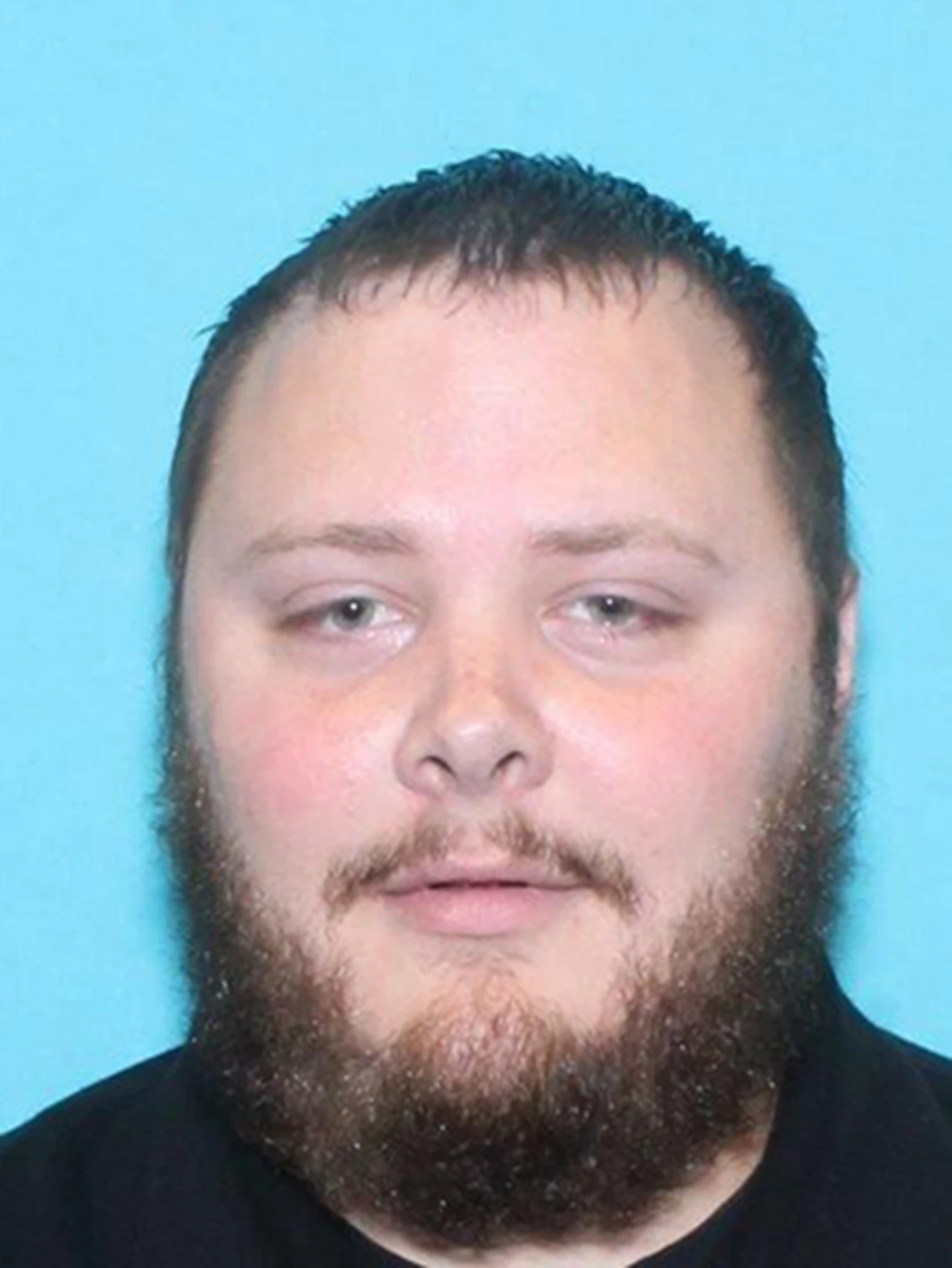
Tashfeen Malik and the 2015 San Bernardino Massacre
Background
Tashfeen Malik was one of the two perpetrators responsible for the December 2, 2015, terrorist attack at the Inland Regional Center in San Bernardino, California. Malik and her husband, Syed Rizwan Farook, entered a gathering of San Bernardino County employees and opened fire, killing 14 people and seriously wounding 22 others. The massacre was one of the deadliest terrorist attacks carried out in the United States during the years following September 11, 2001.
Malik was born on July 13, 1986, in Pakistan and spent part of her childhood and young adulthood in Saudi Arabia. She later studied pharmacology at Bahauddin Zakariya University in Multan, Pakistan. Malik met Farook through an online matrimonial service. Farook, an American citizen born in Chicago on June 14, 1987, was employed as an environmental health specialist by the San Bernardino County Department of Public Health.
Farook traveled to Saudi Arabia in 2014, where he and Malik married. Malik entered the United States in July 2014 on a fiancée visa and later became a lawful permanent resident. The couple lived in Redlands, California, and had an infant daughter. Their outwardly ordinary domestic life concealed their increasing commitment to violent extremist ideology.
Radicalization and Preparation
Federal investigators concluded that Malik and Farook had become radicalized before Malik entered the United States. Private electronic communications indicated that they discussed jihad, martyrdom and violent extremism with one another. Investigators found no evidence that a foreign terrorist organization directly ordered or supervised the San Bernardino attack. The couple instead appeared to have been inspired by extremist propaganda and to have planned the violence themselves.
Before the massacre, Malik and Farook assembled a substantial collection of firearms, ammunition and bomb-making materials. Their weapons included two .223-caliber semiautomatic rifles modeled after the AR-15, along with two 9mm semiautomatic pistols. The rifles had originally been purchased by Farook’s friend and former neighbor, Enrique Marquez Jr., before being illegally transferred to Farook.
The couple also constructed pipe bombs and accumulated thousands of rounds of ammunition. Investigators later recovered additional firearms, explosive components and twelve pipe-bomb-type devices from their Redlands residence. The quantity of weapons and supplies suggested that Malik and Farook may have expected to survive the initial shooting or had considered additional violence.
The Inland Regional Center Gathering
On the morning of December 2, 2015, approximately 80 employees of the San Bernardino County Department of Public Health gathered in a rented conference room at the Inland Regional Center at 1365 South Waterman Avenue in San Bernardino. The center provided services to people with developmental disabilities, but the gathering involved county employees attending a training session and holiday celebration.
Farook attended the event as an employee. During the morning, he left the gathering under circumstances that did not initially cause alarm. He later returned with Malik. Both had changed into dark tactical clothing and were carrying rifles, pistols, ammunition magazines and other equipment.
The December 2, 2015, Attack
At approximately 10:58 a.m., Malik and Farook approached the Inland Regional Center and began firing. They first shot people outside the building before moving into the conference area where Farook’s coworkers were gathered. Witnesses described two masked attackers wearing dark clothing and tactical-style equipment.
The gunfire inside the conference room lasted only several minutes. Malik and Farook fired more than 100 rounds as employees attempted to escape, crawl beneath tables or hide in bathrooms, closets and nearby offices. A bullet struck a fire-sprinkler pipe, sending water into the room and adding to the confusion.
The attackers appeared prepared and familiar with the location. Farook knew the employees, the building and the schedule of the event. Malik participated directly in the assault, firing at victims and moving through the facility with her husband. The victims were largely unarmed county workers who had gathered for an ordinary workplace function.
Before leaving, Malik and Farook placed an improvised explosive device inside the conference room. The device consisted of three connected pipe bombs accompanied by a remote-control mechanism. It failed to detonate. Investigators believed it may have been intended to kill survivors or emergency personnel entering the building after the shooting.
Victims Killed
Fourteen people were killed during the attack. Most were employees of San Bernardino County, and many worked directly with Farook in the Environmental Health Services Division. All were attacked at or near the Inland Regional Center in San Bernardino on December 2, 2015.
- Robert Adams, 40 — A San Bernardino County environmental health specialist who was killed at the Inland Regional Center, 1365 South Waterman Avenue, San Bernardino, California.
- Isaac Amanios, 60 — A San Bernardino County environmental health specialist and Eritrean refugee who was killed during the workplace gathering at the Inland Regional Center.
- Bennetta Betbadal, 46 — A county environmental health specialist who had fled religious persecution in Iran. She was shot at the Inland Regional Center and died at a nearby emergency triage area.
- Harry Bowman, 46 — A San Bernardino County employee who was killed inside the Inland Regional Center during the attack.
- Sierra Clayborn, 27 — An environmental health specialist with San Bernardino County who was killed at the Inland Regional Center.
- Juan Espinoza, 50 — A San Bernardino County environmental health specialist who was killed during the shooting at the Inland Regional Center.
- Aurora Godoy, 26 — A San Bernardino County employee and the youngest person killed in the attack. She died at the Inland Regional Center.
- Shannon Johnson, 45 — A county environmental health specialist who attempted to protect a coworker during the shooting. He was wounded inside the Inland Regional Center and died at a temporary triage area across the street.
- Larry Daniel Kaufman, 42 — An employee of the coffee shop at the Inland Regional Center who was killed while attempting to escape the gunfire.
- Damian Meins, 58 — A San Bernardino County employee and longtime public servant who was killed during the attack at the Inland Regional Center.
- Tin Nguyen, 31 — A county environmental health specialist whose family had come to the United States from Vietnam. She was killed inside the Inland Regional Center.
- Nicholas Thalasinos, 52 — A San Bernardino County environmental health specialist and one of Farook’s coworkers who was killed at the holiday gathering.
- Yvette Velasco, 27 — A San Bernardino County environmental health specialist who was killed during the shooting at the Inland Regional Center.
- Michael Wetzel, 37 — A San Bernardino County environmental health specialist and father who was killed at the Inland Regional Center.
The Escape
After the shooting, Malik and Farook fled in a black Ford Expedition that had been rented several days earlier. Police, firefighters and emergency medical teams arrived to find numerous casualties and terrified survivors hiding throughout the complex. Officers searched the building room by room because they did not initially know whether the attackers were still inside.
The couple returned to their townhouse in Redlands at some point after leaving the center. Investigators later found that electronic devices had been damaged or discarded in an apparent attempt to destroy evidence. Farook and Malik then left the residence in the rented vehicle while carrying rifles, pistols and a large supply of ammunition.
Police Pursuit and Final Shootout
During the afternoon, officers conducting surveillance near the Redlands residence observed the Ford Expedition and attempted to stop it. Farook was driving, and Malik was inside the vehicle. A pursuit followed as the couple traveled back toward San Bernardino.
At approximately 3:08 p.m., the pursuit ended on East San Bernardino Avenue near South Richardson Street. Malik and Farook stopped the SUV and exchanged heavy gunfire with law-enforcement officers. They fired dozens of rounds from rifles and pistols while officers returned fire from behind vehicles and other available cover.
Farook was shot and killed outside the SUV. Malik continued firing before she was also fatally wounded. The shootout ended at approximately 3:14 p.m. Two law-enforcement officers suffered nonfatal injuries. Authorities recovered more than 1,600 rounds of ammunition from the vehicle, in addition to the firearms used during the confrontation.
Investigation of the Attack
The Federal Bureau of Investigation assumed control of the case and officially investigated it as an act of terrorism. Investigators conducted hundreds of interviews, searched the couple’s home, examined electronic evidence and reconstructed their movements before and after the massacre.
During the attack, a social-media account associated with Malik reportedly posted a pledge of allegiance to Abu Bakr al-Baghdadi, the leader of the Islamic State organization. The message supported the conclusion that the attack was motivated by violent extremist ideology. However, investigators did not find evidence that Malik or Farook had received direct operational orders from the Islamic State or another overseas terrorist organization.
The FBI described the pair as homegrown violent extremists who had privately embraced radical beliefs. Their secrecy complicated the investigation. Neither Malik nor Farook had been on a federal terrorism watch list, and neither had a criminal record that would have clearly exposed their preparations.
Enrique Marquez Jr.
Enrique Marquez Jr., a longtime friend and former neighbor of Farook, was arrested after the attack. Marquez had purchased the two rifles that were later used by Malik and Farook. Prosecutors alleged that Marquez and Farook had discussed and prepared for earlier terrorist attacks in 2011 and 2012, including contemplated attacks on Riverside City College and motorists on a Southern California freeway.
Those earlier plans were abandoned and were not directly carried out as part of the 2015 massacre. Marquez was not accused of participating in the Inland Regional Center shooting and investigators did not establish that he knew Malik and Farook intended to use the rifles in the December 2 attack. He was nevertheless prosecuted for offenses connected to the weapons transfer, false statements and immigration fraud.
Impact on San Bernardino
The massacre devastated San Bernardino County’s public-health workforce. Thirteen of the fourteen people killed were county employees, and ten worked as environmental health specialists. The department lost experienced inspectors, supervisors, parents, spouses and longtime public servants in a matter of minutes.
The Inland Regional Center remained closed for several weeks as investigators processed the scene and repairs were completed. Memorial services were held for the victims, and thousands of people attended a public remembrance ceremony in Ontario, California, on January 4, 2016.
The attack also became a major national case involving terrorism, workplace security, firearms trafficking, immigration screening and online radicalization. The failed explosive device, extensive ammunition stockpile and additional bomb-making materials demonstrated that the violence had involved considerable preparation rather than a spontaneous workplace dispute.
Death of Tashfeen Malik
Tashfeen Malik died on December 2, 2015, during the gun battle with police in San Bernardino. She was 29 years old. Her husband, Syed Rizwan Farook, was also killed at the scene. Their infant daughter had been left with Farook’s mother before the attack and was not physically harmed.
Malik’s participation was central to the crime. She helped acquire and prepare equipment, traveled to the Inland Regional Center with Farook, fired upon the victims, fled the scene and engaged officers during the final confrontation. The massacre ended with 14 innocent people dead, 22 civilians wounded and two police officers injured during the pursuit and shootout.
Legacy
The San Bernardino attack remains remembered for the calculated targeting of a workplace celebration and for the devastating loss suffered by the victims’ families and colleagues. The names of the 14 people killed became the center of community memorials, anniversary observances and efforts to support survivors.
Although Malik and Farook attempted to present themselves publicly as an ordinary married couple, their private radicalization and secret preparations culminated in a carefully organized act of mass murder. The December 2, 2015, attack permanently changed the lives of the survivors and left San Bernardino mourning employees who had gathered that morning expecting nothing more than professional training and a holiday celebration.