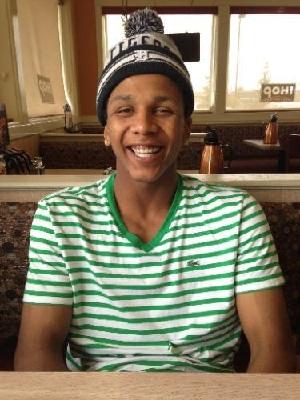
In the heart of Grand Rapids, a family gathering on a Sunday afternoon took a tragic turn, leaving one man dead and a web of conflicting stories that would take authorities months to untangle. On November 27, 2016, 35-year-old Gregory Lee Rogers was at a home near the intersection of Bridge Street and Straight Avenue NW when he sustained a fatal gunshot wound. The initial hours of the investigation were fraught with uncertainty, as police first treated the case as a possible suicide.
However, as detectives delved deeper, the evidence began to point towards a more sinister conclusion, and the focus of their inquiry shifted to homicide.
The investigation led to the arrest of a man with close ties to the victim. In March 2017, authorities took Cavari Jamoul Brown into custody, charging him with the murder of his uncle, Gregory Lee Rogers. The arrest brought a sense of impending justice for Rogers's grieving family and community. Brown was arraigned on an open murder charge, along with charges of felony firearm, being a habitual offender, and a second offense notice, and the stage was set for a legal battle to uncover the truth of what transpired on that fateful November day.
When the case went to trial, the prosecution presented its evidence to paint a picture of a deliberate act of violence. However, the defense offered a starkly different narrative, contending that Rogers's death was a tragic accident. The defense argued that Rogers had accidentally shot himself in the leg and subsequently bled to death. This alternative explanation of events cast a shadow of doubt on the prosecution's case. After deliberating for six hours over two days, the jury ultimately found Cavari Brown not guilty of murder, acquitting him of the most serious charge he faced.
Despite the acquittal on the murder charge, Cavari Brown did not walk away a free man. The jury found him guilty of several other charges, including perjury, as well as drug and weapons offenses. The convictions on these lesser charges ensured that he would still face a significant prison sentence for his role in the events surrounding his uncle's death, leaving a community to grapple with the complexities of justice and the lingering sorrow of a life cut short.