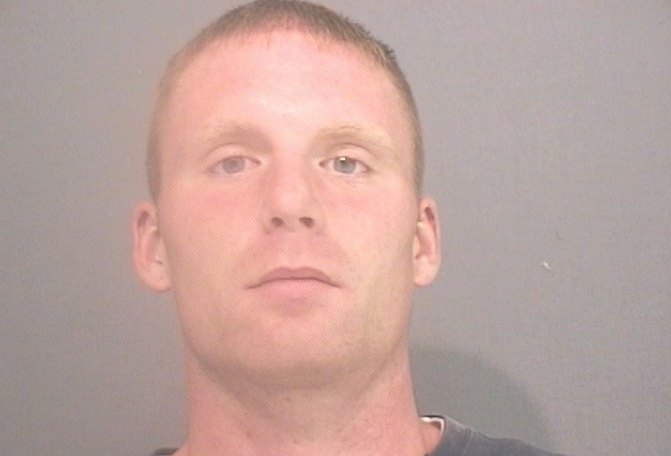
Anthony Bell and the 2006 Baton Rouge Church Murders
Overview
Anthony Bell committed a domestic-violence-related mass murder in Baton Rouge, Louisiana, on May 21, 2006. Bell, who was 25 years old, attacked members of his estranged wife’s family during a Sunday morning service at the Ministry of Jesus Christ Church. He killed four people inside the small church, critically wounded its pastor and then abducted his estranged wife, Erica Bell, and their three children.
Bell drove the family away from the church and stopped at an apartment complex, where he murdered Erica. Their children were not physically injured. Bell was arrested later that day and eventually convicted of five counts of first-degree murder and one count of attempted first-degree murder.
Domestic Violence Before the Murders
Anthony and Erica Bell had a troubled marriage marked by separation and allegations of domestic abuse. Erica had obtained a temporary restraining order against Bell in 2005. Court records and later testimony indicated that she had accused him of abusing her and engaging in an extramarital relationship.
By May 2006, Erica and the couple’s children were staying with members of her family. Bell reportedly wanted Erica to reconcile with him, but she did not want to resume the relationship. The prosecution later characterized the murders as the culmination of Bell’s attempts to control and intimidate his estranged wife.
The Ministry of Jesus Christ Church Shooting
On the morning of Sunday, May 21, 2006, members of Erica Bell’s family gathered for worship at the Ministry of Jesus Christ Church in Baton Rouge. The church was led by Erica’s mother, Pastor Claudia Brown. Six adults and five children were reportedly inside the building when Bell arrived.
Bell entered the church and attempted to speak with Erica about reconciling. After she rejected him, he left the building. Bell soon returned carrying a revolver. He entered the church during the service and began shooting members of Erica’s family.
Bell fired six rounds inside the church. Leonard Howard, Gloria Howard, Dolores McGrew and Darlene Mills Selvage were fatally wounded. Pastor Claudia Brown was shot in the back of the head but survived. Despite her severe injury, Brown remained conscious long enough to direct one of the children inside the church to call for help.
Testimony later presented in court described the panic inside the small sanctuary as Bell confronted his in-laws at close range. Claudia Brown testified that she heard her mother, Gloria Howard, plead with Bell not to shoot her shortly before Gloria was killed.
Abduction of Erica Bell and the Children
After shooting the five adults, Bell forced Erica and their three children to leave the church with him. He placed them in a vehicle and drove away before police arrived. Two children who remained inside the church were able to help summon emergency assistance.
Bell drove to the parking area of a nearby apartment complex. There, while the couple’s children were present, he shot 24-year-old Erica Bell in the head. Bell then attempted to make her death appear to be a suicide by placing the revolver near or in her hand.
Bell called 911 and claimed that Erica had shot herself. Responding officers quickly became suspicious of his account. Bell was taken into custody, and the three children were recovered alive.
Victims
- Leonard Howard, 78 — Killed on May 21, 2006, inside the Ministry of Jesus Christ Church in Baton Rouge, Louisiana. He was Erica Bell’s grandfather.
- Gloria Howard, 72 — Killed on May 21, 2006, inside the Ministry of Jesus Christ Church in Baton Rouge. She was Erica’s grandmother and Pastor Claudia Brown’s mother.
- Dolores McGrew, 68 — Killed on May 21, 2006, inside the Baton Rouge church. She was Erica Bell’s great-aunt.
- Darlene Mills Selvage, 47 — Killed on May 21, 2006, inside the Ministry of Jesus Christ Church. She was Erica Bell’s cousin and the mother of a daughter.
- Erica Bell, 24 — Abducted from the church and killed on May 21, 2006, in the parking area of a Baton Rouge apartment complex. She was Anthony Bell’s estranged wife and the mother of their three children.
Sole Adult Survivor
- Pastor Claudia Brown — Shot in the back of the head on May 21, 2006, inside the Ministry of Jesus Christ Church. Brown, Erica Bell’s mother, survived the attack and became an important eyewitness in the prosecution of Anthony Bell.
Investigation and Physical Evidence
Investigators connected the church murders and Erica Bell’s death through witness statements, forensic evidence and the revolver recovered at the apartment complex. Although the weapon had been positioned to support Bell’s claim that Erica killed herself, DNA testing found a greater amount of Bell’s DNA on the gun than Erica’s.
The physical evidence was inconsistent with Bell’s account. Investigators concluded that Bell had fired the weapon, murdered Erica and then attempted to stage the scene. Claudia Brown’s eyewitness identification also placed Bell inside the church as the person who shot the family members.
Bell was arrested on the day of the murders. On June 15, 2006, an East Baton Rouge Parish grand jury indicted him on five counts of first-degree murder and one count of attempted first-degree murder. Prosecutors announced that they would seek the death penalty.
Mental Competency Proceedings
Questions concerning Bell’s intellectual functioning and mental competency delayed the case. He underwent several psychological examinations before trial. A defense psychologist testified that Bell had extremely limited intellectual abilities and argued that he was not competent to stand trial.
Other mental-health experts concluded that Bell understood the charges against him and could participate in his defense. In 2007, District Judge Todd Hernandez ruled that Bell was legally competent to stand trial.
Bell repeatedly sought permission to dismiss his attorneys and represent himself. After initially denying his requests, the court eventually allowed him to act as his own attorney. Standby counsel remained available to assist him during the proceedings.
Trial
Bell’s trial began in East Baton Rouge Parish in 2008. He denied murdering the victims and attempted to blame Erica for the bloodshed. Bell claimed that Erica had shot her relatives inside the church before later killing herself.
The prosecution presented forensic evidence, witness testimony and evidence of Bell’s history of violence toward Erica. Claudia Brown testified about Bell’s actions inside the church and identified him as the gunman. The state also emphasized the attempt to arrange the revolver around Erica’s hand after her death.
Prosecutors argued that Bell’s account was contradicted by the physical evidence and by the surviving eyewitness. They maintained that he had entered the church intending to punish Erica and her family because Erica refused to return to him.
Convictions and Death Sentences
On April 11, 2008, the jury found Anthony Bell guilty of five counts of first-degree murder for killing Erica Bell, Leonard Howard, Gloria Howard, Dolores McGrew and Darlene Mills Selvage. He was also convicted of attempted first-degree murder for shooting Claudia Brown.
After a separate penalty proceeding, the jury unanimously recommended death sentences for each of the five murders. On September 11, 2008, Judge Todd Hernandez formally imposed five consecutive death sentences. Bell also received a 50-year prison sentence for the attempted murder of Claudia Brown.
Appeals
Bell appealed his convictions and sentences to the Louisiana Supreme Court. His attorneys challenged several aspects of the trial, including the decision allowing him to represent himself and the determination that he was not intellectually disabled for purposes of the death penalty.
On November 30, 2010, the Louisiana Supreme Court upheld Bell’s convictions and death sentences. The court rejected the principal arguments raised on his behalf. Later attempts to obtain a new trial also focused on his competency, intellectual limitations and allegations of previously undiagnosed mental or neurological conditions.
In April 2017, the Louisiana Supreme Court rejected another effort to overturn the convictions and sentences. Bell remained under five death sentences for the murders.
Aftermath
The murders devastated several generations of one Baton Rouge family. Four relatives were killed in their place of worship, Erica was murdered after being taken from the church and Claudia Brown survived a gunshot wound that could easily have been fatal. Several children were present during the violence and lost close family members in a single morning.
The Ministry of Jesus Christ Church closed after the shooting. Funerals for the victims were held during the following weeks, including a service for Darlene Mills Selvage attended by more than 200 relatives, friends and community members.
The case became one of Louisiana’s most notorious examples of domestic violence escalating into mass murder. Although the first four killings occurred inside a church, investigators and prosecutors determined that the central cause of the attack was Bell’s desire to control his estranged wife and retaliate against the relatives who supported her separation from him.
Legacy of the Case
The Anthony Bell case demonstrated that protective orders and separation do not always end the danger posed by an abusive partner. Erica Bell had taken legal steps to distance herself from Bell, but he continued pursuing her and ultimately attacked both her and the relatives who had provided her with support.
The Baton Rouge church murders are remembered not only as a mass shooting but also as a family annihilation rooted in domestic abuse. Five people were murdered, another was permanently affected by a severe gunshot wound and multiple children were left to cope with the loss of their mother and other relatives.