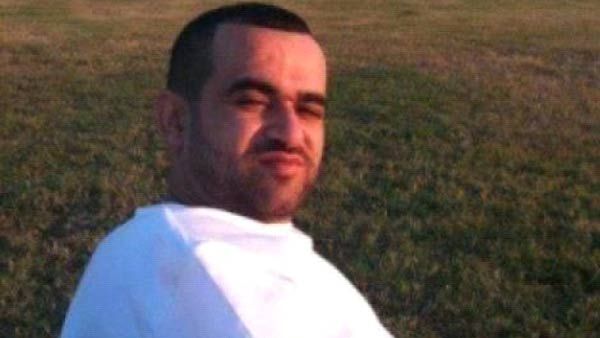
Leonard Howard, a 78-year-old man from Baton Rouge, Louisiana, was spending Sunday morning the way many of his neighbors knew him to—among family and friends at his church. The small congregation gathered at the Ministry of Jesus Christ on Dallas Drive, and the service moved along quietly until Anthony Bell arrived and asked to speak. Standing before the group, Bell pleaded for reconciliation with his estranged wife, Erica, and when she refused, his agitation rose and spilled outside onto the
sidewalk. Watching him pace, the pastor, Claudia Brown, grew uneasy enough to send her father, Leonard, to check on him. Leonard went out, returned, and for a moment it seemed the tension might pass without incident.
It didn’t. As the service was ending and people began to leave, a commotion broke out near the outer room. Brown heard her mother plead, “Don’t shoot me Anthony,” and then gunshots cracked through the church. Brown was struck in the back of the head and collapsed, later recalling the chilling moments that followed—hearing Erica ask permission to kiss her mother goodbye, seeing the gun hanging in Bell’s hand, and hearing him insist, as he forced Erica out, that he had warned them he would do it. Five of the six adults present had been shot in the head; Brown was the only adult who survived long enough to call for help. From where she lay, she could see loved ones down and unmoving, and with the assistance of one of the children left behind, she reached a 911 operator and reported that Bell had “shot up the church.”
Bell fled in a rented beige Nissan Maxima with Erica and three children. Roughly two hours after the church shooting, he called 911 again—this time claiming Erica had died by suicide at an apartment complex on North Ardenwood. When police arrived, they found Bell outside, shirtless, holding an infant, and Erica dead inside the vehicle with a gunshot wound to the head. A revolver was found resting in her hand, and investigators documented details that fueled dispute at trial over whether she could have shot herself. Forensic testimony connected the revolver to the spent casings recovered from the church and to bullets recovered from Erica and another victim, and both Erica and Bell tested positive for gunshot residue. Bell was arrested at the apartment complex that day.
The case moved quickly into capital territory. On June 15, 2006, an East Baton Rouge Parish grand jury indicted Anthony Bell for five counts of first-degree murder—Erica Bell and four of her relatives, including Leonard and Gloria Howard—and for the attempted first-degree murder of Claudia Brown, with prosecutors giving notice they intended to seek the death penalty and alleging multiple aggravating factors tied to the killings. Jury selection began in late March 2008, the trial followed in April, and jurors unanimously found Bell guilty as charged. After the penalty phase, the jury recommended death on each murder count; Bell was sentenced in September 2008 to death by lethal injection for the murders and to an additional 50 years at hard labor for the attempted murder. In 2010, the Supreme Court of Louisiana affirmed the convictions and death sentence.