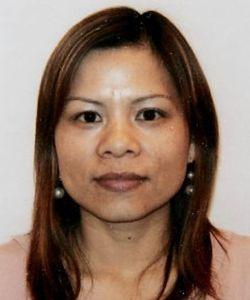
On the morning of April 3, 2009, Jiang Ling, 22, a female Asian resident of Endicott who had come from China, arrived at the American Civic Association in Binghamton, New York, a place known locally for helping newcomers with language and citizenship classes. It was the kind of ordinary spring Friday where people showed up with notebooks and quiet determination, trying to make a life feel more legible in a new country—until the building became a trap.
Just after the day’s lessons were underway, a gunman later identified as Jiverly Voong forced the situation toward catastrophe with planning that was as simple as it was cruel. Police said he blocked the back exit with a car, then came in through the front with two handguns, immediately firing on people near the entrance. Two receptionists were hit at the start; one was killed, and the other, wounded in the abdomen, played dead long enough to crawl under a desk and call 911. In those first moments, the building’s hallways and waiting areas—spaces meant for help and paperwork—turned into places where survival depended on seconds and luck.
From the reception area, the gunfire pushed deeper into the heart of the center, into a room where immigrants had gathered for a citizenship class. Witnesses and officials described people scattering to wherever a door would shut: a boiler room, storage spaces, corners that felt too small to hide a heartbeat. Outside, the response quickly swelled into a perimeter of uniforms and hard edges—SWAT positions, hostage negotiators, and federal support arriving as the city tried to understand whether more shooters might be inside. The fear dragged on for hours for those still trapped, while the scale of the loss became clearer with each update: dozens sheltered in place, some released in waves, and four victims taken out critically wounded.
When authorities finally determined what had happened inside, there would be no arrest, no interrogation, no trial to explain it in a courtroom. The gunman was found dead from a self-inflicted gunshot wound, and investigators described equipment meant for sustained violence—ammunition carried on him, and weapons that included a 9mm and a. 45-caliber handgun, along with a knife. In the frantic hours after the shooting, police searched his home for clues, removing items such as computer hard drives and cases as they tried to piece together motive and timeline; early reports and assumptions about his employment were publicly corrected as officials worked to establish what was true. With the shooter dead at the scene and officials treating him as the lone perpetrator, the case’s criminal accountability ended where it began: inside the building, in the silence after the last shots.
In the aftermath, Jiang Ling’s name was spoken alongside the others who were killed—ordinary people who had come to the center seeking language skills, citizenship, and stability. Official statements and later remembrances emphasized the breadth of the response—local police leading the scene, reinforced by county, state, and federal resources—and the lasting impact on families spread across countries and communities. Years later, anniversaries continued to draw people back to the memory of that morning, keeping the victims’ names present in Binghamton’s public life and grief.