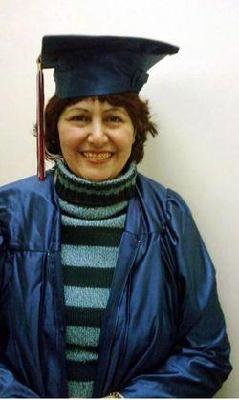
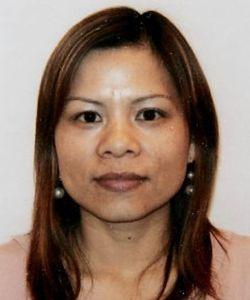
Roberta “Bobbie” Badaines King, 72, a White woman, was spending the morning of April 3, 2009 doing what she was known for around Binghamton—showing up when she was needed and making strangers feel less alone. She had agreed to fill in at the American Civic Association, where immigrants gathered for English lessons and help navigating a new life.
In that classroom, she spoke slowly and clearly, patient and kind, the sort of teacher who believed understanding could be built one careful sentence at a time.
Just after 10:30 a.m., the calm of the center shattered. A man later identified as Jiverly Wong—also reported early on as Jiverly Voong—arrived with a plan. Investigators said he positioned a vehicle at the rear to hinder escape, then entered through the front armed with two handguns and extra ammunition. He shot two receptionists almost immediately. One did not survive; the other, wounded, forced herself into stillness, playing dead until the gunman moved on, then slid beneath a desk and called 911 from the floor.
The gunman turned toward the nearest classroom, where King was teaching. In minutes that felt like an eternity to those trapped inside, he fired again and again—ballistics later putting the total at about 99 shots over roughly three minutes. The violence in that small room was devastating: King and many of her students were killed where they sat. As sirens sounded outside, the gunman ended the attack by taking his own life. When officers arrived moments later, the building had gone eerily quiet, and the first responders had to treat every hallway and doorway as if the danger might start again.
Outside, the scene stretched into a tense, confusing standoff as police worked to confirm whether the shooter was dead and whether anyone else might be involved. Nearby areas were locked down, and emergency responders staged and waited while law enforcement methodically cleared rooms. A SWAT entry followed, and survivors were escorted out in groups; others stayed hidden for hours, packed into a basement boiler room, listening for footsteps overhead. Four people were transported to hospitals in critical condition.
Investigators focused on the lone suspect, identifying him as a naturalized U.S. citizen from the area who had attended classes at the center. Police executed a search warrant at his home and interviewed family members, trying to reconstruct what had led him to transform an immigrant aid office into a killing ground. Authorities later described a letter connected to him that spoke of perceived harassment and humiliation tied to his English skills, a window into grievances that, whatever their origin, did not explain the scale of what he had done. Because the suspect died at the scene, there were no arrests for King’s killing, no criminal charges filed, and no trial—only an investigation that ended where the gunman’s life ended.
In the days that followed, King’s absence was measured in the details people kept reaching for: her lifelong habit of saying yes to work that mattered, her hunger for learning, her ability to talk with anyone, and the thousands of small kindnesses that never made headlines. Family and friends remembered a person who collected stories as eagerly as she collected dolls, who loved music and books and teaching, and who left behind a sprawling family and a community that could not reconcile the ordinary morning she set out for class with the way it ended. Years later, memorial gatherings still speak her name among the victims at the American Civic Association, holding onto the image of a teacher at the front of the room, trying to make the world a little more understandable—right up until it became unbearable.