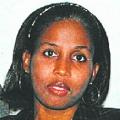
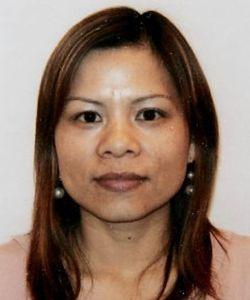
Maria Sonia Ju-Louis Bernard, 45, a Black woman, was killed on the morning of April 3, 2009, in Binghamton, New York, after walking into the American Civic Association with the ordinary purpose that brought so many people there: learning English, navigating paperwork, and trying to build a steadier life. Bernard had come to the United States a few years earlier and kept chasing forward motion—classes, work, community—believing the routine of effort would eventually turn into security.
Born in Haiti on February 1, 1964, Bernard lived there until 2006, earning an associate degree in office administration and working for the state telephone company TELECO. In Haiti, Bernard was active in a church community and carried that sense of connection into life in upstate New York, where Bernard continued seeking education and opportunity. At the American Civic Association, Bernard attended classes to strengthen English skills, an investment meant to widen the future for the family and make a new country feel less unfamiliar.
That morning, the building became a trap. At about 10:30 a.m., a man later identified as Jiverly Antares Wong, also known as Jiverly Voong, barricaded the rear exit with a vehicle and entered through the front. Wearing a bullet-resistant vest, a bright green jacket, and dark-rimmed glasses, Wong began firing almost immediately. Two receptionists were among the first shot; one survived by pretending to be dead and staying hidden long enough to call 911 and feed dispatchers details while bleeding beneath a desk.
Wong moved deeper into the facility, toward a classroom where an English lesson was underway. In minutes, gunfire tore through the room—students and a teacher caught at close range, with almost no time to comprehend what was happening, let alone escape. The violence ended as abruptly as it began: roughly three minutes after the first shots, Wong shot himself. When police and emergency responders worked their way through the building, they found a scene of devastation: thirteen people dead besides the shooter, with others wounded, and survivors hiding in closets and in the basement, waiting for the moment it was safe to breathe again.
Bernard and Bernard’s spouse, Marc Henri Bernard, were both among those killed. The couple lived in Endicott and were raising two children, Hermanoschy and Valentina Chystelle Bernard. They kept a disciplined schedule—classes in the morning, work in the afternoon—trying to be home in time to meet the children after school. Bernard worked at McDonald’s, while Marc had been employed in manufacturing before a layoff, and people around them described the pair as hardworking and friendly, the kind of neighbors who spoke to everyone and seemed determined to earn a place in the community they had chosen.
In the aftermath, the case did not unfold like a typical homicide investigation with arrests and courtroom testimony. The suspect was identified quickly, but there was no prosecution for the killings because Wong died at the scene. Investigators treated the attack as the act of a lone gunman; no additional suspects were charged in connection with the shootings. Public reporting also noted that Wong had a prior arrest in California years earlier that led to a misdemeanor fraud conviction for forgery, and that a package associated with Wong—containing writings and materials—surfaced after the attack, offering a glimpse into a mind unraveling rather than a trail leading to accomplices. What remained for Bernard’s loved ones was not a trial, but the long aftermath: children suddenly without both parents, a community forced to memorialize a morning that was supposed to be another step toward belonging.