Colin Ferguson and the 1993 Long Island Rail Road Massacre
Overview
Colin Ferguson committed one of the most notorious mass shootings in New York history on December 7, 1993. Armed with a semiautomatic handgun and a large supply of ammunition, Ferguson opened fire on passengers aboard a crowded Long Island Rail Road commuter train as it approached the Merillon Avenue station in Garden City Park, Nassau County, New York. Six people were killed and 19 others suffered gunshot wounds before several passengers overpowered him.
The attack occurred during the evening rush hour as commuters were traveling east from Manhattan toward communities on Long Island. Ferguson walked through the train car firing at people seated along both sides of the aisle. When he paused to reload, surviving passengers rushed him, wrestled him to the floor and held him until an off-duty railroad police officer arrived. Ferguson was later convicted of six murders and 19 attempted murders and received a sentence calculated at 315 years and eight months to life.
Background of Colin Ferguson
Colin Ferguson was born on January 14, 1958, in Kingston, Jamaica. He grew up in a comparatively prosperous family, but his circumstances changed after the deaths of his parents. Ferguson later immigrated to the United States and lived in several locations, including California and New York.
He attended Nassau Community College and Adelphi University on Long Island. During this period, Ferguson became increasingly preoccupied with perceived racial discrimination and personal grievances. His writings and statements frequently blamed white people, government agencies, former employers and educational institutions for the difficulties in his life. He was suspended from Adelphi University after displaying disruptive behavior and making threatening remarks.
Ferguson also experienced employment problems and legal disputes. In 1988, he suffered an injury while working for the Ademco Security Group on Long Island. He received workers’ compensation but continued to believe he had been treated unfairly. In 1992, he was arrested following an altercation with a woman on a New York City subway. Witnesses and acquaintances later described him as increasingly angry, suspicious and consumed by racial resentment.
Preparation for the Attack
Before the massacre, Ferguson obtained a Ruger P89 9-millimeter semiautomatic pistol in California, where firearm purchasing requirements differed from those then in effect in New York. He also acquired multiple magazines and approximately 160 rounds of ammunition.
On December 7, 1993, Ferguson carried the pistol, ammunition and written notes onto a Long Island Rail Road train. Investigators later recovered papers from him containing accusations against various people and institutions. The writings included repeated references to racism and indicated that Ferguson had deliberately selected Nassau County as the location for his attack.
The Long Island Rail Road Shooting
During the evening of December 7, 1993, Ferguson boarded the 5:33 p.m. eastbound Long Island Rail Road train at Pennsylvania Station in Manhattan. The train was headed toward Hicksville and carried commuters returning home after work. Ferguson entered the third passenger car, where more than 80 people were reportedly traveling.
As the train approached the Merillon Avenue station in Garden City Park at approximately 6:00 p.m., Ferguson stood, drew the Ruger pistol and began firing. He moved through the aisle and shot passengers seated on both sides of the car. Some people initially mistook the sounds for firecrackers or mechanical noises until passengers began shouting that someone had a gun.
The confined train car offered few places to escape. Passengers attempted to hide beneath seats, move into adjoining cars or reach the doors. Railroad personnel worked to open the train so injured and frightened passengers could leave. Ferguson continued shooting until he had emptied two 15-round magazines.
As Ferguson attempted to load another magazine, passengers Michael O’Connor, Kevin Blum and Mark McEntee rushed him. They tackled him and pinned him against the seats. Other passengers helped restrain his arms and legs. Their intervention prevented Ferguson from continuing the attack despite the additional ammunition he was carrying.
Off-duty Long Island Rail Road police officer Andrew Roderick was waiting at the station to meet his wife. After learning that a shooting had occurred, he entered the train, handcuffed Ferguson and took him into custody. Emergency personnel then treated the wounded and transported victims to area hospitals.
Fatal Victims
Six passengers died as a result of the shooting. Five died on December 7, 1993, while the sixth victim died from her injuries several days later.
- Amy Federici, 27 – A corporate interior designer from Mineola, New York. Federici was shot aboard the Long Island Rail Road train near the Merillon Avenue station in Garden City Park on December 7, 1993. She remained hospitalized for several days before dying from her injuries.
- James Gorycki, 51 – An account executive from Mineola, New York. Gorycki was killed during the December 7, 1993, shooting inside the third car of the eastbound commuter train.
- Maria Theresa Tumangan Magtoto, 30 – A lawyer from Westbury, New York. Magtoto was shot and killed aboard the train as it approached the Merillon Avenue station on December 7, 1993.
- Dennis McCarthy, 52 – An office manager from Mineola, New York. McCarthy was killed on December 7, 1993. His son, Kevin McCarthy, who was traveling with him, was critically wounded but survived.
- Richard Nettleton, 24 – A college student from Roslyn Heights, New York. Nettleton was fatally shot inside the commuter train on December 7, 1993.
- Mi Kyung Kim, 27 – A resident of New Hyde Park, New York. Kim was killed during the attack aboard the Long Island Rail Road train on December 7, 1993.
Wounded Passengers and Survivors
Nineteen passengers suffered gunshot wounds. Other people were injured while fleeing or responding to the chaos. Several survivors required extensive surgery, rehabilitation and long-term medical care.
Kevin McCarthy, the son of Dennis McCarthy, suffered devastating injuries when a bullet passed through his hand and entered his head. Doctors removed damaged brain tissue, and his family was initially warned that he might not survive. Kevin lived, but the shooting caused permanent physical and neurological effects.
Other survivors later described the lasting psychological consequences of being trapped in the train car. Many experienced anxiety, nightmares and fear associated with public transportation. Some nevertheless continued riding the same rail line as an act of determination and refusal to allow the shooting to control their lives.
Arrest and Evidence
Ferguson was arrested at the scene on December 7, 1993. Police recovered the Ruger P89 handgun, magazines and a substantial quantity of unused ammunition. Investigators also found handwritten papers describing his grievances and hostility toward people and organizations he believed had wronged him.
The evidence against Ferguson included the weapon, ammunition, documents found in his possession and testimony from numerous surviving passengers. Several witnesses had watched him move through the car and fire. The passengers who restrained him were able to identify him immediately, and he remained in their custody until Officer Roderick handcuffed him.
Indictment and Competency Proceedings
On January 19, 1994, a Nassau County grand jury returned a 93-count indictment against Ferguson. The charges included murder, attempted murder, assault, weapons offenses and crimes connected to the racial targeting of passengers.
Defense attorneys William Kunstler and Ronald Kuby initially represented Ferguson. They considered presenting a psychiatric defense based on the argument that Ferguson’s mental condition prevented him from being fully responsible for his actions. The proposed strategy became publicly associated with the controversial phrase “black rage.”
Ferguson rejected the proposed defense and maintained that he had not committed the shooting. He claimed that another person had taken his gun and fired it. Despite concerns about his behavior and beliefs, Judge Donald E. Belfi ruled on December 10, 1994, that Ferguson was mentally competent to stand trial. Competency did not mean that he was considered mentally healthy; it meant the court found that he understood the proceedings and could participate in his defense.
The 1995 Trial
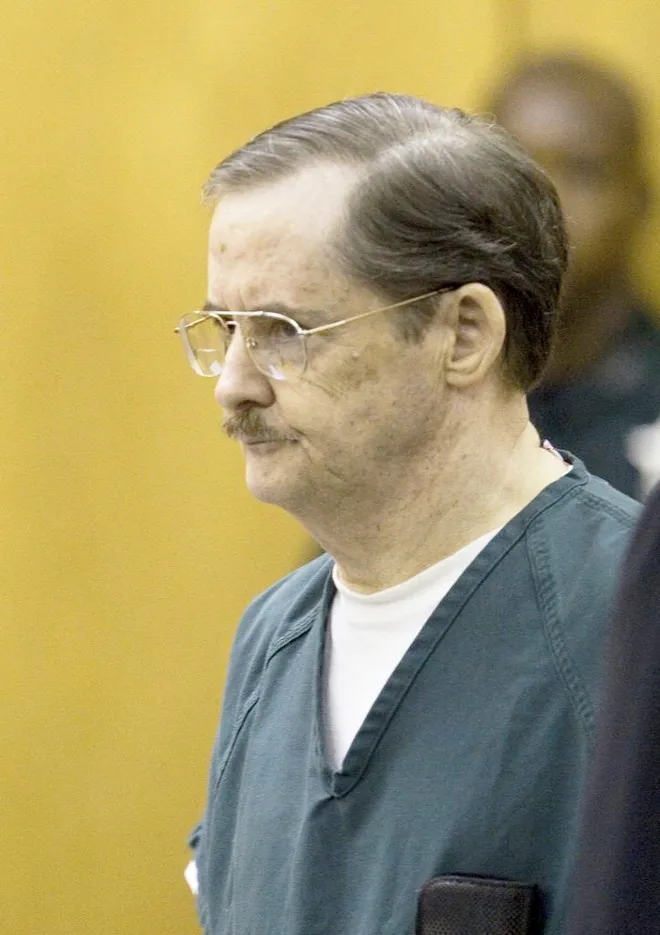
Ferguson dismissed his attorneys and represented himself during his trial in Nassau County Court. The proceedings began in January 1995 and attracted national attention. Acting as his own attorney, Ferguson questioned police officers, eyewitnesses and people he had wounded.
Ferguson admitted that he had brought the handgun onto the train but denied firing it. He presented a conspiracy theory in which an unidentified man supposedly took the weapon while Ferguson was sleeping and committed the shooting. This account conflicted with the testimony of numerous passengers who had directly observed Ferguson holding and firing the pistol.
Prosecutors presented eyewitness testimony, physical evidence and Ferguson’s written notes. Survivors described seeing him walk through the car and shoot passengers at close range. The passengers who subdued him testified about tackling and restraining him while he was attempting to reload.
Conviction and Sentence
On February 17, 1995, the jury convicted Colin Ferguson of six counts of second-degree murder, 19 counts of attempted second-degree murder and weapons offenses. The verdict held him criminally responsible for each person killed and each passenger wounded by gunfire.
On March 22, 1995, Judge Belfi imposed consecutive sentences totaling 315 years and eight months to life. The structure of the sentence ensured that Ferguson would remain imprisoned for the rest of his natural life. His theoretical earliest release date falls centuries beyond a normal human lifespan.
Ferguson continued to deny responsibility after his conviction. His appeals were unsuccessful, and the conviction and sentence remained in effect. He has been held in the New York State prison system.
Aftermath and Public Impact
The Long Island Rail Road massacre deeply affected communities across Nassau County and the New York metropolitan area. The attack demonstrated how quickly violence could unfold inside a crowded commuter train and raised questions about passenger security, emergency planning and access to firearms.
Carolyn McCarthy, the wife of Dennis McCarthy and mother of wounded survivor Kevin McCarthy, became a prominent advocate for stricter firearm legislation. She entered politics after her congressional representative opposed a proposed assault-weapons measure. McCarthy was elected to the United States House of Representatives in 1996 and served from January 1997 until January 2015.
The massacre also influenced discussions involving ammunition regulation, background checks and differences among state firearm laws. Families of victims and survivors pursued civil claims against firearm and ammunition manufacturers, although such lawsuits faced significant legal obstacles.
Legacy of the Case
The December 7, 1993, Long Island Rail Road shooting remains remembered primarily for the six commuters whose lives were taken, the many passengers who suffered serious injuries and the courage of those who stopped the attacker. The rapid actions of Michael O’Connor, Kevin Blum, Mark McEntee and the other passengers who helped restrain Ferguson prevented him from using the remaining ammunition in his possession.
The case also became an extraordinary example of the dangers associated with a defendant representing himself in a complex murder trial. Ferguson’s courtroom conduct, conspiracy claims and direct questioning of wounded survivors made the proceedings unusually painful for the people affected by the massacre. Despite those disruptions, the evidence resulted in convictions for all six murders and all 19 attempted murders.
Colin Ferguson’s crimes permanently altered the lives of dozens of passengers and families. The tragedy continued to influence public policy and survivor advocacy for decades, while memorial observances preserved the names of Amy Federici, James Gorycki, Maria Theresa Tumangan Magtoto, Dennis McCarthy, Richard Nettleton and Mi Kyung Kim.