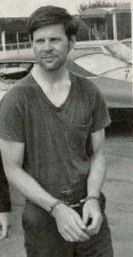
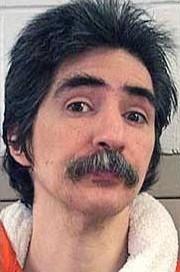
Leonard Thomas Lake: The Wilseyville Serial Murders
Background and Early Life
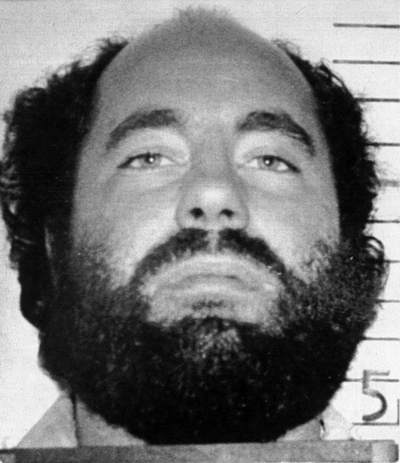
Leonard Thomas Lake was born on October 29, 1945, in San Francisco, California. He served in the United States Marine Corps during the Vietnam War as a radar electronics technician but was medically discharged in 1971 after military doctors diagnosed him with a personality disorder. In the years that followed, Lake became increasingly absorbed in survivalism, weapons, pornography and fantasies involving the imprisonment and domination of women.
Lake believed that civilization might collapse in a nuclear war. He imagined surviving such a disaster inside a fortified shelter while keeping women as prisoners for his sexual gratification. These ideas were not merely private fantasies. Lake recorded them in writings and on videotapes, describing a plan he called “Operation Miranda,” a reference to the imprisoned woman in the novel The Collector. His goal was to construct a concealed chamber where women could be held indefinitely and forced to obey him.
During the early 1980s, Lake became associated with Charles Chitat Ng, a former Marine originally from Hong Kong. Ng had fled military custody after stealing weapons from a Marine Corps armory. Although Lake was considerably older, the two men developed a close relationship based on their shared interest in firearms, military equipment, survivalism and sexual violence. After Ng was released from federal prison in 1984, he reunited with Lake in Northern California.
The Wilseyville Property
Lake established himself at a secluded property near Wilseyville in Calaveras County, California. The land was legally connected to his former wife, Claralyn Balazs, but Lake treated it as his private compound. In addition to the main residence, he constructed a bunker containing three rooms, two of which were hidden behind a concealed doorway.
One hidden room was furnished as a living area. The second was a narrow locked cell approximately seven feet long and three feet wide. It contained a small bed with a foam pad, a bucket, toilet paper and a lamp. Its door could be opened only from the outside. Investigators later concluded that Lake and Ng used this chamber to confine abducted women.
The two men targeted acquaintances, coworkers, neighboring families and strangers selling valuable property through classified advertisements. Male victims and children were generally killed, while some women were held captive, threatened, sexually assaulted and recorded on videotape. Lake and Ng also stole their victims’ vehicles, identification documents, money and household belongings. Forged letters and telephone calls were used to create the impression that missing victims had voluntarily moved away.
The Dubs Family Disappearance
On July 25, 1984, Harvey Dubs returned to his San Francisco apartment after telling a coworker that he was meeting someone interested in purchasing video equipment he had advertised for sale. Harvey lived with his wife, Deborah, and their 16-month-old son, Sean. At approximately 5:45 that evening, Deborah was speaking to a friend by telephone when someone arrived at the apartment. She ended the conversation to answer the door and was never heard from again.
A neighbor saw an Asian man carrying a suitcase from the apartment to a waiting car. Another neighbor later saw Ng leaving the residence with bags while Lake waited nearby in the Dubs family’s vehicle. Property was removed from the apartment during the following days. Lake and Ng attempted to disguise the disappearance by having someone telephone Harvey’s employer and falsely claim that Harvey had left California because of a family emergency.
When authorities eventually searched the Wilseyville property, they discovered a video recorder and other equipment belonging to the family. Human remains recovered from the property included bone and dental fragments from young children, although the remains of every member of the Dubs family were not individually identified. Ng was later convicted of murdering Harvey, Deborah and Sean Dubs.
Paul Cosner and the Stolen Honda
Paul Cosner, a San Francisco automobile dealer, disappeared on November 2, 1984. He had advertised his gold Honda Prelude for sale and told relatives that he was going to meet a prospective buyer. He failed to return home and missed plans with his girlfriend and sister. His body was never recovered.
Seven months later, Lake was found using Cosner’s Honda. Investigators discovered that the vehicle’s license plates belonged to another missing victim, Lonnie Bond, while a gun inside the car was registered to Robin Scott Stapley, who had also disappeared. Although prosecutors charged Ng with Cosner’s murder, the jury was unable to reach a verdict on that count. Cosner is nevertheless widely regarded as a probable victim of Lake and Ng.
Murders of Coworkers and Acquaintances
Lake and Ng also preyed upon men connected to Ng’s employment at Dennis Moving Company in San Francisco. Clifford Peranteau disappeared in January 1985 after Ng had offered him an opportunity to work at a supposed marijuana-growing operation. After Peranteau vanished, his possessions were removed from his residence. Lake forged a letter claiming that Peranteau had suddenly obtained a new job, a new home and a girlfriend.
Lake later sold Peranteau’s motorcycle. Investigators found Peranteau’s personal property in Ng’s apartment, at the Wilseyville compound and at a temporary hiding place Ng used in Canada. Peranteau’s body was never recovered, but the evidence established that the men had taken control of his belongings and attempted to conceal his disappearance.
Jeffrey Gerald, another moving-company employee, disappeared from San Francisco on February 24, 1985. Gerald told his roommate that he was meeting Ng at a bus station to help with a moving job for $100. He promised to return for dinner, but he was never seen alive again. Several days later, clothing, bedding, musical equipment and other property disappeared from his room. Gerald’s guitar was eventually discovered at Wilseyville, and his Social Security card was found buried on the property.
Michael Carroll and Kathleen Allen
Michael Carroll was acquainted with Ng and disappeared in April 1985. Lake and Ng obtained Carroll’s automobile, financial information and personal documents. They then contacted Carroll’s 18-year-old girlfriend, Kathleen Allen, and falsely told her that Carroll had been shot or had become involved in serious trouble near Lake Tahoe.
On April 14, 1985, Allen left her job at a Safeway supermarket in Milpitas and entered Paul Cosner’s stolen Honda Prelude with a man believed to be Lake. She telephoned a friend from a hotel and described the man accompanying her as strange, adding that he wanted to photograph her. She was taken to Wilseyville and never returned.
Investigators found a videotape showing Allen shackled to a chair. Lake and Ng told her that Carroll had already been buried and threatened to rape and kill her if she refused to cooperate. They demanded information about bank accounts and instructed her to help create letters explaining that she and Carroll had moved away. Later footage showed Allen being subjected to humiliation, threats and forced captivity. Her exact date of death was never established, but Ng was convicted of murdering both Allen and Carroll.
The Bond Family and Robin Scott Stapley
In January 1985, Lonnie Wayne Bond Sr. rented a house close to Lake’s compound. Bond lived there with his fiancée, Brenda Sue O’Connor, and their infant son, Lonnie Bond Jr. Their friend Robin Scott Stapley, commonly called Scott Stapley, visited frequently.
The family and Stapley disappeared in late April 1985. Lake quickly began using Bond’s vehicle and identification. He told neighbors that the family had suddenly moved away, but their property remained under his control. Evidence later showed that O’Connor had been imprisoned inside Lake’s bunker.
A videotape recovered from the compound showed Brenda O’Connor in captivity. Lake discussed the murder of Bond and threatened O’Connor and her baby. The recording demonstrated that the disappearance was not voluntary and that O’Connor understood her family was in immediate danger.
On July 8, 1985, investigators discovered the bodies of Bond and Stapley in separate sleeping bags buried approximately one-quarter mile from the Wilseyville property. Bond had been handcuffed, gagged and shot in the head. Stapley’s hands and ankles had been bound with duct tape, and he had been shot three times. Plastic bags had been placed over both men.
The bodies of O’Connor and her infant son were not immediately identified. Modern forensic testing eventually provided additional answers. In 2025, authorities announced that remains recovered during the original investigation had been positively identified as those of Brenda Sue O’Connor. She had been 20 years old when she disappeared. The exact circumstances and date of her death remain uncertain.
Identified and Confirmed Victims
- Harvey Dubs — Disappeared from his San Francisco apartment on July 25, 1984. His exact time of death was not established. Ng was convicted of his murder.
- Deborah Dubs — Disappeared with her husband and child from San Francisco on July 25, 1984. Her exact time of death was not established. Ng was convicted of her murder.
- Sean Dubs — The 16-month-old son of Harvey and Deborah Dubs disappeared in San Francisco on July 25, 1984. Ng was convicted of murdering him.
- Clifford Peranteau — Disappeared from San Francisco in January 1985. His body was never recovered, and the exact date of death remains unknown. Ng was convicted of his murder.
- Jeffrey Gerald — Last seen in San Francisco on February 24, 1985, after leaving to meet Ng for a moving job. His exact date of death was not independently established. Ng was convicted of his murder.
- Michael Carroll — Disappeared from the Milpitas area in April 1985. Lake and Ng took possession of his automobile and personal documents. Ng was convicted of his murder.
- Kathleen Allen — Abducted from Milpitas on April 14, 1985, and taken to the Wilseyville compound. Her exact date of death remains unknown. Ng was convicted of her murder.
- Lonnie Wayne Bond Sr. — Disappeared from Wilseyville in late April 1985. His bound and gagged body was recovered near the compound on July 8, 1985. He had been shot in the head.
- Brenda Sue O’Connor — Disappeared from Wilseyville in late April 1985. She was recorded as a prisoner inside the bunker. Her remains were positively identified in 2025, although her exact date of death was not determined.
- Lonnie Bond Jr. — Disappeared with his parents from Wilseyville in late April 1985. He was approximately one year old. Ng was convicted of his murder, but an exact death date was not established.
- Robin Scott “Scott” Stapley — Disappeared from the Wilseyville area in late April 1985. His bound body was discovered near the compound on July 8, 1985. He had been shot three times.
- Reginald “Reggie” Frisby — Last known to have been living in San Francisco in 1984. His remains were recovered near the Wilseyville compound and identified through forensic DNA testing in 2025. His exact date and circumstances of death remain unknown.
Probable and Suspected Victims
- Paul Cosner — Disappeared from San Francisco on November 2, 1984, while attempting to sell his Honda Prelude. Lake was driving Cosner’s car when arrested. Cosner’s body was never recovered, and Ng’s jury did not reach a verdict on the murder charge.
- Donald Lake — Leonard Lake’s younger brother disappeared during a trip with him in December 1982. Donald was never found. His disappearance has long been considered suspicious, but Leonard Lake was never prosecuted for his death.
- Charles Gunnar — A survivalist associate with whom Lake lived in 1983. Gunnar disappeared after reportedly leaving with Lake on May 22, 1983. Lake subsequently assumed Gunnar’s identity and took possession of his belongings. Gunnar’s body was never recovered.
Discovery of the Crimes
The investigation began unexpectedly on June 2, 1985, when Ng attempted to steal a large vise from South City Lumber Company in South San Francisco. A witness alerted employees and police. Ng walked away before officers arrived, leaving Lake beside Paul Cosner’s stolen Honda.
Police found an illegally equipped firearm and silencer in the vehicle. Lake identified himself as Robin Scott Stapley and produced Stapley’s driver’s license, but officers soon discovered that the car, license plates, gun and identification were connected to several missing people. Lake was arrested and taken to the South San Francisco police station.
While in custody, Lake swallowed cyanide capsules he had concealed in his clothing. He collapsed and was transported to a hospital, where he remained on life support until his death on June 6, 1985. By killing himself, Lake avoided interrogation, prosecution and a public trial.
A utility bill found inside the Honda led investigators to the Wilseyville compound. During a five-week search involving several law-enforcement agencies, investigators uncovered the concealed bunker, bloodstained tools, firearms, restraints, victims’ property, videotapes, written records and thousands of burned bone and tooth fragments.
Forensic anthropologists determined that the scattered remains represented at least four adults, one child and one infant. A child’s liver was also found buried on the property. Because many remains had been burned, crushed and widely dispersed, investigators could not determine precisely how many people had died there.
Charles Ng’s Flight, Capture and Conviction
After leaving the lumber store, Ng fled the United States and traveled to Canada. He was arrested in Calgary on July 6, 1985, after another shoplifting incident that resulted in a confrontation with store security. Canadian authorities prosecuted him for crimes committed during that arrest.
The United States sought Ng’s extradition, but the process lasted several years because Canada objected to sending a prisoner to a jurisdiction where he could receive the death penalty. Ng was finally returned to California in 1991.
His trial began in 1998 after years of motions, disputes over legal representation, competency proceedings and a change of venue from Calaveras County to Orange County. On February 24, 1999, a jury convicted Ng of 11 counts of first-degree murder involving Harvey, Deborah and Sean Dubs; Clifford Peranteau; Jeffrey Gerald; Michael Carroll; Kathleen Allen; Lonnie Bond Sr.; Brenda O’Connor; Lonnie Bond Jr.; and Robin Scott Stapley.
The jury also found Ng guilty of kidnapping, burglary and attempted murder. On April 30, 1999, the jury recommended a death sentence. The California Supreme Court upheld his convictions and sentence in 2022. Lake could not be formally convicted because he died before the full extent of the crimes was discovered, but the physical evidence, recordings and Lake’s own writings established his central role in planning and carrying out the murders.
Uncertain Number of Victims
Although Ng was convicted of 11 murders, investigators have long suspected that Lake and Ng killed additional people. Early estimates suggested that the number might have reached 25, but the destruction of human remains made a precise count impossible. The identification of Reginald Frisby and Brenda O’Connor decades later demonstrated that evidence from the Wilseyville property could still reveal new information.
The crimes of Leonard Lake were driven by a combination of sadistic sexual fantasies, a desire for absolute control, greed and a willingness to eliminate anyone who could expose him. He constructed a physical environment designed for captivity and treated human beings as disposable objects. Men and children were murdered, women were imprisoned and terrorized, and victims’ property was stolen to finance and conceal the operation.
Lake’s suicide prevented survivors’ families from seeing him answer in court for his actions. Nevertheless, the conviction of Charles Ng, continuing forensic identifications and preservation of the victims’ names have ensured that the Wilseyville murders are remembered not simply for their perpetrators, but for the individuals and families whose lives were taken.