Manuel Pardo: The Former Police Officer Who Murdered Nine People
Introduction
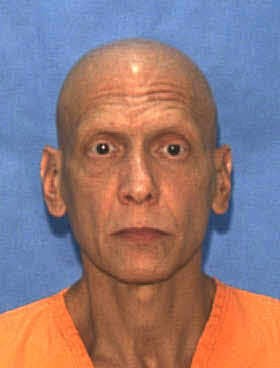
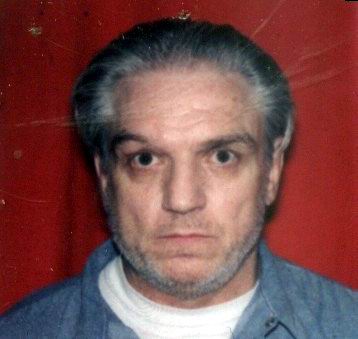
Manuel “Manny” Pardo Jr. was an American serial killer and former police officer who murdered nine people during five separate attacks in South Florida between January 22 and April 23, 1986. His victims included people associated with the illegal drug trade, acquaintances involved in personal disputes, and a man Pardo believed was providing information to law enforcement.
Pardo attempted to portray the killings as a vigilante campaign against drug dealers. Prosecutors rejected that explanation, arguing that he was himself involved in criminal activity and that robbery, retaliation, financial gain, and the elimination of rivals or potential informants were the true motives. The victims were generally shot at close range in attacks that authorities described as calculated executions.
Early Life and Police Career
Manuel Pardo Jr. was born in New York on September 24, 1956. He served in the United States Marine Corps before entering law enforcement. Pardo joined the Florida Highway Patrol and reportedly performed extremely well during his academy training. His career with the agency ended in 1979 after he was accused of falsifying traffic citations.
Pardo was later hired by the Sweetwater Police Department in Miami-Dade County. His law-enforcement career again ended under troubling circumstances. Pardo and another officer, Rolando Garcia, became involved in a case concerning false testimony connected to the delivery of weapons to the Caribbean. Pardo claimed the officers were participating in an undercover operation, but authorities determined that his account was false. He was dismissed from the department in the early 1980s.
After leaving police work, Pardo maintained access to firearms and became associated with people involved in narcotics, stolen property, illegal weapons, and other criminal enterprises. Garcia remained one of his closest associates and was later prosecuted in connection with several of the murders.
The First Double Murder
Pardo’s known murder series began on January 22, 1986, with the deaths of Mario Amador and Roberto Alfonso. The two men were killed during what investigators described as a drug-related robbery or “rip-off.” Both victims were shot, and evidence later connected Pardo to the attack.
The killings established the pattern that would continue throughout the following three months. Pardo selected people he knew or believed were connected to criminal activity, approached them under circumstances that did not immediately arouse suspicion, and then used firearms to kill them. Property, money, drugs, or credit cards were taken in connection with several of the attacks.
The Murder of Michael Millot
Six days later, on January 28, 1986, Pardo killed Michael Millot. Millot was a Haitian political activist and gunsmith who had reportedly manufactured or supplied a firearm silencer for Pardo. Pardo came to believe that Millot was acting as a confidential informant.
According to the prosecution’s account, Millot was lured to a vehicle in Miramar, Florida. Pardo was waiting inside and shot Millot in the head. The automobile was later altered or reupholstered in an apparent effort to conceal evidence of the killing.
The courts concluded that Millot’s murder was committed to prevent or disrupt cooperation with law enforcement. Pardo later attempted to justify the killing by branding Millot an informant, but the attack was treated as another deliberate and premeditated execution.
The Robledo and Ledo Murders
On February 27, 1986, Luis Robledo and Armando Ulpiano Ledo were killed during another suspected drug-related robbery. The men were attacked at a residence in the Miami-Dade County area. Both were shot and killed.
Investigators believed the attack was carried out for financial or criminal gain rather than as part of the public-service mission Pardo later claimed. The murders occurred more than a month after Millot’s death, demonstrating that the killings were separate, planned episodes rather than one continuous confrontation.
The Murders of Sara Musa and Fara Quintero
On April 22, 1986, Pardo and Garcia became involved in a dispute with Sara Musa and Fara Quintero. The women were acquaintances who had allegedly received money or stolen credit cards with instructions to purchase a videocassette recorder. When the proposed transaction was not completed, the disagreement escalated.
Pardo also claimed that Quintero had sent him a threatening numerical message through a pager. He interpreted the message as a sign that she intended to have him killed. Prosecutors regarded this explanation as another attempt to rationalize a retaliatory double murder.
Musa and Quintero were shot and killed in Hialeah on April 22. The killings were not shown to be part of any legitimate effort to stop violent criminals. Instead, the evidence indicated that the women were murdered because Pardo and Garcia were angry over money, property, and the failed purchase.
The Final Double Murder
The following day, April 23, 1986, Pardo murdered Ramon Antonio Alvero and Alvero’s companion, Daisy Josefina Ricard. Alvero was described as a suspected drug dealer and an associate whom Pardo regarded as a superior or employer within the drug trade. Pardo was reportedly angry because Alvero had failed to appear for planned narcotics transactions.
Alvero and Ricard were shot in Miami. During the attack, Pardo’s firearm malfunctioned while he was assaulting Ricard. A cartridge discharged into Pardo’s foot, creating the physical evidence that would help expose him. Despite suffering the injury, Pardo fled and traveled to New York with Garcia.
Confirmed Victims
- Mario Amador, 33 — Murdered on January 22, 1986, in Hialeah, Florida. Amador was killed with Roberto Alfonso during a suspected drug-related robbery.
- Roberto Alfonso, 28 — Murdered on January 22, 1986, in Hialeah, Florida. Alfonso was shot during the same attack that killed Mario Amador.
- Michael Millot, 43 — Murdered on January 28, 1986, in Miramar, Florida. Millot, a gunsmith and Haitian political activist, was killed because Pardo believed he was an informant.
- Luis Robledo, 37 — Murdered on February 27, 1986, in the Miami-Dade County area of Florida. Robledo was killed during a suspected drug-related robbery.
- Armando Ulpiano Ledo, 39 — Murdered on February 27, 1986, in the Hialeah or Miami-Dade County area of Florida. Ledo was killed during the same attack as Luis Robledo.
- Sara T. Musa, 28 — Murdered on April 22, 1986, in Hialeah, Florida. Musa was killed following a dispute involving money, stolen credit cards, and the proposed purchase of a videocassette recorder.
- Fara Quintero, 30 — Murdered on April 22, 1986, in Hialeah, Florida. Quintero was killed with Sara Musa after angering Pardo and Garcia.
- Ramon Antonio Alvero, 41 — Murdered on April 23, 1986, in Miami, Florida. Alvero was allegedly involved in drug trafficking and had failed to appear for transactions arranged with Pardo.
- Daisy Josefina Ricard, 37 — Murdered on April 23, 1986, in Miami, Florida. Ricard was killed alongside Ramon Alvero during Pardo’s final known murder episode.
The Investigation and Arrest
Pardo’s injury during the Alvero and Ricard murders became a critical break in the investigation. He and Garcia traveled to New York, where Pardo sought medical treatment for the gunshot wound in his foot. He attempted to provide a false explanation for how he had been injured.
Investigators recovered the projectile from Pardo’s foot. Ballistics testing connected it to the firearm associated with the final murder scene. The unusual fact that the suspected killer had been wounded by his own weapon gave detectives a direct physical link between Pardo and the victims.
Pardo was taken into custody on May 7, 1986. Garcia was arrested later that month. Searches of Pardo’s property uncovered additional incriminating evidence, including firearms, stolen items, photographs, newspaper clippings about the killings, and a diary containing references to several victims.
Authorities also discovered a collection of Nazi memorabilia and evidence that Pardo admired Adolf Hitler. Prosecutors presented testimony concerning his racist and antisemitic beliefs. These findings contradicted the disciplined public image he had once cultivated as a Marine and police officer.
Pardo’s Claims and the Prosecution’s Case
Pardo admitted that he intentionally killed all nine victims. Rather than denying the shootings, he claimed that the victims were drug dealers or criminals who had no right to live. He described himself as a soldier carrying out a mission to remove dangerous people from society.
The prosecution demonstrated that this explanation was misleading. Although some victims may have been associated with narcotics or other crimes, Pardo was also involved in the illegal drug trade. Several killings involved robbery, stolen property, personal retaliation, or the silencing of someone perceived as an informant.
Evidence showed that the murders were carefully planned. Victims were approached through existing relationships or lured into vulnerable positions. Pardo used concealable firearms, including weapons equipped with silencers, and attempted to remove or alter evidence afterward. He kept records and souvenirs connected to the crimes, suggesting that the killings held deep personal importance for him.
Trial and Conviction
Pardo went on trial in 1988. His case was separated from Garcia’s, allowing prosecutors to try Pardo on all nine murder counts. Against the advice of his attorneys, Pardo testified in his own defense and openly acknowledged committing the killings.
The defense presented evidence suggesting that Pardo was psychotic or mentally disturbed. Other experts concluded that he understood that murder was illegal and was competent to stand trial. The jury rejected the insanity defense and found him guilty of nine counts of first-degree murder, along with robbery and firearm-related offenses.
Pardo asked the jury to sentence him to death rather than imprison him for life. He described his killings as a completed military-style mission and claimed that execution would provide a glorious conclusion. The jury recommended death for each murder, with the votes varying among the nine counts.
In April 1988, the trial judge imposed nine death sentences. The court found that the murders were cold, calculated, and premeditated. Additional aggravating factors applied to individual killings, including murder for financial gain and the killing of a suspected informant to interfere with a governmental function.
Rolando Garcia
Rolando Garcia was charged as Pardo’s accomplice in the murder series. Prosecutors alleged that he helped arrange meetings, participated in robberies, and assisted Pardo before or after several killings.
Garcia was eventually convicted of four first-degree murders and initially sentenced to death. His convictions were later overturned, and he received a new trial. In 2002, Garcia pleaded guilty to four counts of second-degree murder and received a 25-year prison sentence. Because of the time he had already served, he was released that year.
Appeals and Execution
The Florida Supreme Court upheld Pardo’s convictions and death sentences in 1990. The court emphasized that the murders occurred during five distinct episodes and rejected the suggestion that they were one continuous incident. Judges characterized the killings as deliberate executions carried out without moral or legal justification.
Pardo spent more than 26 years on Florida’s death row while his attorneys pursued state and federal appeals. His claims concerning mental illness, trial errors, sentencing, and access to records were unsuccessful.
Manuel Pardo Jr. was executed by lethal injection at Florida State Prison on December 11, 2012. He was pronounced dead at 7:47 p.m. He was 56 years old.
Legacy
Manuel Pardo remains one of Florida’s most notorious examples of a law-enforcement officer becoming a serial murderer. His police training, familiarity with investigative methods, and access to criminal contacts allowed him to approach victims and temporarily conceal his involvement.
His claim that he was protecting society was undermined by evidence that he robbed victims, participated in illegal drug activity, killed over personal grievances, and preserved reminders of the murders. The five attacks were not lawful confrontations or spontaneous acts of self-defense. They were planned killings committed over a period of approximately three months.
The case also demonstrated how one unexpected piece of evidence can expose a carefully concealed murder series. The bullet accidentally fired into Pardo’s foot linked him to the final crime scene and helped investigators unravel the connections among all nine deaths.