Jennifer San Marco and the 2006 Goleta Postal Facility Murders
Overview
Jennifer San Marco was a 44-year-old former United States Postal Service employee who murdered seven people during a carefully prepared shooting rampage in Santa Barbara County, California. On January 30, 2006, she killed a former neighbor in Santa Barbara before traveling to the postal processing facility where she had once worked in nearby Goleta. She murdered six postal employees at the facility and then died by suicide.
The attacks occurred at two locations and unfolded over several hours. The first killing was committed at San Marco's former condominium complex in Santa Barbara. The remaining murders occurred at the Santa Barbara Processing and Distribution Center, a large and normally secured postal facility at 400 Storke Road in Goleta. San Marco used a 9mm Smith & Wesson Model 915 semiautomatic pistol.
Background of Jennifer San Marco
Jennifer San Marco was born on December 6, 1961, in Brooklyn, New York. She attended Edward R. Murrow High School, Brooklyn College and Rutgers University, although she did not complete a degree at Rutgers. She moved to California and held several government-related positions, including a brief job as a correctional officer and employment as a dispatcher for the Santa Barbara Police Department.
San Marco later became a mail-processing clerk at the Goleta postal facility. Her behavior at work reportedly became increasingly erratic. Police removed her from the facility during an incident in 2001, after which she was placed on an involuntary psychiatric hold. She eventually returned to postal employment but was again removed from the workplace following another serious disturbance. By 2003, she was no longer regularly working at the facility and was receiving psychological disability benefits.
San Marco moved to Grants, New Mexico, during 2004. People who encountered her there described episodes of unusual and disturbing behavior, including talking to unseen individuals, shouting in public and making paranoid or racially offensive statements. She attempted to obtain a business license for a publication she called The Racist Press, but the application was rejected. Despite these incidents, she was not legally prohibited from purchasing a firearm.
Preparation for the Attack
Before returning to California, San Marco purchased a used Smith & Wesson pistol and ammunition from pawn shops in New Mexico. She passed the required background check. Investigators later determined that she had also cut her hair extremely short, leaving her appearance noticeably different from the way former coworkers remembered her.
Authorities found extensive writings among her belongings after the murders. These documents contained paranoid allegations involving former coworkers, government agencies, religious groups and imagined conspiracies. A diary reportedly recorded numerous perceived insults and grievances. Investigators believed that resentment toward the Postal Service, severe paranoia and possible racial hostility may all have influenced her actions, although no single definitive motive was established.
Murder of Beverly Graham
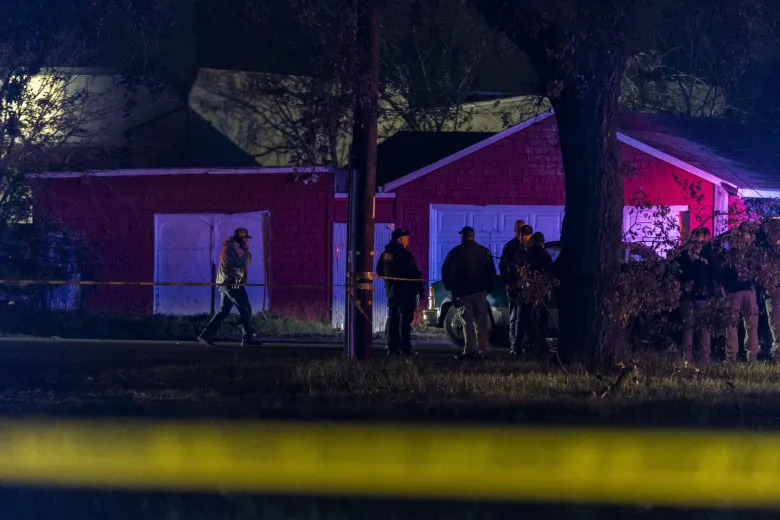
On the evening of January 30, 2006, San Marco went to the condominium complex where she had previously lived on West Calle Real in Santa Barbara. There she confronted Beverly Graham, a 54-year-old former neighbor. The women had reportedly experienced conflicts while San Marco lived at the complex, and Graham had complained about San Marco's disruptive behavior.
San Marco shot Graham in the head and left her inside the residence. Neighbors reported hearing gunfire at approximately 7:15 p.m., but Graham's death was not immediately connected to the later postal-facility attack. Investigators discovered the connection after identifying San Marco and reviewing her former addresses and relationships.
Entry into the Goleta Postal Facility
After killing Graham, San Marco drove approximately ten miles west to the Santa Barbara Processing and Distribution Center in Goleta. The facility was secured by gates and employee-access controls. San Marco entered the parking area by closely following an authorized vehicle through the gate before it closed.
Once inside the property, she confronted a postal employee at gunpoint and demanded the employee's identification badge. She used the badge to obtain electronic access to the building. San Marco allowed that employee to leave unharmed, indicating that she was selecting particular people or locations rather than firing indiscriminately at every person she encountered.
The Parking-Lot Murders
At approximately 9:00 p.m., San Marco began shooting postal employees in the facility's parking lot. Ze Fairchild, Maleka Higgins and Nicola Grant were attacked outside the building. Employees inside heard the gunfire, and some looked through windows toward the parking area. Witnesses reported that San Marco appeared calm as she continued toward the building.
Several workers escaped from the facility and ran to a nearby fire station. Others hid inside work areas, offices or processing spaces. Approximately 80 employees were believed to have been working in the building when the attack began.
The Murders Inside the Facility
After entering the processing center, San Marco shot postal supervisor Charlotte Colton. A coworker pulled Colton away from the immediate danger and into another room. She was transported to Santa Barbara Cottage Hospital in critical condition but died from her injuries on February 1, 2006.
San Marco then moved toward the section of the facility where she had formerly worked. Guadalupe Swartz saw her approaching and attempted to escape. San Marco fired repeatedly, killing Swartz. She also encountered Dexter Shannon, a Vietnam War veteran who was working while wearing headphones. Shannon apparently did not hear the earlier gunshots and was shot at close range.
Law-enforcement officers from several agencies surrounded and entered the facility while employees remained hidden. Before officers reached her, San Marco shot herself in the head. She died inside the building on January 30, 2006. No other person was prosecuted because investigators determined that she had acted alone.
Victims
- Beverly Graham, 54 — Killed on January 30, 2006, at San Marco's former condominium complex on West Calle Real in Santa Barbara, California. Graham was a former neighbor who had previously experienced conflicts with San Marco.
- Ze Fairchild, 37 — Killed on January 30, 2006, in the parking lot of the Santa Barbara Processing and Distribution Center at 400 Storke Road in Goleta, California.
- Maleka Higgins, 28 — Killed on January 30, 2006, in the parking area of the Goleta postal processing facility.
- Nicola Grant, 42 — Killed on January 30, 2006, outside the Goleta postal processing facility during the opening stage of the workplace attack.
- Guadalupe Swartz, 52 — Killed on January 30, 2006, inside the Goleta postal processing facility after attempting to flee from San Marco.
- Dexter Shannon, 57 — Killed on January 30, 2006, while working inside the Goleta postal facility. Shannon was a Vietnam War veteran, husband, father and grandfather.
- Charlotte Colton, 44 — Shot inside the Goleta postal facility on January 30, 2006. She died from her injuries at Santa Barbara Cottage Hospital on February 1, 2006.
Investigation and Possible Motives
The Santa Barbara County Sheriff's Department, the Santa Barbara Police Department, federal postal inspectors and other agencies participated in the investigation. Authorities searched San Marco's vehicle, her residence in New Mexico and other locations associated with her. The recovered evidence demonstrated extensive planning, but investigators did not find evidence that anyone had helped her carry out the murders.
San Marco's writings suggested that she believed former coworkers and government officials were participating in a conspiracy against her. Investigators also considered workplace revenge because she returned to the exact facility from which she had been removed. Racial prejudice was examined as another possible factor because most of the people she killed were members of racial or ethnic minority groups and because she had previously made racist statements. Authorities nevertheless stopped short of identifying one conclusive motive.
Aftermath
The murders devastated postal employees and families throughout Santa Barbara County. The processing center temporarily suspended operations while investigators documented the crime scene. Postal workers from other locations helped restore mail service as surviving employees received counseling and support.
Memorial services were held for the victims in the days following the attack. More than a thousand mourners reportedly attended Charlotte Colton's funeral. Families remembered the victims as parents, grandparents, friends, veterans and longtime public servants rather than simply as names associated with a workplace shooting.
The Goleta attack became one of the deadliest workplace shootings committed by a woman in the United States. Seven innocent people were murdered at two locations, six of them because they reported for an ordinary night shift at a postal facility. The case also intensified discussion about workplace warning signs, access to mental-health intervention, secure-entry procedures and the legal standards governing firearm purchases by people with histories of severe psychiatric disturbances.