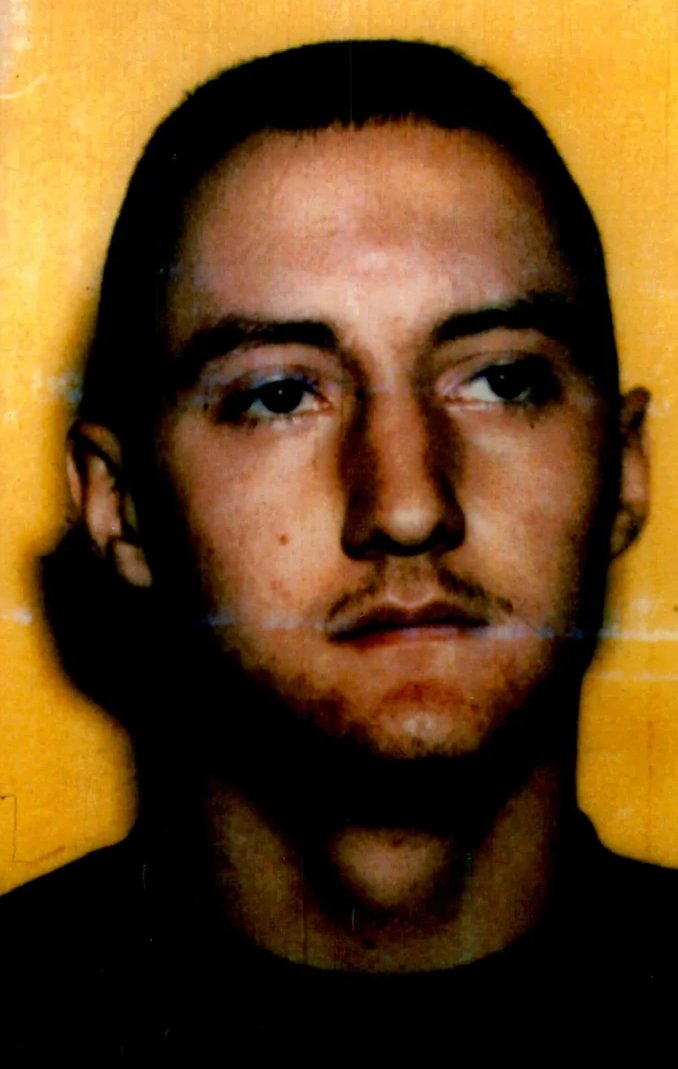
Charles Thornton and the 2008 Kirkwood City Council Shooting
Overview
Charles Lee “Cookie” Thornton was responsible for a deadly attack on municipal officials and police officers in Kirkwood, Missouri, on February 7, 2008. Thornton, a 52-year-old resident of the Meacham Park neighborhood, entered Kirkwood City Hall during a public city council meeting and opened fire. Five victims died that evening, Mayor Mike Swoboda was critically wounded and later died after suffering continuing medical complications, and a newspaper reporter was injured. Thornton was shot and killed by responding police officers inside the council chamber.
The attack was not considered random. Thornton had spent years in conflict with Kirkwood officials over municipal citations, construction work, legal disputes and his treatment at public meetings. Several of the people he targeted had been directly involved in those disputes. His grievances developed after Meacham Park, a historically Black community adjoining Kirkwood, was annexed by the city in 1992. Thornton increasingly claimed that city officials were unfairly enforcing ordinances against him and denying him economic opportunities.
Background and Disputes with Kirkwood
Thornton was born on December 23, 1955, and lived for much of his life in Meacham Park. He operated a demolition and asphalt business and had once participated in local civic activities. He unsuccessfully ran for a seat on the Kirkwood City Council in 1994. Thornton initially supported a commercial redevelopment project near Meacham Park because he believed local contractors, including his company, would receive work from the project.
Thornton later became convinced that Kirkwood officials had excluded him from contracts and were deliberately targeting him with municipal citations. The city cited him repeatedly for matters involving vehicles, equipment, signs, debris and other alleged ordinance violations. Thornton challenged many of the citations and accumulated substantial fines and legal costs. He regularly appeared at city council meetings to denounce officials and accuse the city of corruption, discrimination and constitutional violations.
His confrontations with city employees occasionally became physical. On May 13, 2002, Thornton was convicted of assaulting Kirkwood Public Works Director Kenneth Yost during an argument. Yost would later become one of the people killed in the 2008 attack. Thornton was also removed from council meetings after disrupting proceedings. On May 18, 2006, police arrested and handcuffed him at a meeting after he refused orders to stop speaking and leave the podium.
On June 1, 2006, the council considered proposals that would have restricted Thornton from attending or speaking at meetings. The measures were defeated, and Mayor Mike Swoboda stated that the city would continue allowing Thornton to participate as long as he followed meeting rules. Thornton nevertheless continued to believe that the city was silencing him. He filed lawsuits and demanded millions of dollars in damages, but his legal claims were unsuccessful.
Thornton also faced a pending misdemeanor assault case arising from a June 24, 2007, confrontation outside a Kirkwood restaurant. By early 2008, his relationship with city leaders and police had deteriorated into open hostility. Investigators later concluded that the February 2008 attack had been planned and that Thornton expected to die during it.
The Attack Begins
On Thursday, February 7, 2008, the Kirkwood City Council was scheduled to hold a public meeting at City Hall on South Taylor Avenue. Approximately 30 people were gathered in the council chamber. Thornton drove to the area in a van carrying a Smith & Wesson Model 29 .44-caliber revolver.
Shortly before the meeting began, Thornton encountered Kirkwood Police Sergeant William Biggs in a parking area near an Imo’s Pizza restaurant across the street from City Hall. Biggs was on duty and had reportedly been walking to obtain dinner. Recognizing the danger, Biggs activated an emergency signal on his police radio. Thornton then shot and killed him.
After killing Biggs, Thornton took the sergeant’s Smith & Wesson .40-caliber service pistol. Armed with both weapons, he crossed the street and entered Kirkwood City Hall. Biggs’s emergency transmission alerted other officers, but Thornton reached the council chamber before they could stop him.
Shooting Inside City Hall
The council meeting had just opened, and those present had completed the Pledge of Allegiance. Thornton entered quietly from the rear of the chamber with his weapons initially concealed. He approached the officials and began firing at close range.
Kirkwood Police Officer Tom Ballman, who was assigned to provide security at the meeting, was among the first people Thornton shot. Ballman was fatally wounded before he could stop the attack. Thornton then fired at the officials seated at the front of the room.
Thornton killed Councilwoman Connie Karr, Councilman Michael H. T. Lynch and Public Works Director Kenneth Yost. He also shot Mayor Mike Swoboda in the head and face. Witnesses reported that Thornton repeatedly referred to the mayor during the assault, demonstrating that Swoboda was one of his principal targets.
Suburban Journals reporter Todd Smith, who was covering the meeting, was shot in the hand. Other council members and spectators dropped to the floor, crawled behind furniture or fled from the chamber. Thornton pursued City Attorney John Hessel, another official associated with his legal disputes. Hessel threw chairs into Thornton’s path and managed to escape without being shot.
Police Response and Thornton’s Death
The gunfire could be heard from the nearby Kirkwood Police Department. Officers rushed into City Hall and entered the council chamber. Thornton took cover near the council desk and fired at the responding officers.
The officers returned fire, striking Thornton in the neck and abdomen. He died inside the chamber on February 7, 2008. Investigators determined that he still possessed ammunition when he was killed and could have continued shooting if police had not intervened.
Authorities recovered Thornton’s .44-caliber revolver and Sergeant Biggs’s stolen .40-caliber service pistol. Witnesses estimated that approximately 15 shots had been fired during the attack. The entire sequence, from the killing of Biggs to Thornton’s confrontation with responding officers, unfolded within a matter of minutes.
Victims
- Sergeant William Biggs, 50 — A Kirkwood police sergeant killed on February 7, 2008, in a parking area near Kirkwood City Hall and the Imo’s Pizza restaurant in Kirkwood, Missouri. Thornton stole Biggs’s service pistol after shooting him.
- Officer Tom Ballman, 37 — A Kirkwood police officer providing security at the city council meeting. He was fatally shot on February 7, 2008, inside the Kirkwood City Hall council chamber.
- Connie Karr, 51 — A member of the Kirkwood City Council. She was shot and killed on February 7, 2008, while seated in the council chamber at Kirkwood City Hall.
- Michael H. T. Lynch, 63 — A Kirkwood City Council member and attorney. He was killed during the February 7, 2008, attack inside City Hall.
- Kenneth “Ken” Yost, 61 — Kirkwood’s public works director. He was shot and killed on February 7, 2008, inside the council chamber. Yost had previously been involved in a 2002 confrontation that resulted in Thornton’s assault conviction.
- Mike Swoboda, 69 — The mayor of Kirkwood. He was shot twice and critically wounded on February 7, 2008, at Kirkwood City Hall. Swoboda survived the immediate attack but died in hospice on September 6, 2008. His declining health involved complications associated with the shooting as well as cancer and other medical problems.
- Todd Smith, 36 — A reporter for the Suburban Journals who was covering the meeting. He was shot in the hand on February 7, 2008, inside the council chamber. Smith survived and was released from the hospital shortly afterward.
Mayor Mike Swoboda’s Injuries
Mayor Swoboda suffered devastating wounds to his head and face. One bullet struck his lower jaw and exited through his cheek, while another struck the back of his head. He underwent emergency surgery on February 7 and a second operation on February 8 that lasted several hours.
Swoboda’s condition gradually improved from critical to serious and then satisfactory. He regained the ability to speak and eat soft food, although his family said he had no memory of the shooting. His recovery required extensive medical treatment and the prospect of reconstructive surgery.
On April 18, 2008, Swoboda returned briefly to City Hall near the end of his term as mayor. His appearance was viewed as an important moment in Kirkwood’s recovery. His health later deteriorated, however, and he entered hospice care. Swoboda died on September 6, 2008, seven months after the attack. He had also been suffering from cancer, making the exact contribution of the gunshot injuries to his death medically complex.
Evidence of Planning
Thornton left a brief handwritten message at his home stating that the truth would eventually prevail or come out. Authorities interpreted the statement as a possible suicide note and as evidence that Thornton did not expect to survive the attack.
His actions also demonstrated preparation. He arrived armed, killed a police officer outside City Hall, took the officer’s weapon and immediately proceeded toward the council meeting. Once inside, he focused on specific police officers and city officials connected to his long-running grievances. He did not attempt to surrender or flee when responding officers arrived.
Motive
Thornton’s motive was rooted in years of personal, financial and political grievances against Kirkwood’s government. He believed the city had unfairly denied his business opportunities, selectively enforced municipal ordinances and violated his right to speak at public meetings. City officials maintained that Thornton had been treated according to the same laws and meeting procedures that applied to other residents.
The history of Meacham Park added a broader social context to the conflict. Some residents believed the neighborhood had suffered from displacement, unequal development and poor relations with Kirkwood officials after annexation. Thornton’s relatives and supporters described him as a man who believed he was fighting injustice. Other Meacham Park residents rejected any attempt to justify the killings and emphasized that his personal grievances did not represent the community.
Although Thornton portrayed his conflict as a struggle against government misconduct, the attack was a deliberate act of mass murder. He targeted individuals who were performing public duties at an open civic meeting, including police officers, elected representatives and a municipal employee.
Community Aftermath
The shooting devastated Kirkwood and Meacham Park. Five victims and Thornton died on the night of February 7, while Mayor Swoboda’s later death brought the number of people killed or fatally affected by the attack to six, excluding Thornton. Memorial services were held for the victims, flags were lowered and residents placed flowers and other tributes near City Hall and the police station.
The deaths of Sergeant Biggs and Officer Ballman were especially painful for the Kirkwood Police Department, which lost two officers in the same incident. The city also lost two elected council members and its public works director. The attack destroyed much of Kirkwood’s municipal leadership in a single evening.
City officials temporarily moved public meetings away from the damaged council chamber. Security procedures were reviewed, and the community began a prolonged effort to address both the trauma of the killings and the underlying distrust between some Meacham Park residents and the Kirkwood government.
Legacy
The Kirkwood City Council shooting remains one of the deadliest attacks against a municipal government meeting in United States history. It illustrated the vulnerability of open public proceedings, where elected officials attempt to remain accessible to residents while facing the possibility of threats from individuals consumed by grievances.
Charles Thornton’s disputes with Kirkwood had lasted for years, but none of those disputes justified the violence he committed on February 7, 2008. His attack killed police officers, public servants and elected representatives, injured a journalist and permanently altered the lives of the victims’ families and the Kirkwood community.
The victims are remembered for their public service and their roles in the community rather than merely as names associated with a mass shooting. The tragedy also remains a warning about escalating threats, fixation on perceived injustice and the danger posed when personal resentment turns into targeted political violence.