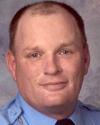
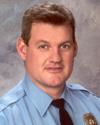
William King Biggs Jr., a 50-year-old White man, was a sergeant with the Kirkwood Police Department who had spent decades building a steady, public-facing life: he’d grown up around St. Louis, graduated from Webster Groves High School, worked for years on a Colorado ranch, and eventually returned home to law enforcement—training at the St. Louis Police Academy, serving roughly two decades in Kirkwood, and earning credentials that included graduation from the FBI National Academy.
By the time of his death on February 7, 2008, he was a husband and father, the kind of officer whose name people in a close-knit suburb tended to recognize even before the night Kirkwood came to be known nationwide for its City Hall tragedy.
That evening, Kirkwood City Hall was filling up for a council meeting when a familiar presence returned to the building’s orbit: Charles Lee “Cookie” Thornton, a local contractor whose relationship with city government had curdled over years of disputes, fines, and confrontations. Accounts described him as a frequent, disruptive attendee who had been forcibly removed from meetings in 2006 and arrested in connection with that conduct, then pushed his grievances into court—arguing his rights had been violated—only to have a federal judge dismiss the case on January 28, 2008, about ten days before the shooting. In the hours before the attack, reports said he left behind a note that read like a final declaration—“The truth will come out in the end”—and headed for City Hall carrying a large-caliber revolver.
Outside the building, just across the street from the meeting, Thornton approached Sgt. Biggs and asked a simple, almost ordinary question—what time the meeting started. Then, without warning, he pulled a handgun and shot Biggs in the head. As Biggs lay dying, he triggered his distress alarm, a last reflex of duty that sent the urgent call outward even as the scene was collapsing into panic. Thornton took Biggs’ service weapon and walked into City Hall, now armed with both his own revolver and the stolen police handgun.
Inside the council chambers, the meeting had just begun, with dozens of people gathered. Thornton moved fast. He confronted Officer Thomas Ballman at the front of the room, ordered him to raise his hands, and shot him before compliance could even matter. Then he opened fire on others—killing Councilwoman Connie Karr, Councilman Michael Lynch, and Public Works Director Ken Yost—while also shooting Mayor Mike Swoboda in the head and wounding a newspaper reporter, Todd Smith, in the hand. The violence ended only when responding Kirkwood officers shot and killed Thornton in the council chambers.
Because the shooter was killed at the scene, there were no later arrests, no charging decisions, and no trial in which evidence could be tested in open court. What remained instead were the long paper trails of his earlier disputes—accounts of repeated disruptions, prior arrests and disorderly-conduct charges tied to council-meeting removals, and lawsuits that documented how intensely he believed the city was persecuting him. The city’s grief also continued to unfold in time: Swoboda survived the night but later died from complications of his injuries, and Kirkwood eventually dedicated a memorial walkway to the public servants killed in the rampage, turning a place of routine civic business into a permanent site of remembrance.