On a cold February evening in Kirkwood, Missouri, the familiar drone of a city council meeting was shattered by a sudden and brutal eruption of violence. It was February 7, 2008, when a local man, Charles Lee 'Cookie' Thornton, unleashed a deadly assault within the walls of Kirkwood City Hall, forever altering the lives of those present and scarring the community.
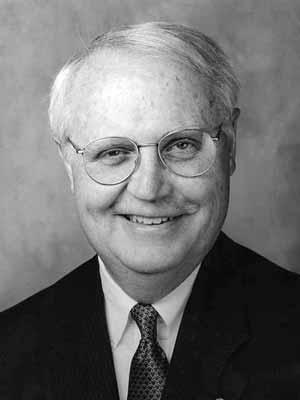
Among the targets of his rage was Mayor Michael Emil 'Mike' Swoboda, a 69-year-old man serving his community.
The council meeting had just begun, with about 30 people in attendance, when Thornton, armed with a revolver and a handgun he had taken from a police officer he had already shot and killed outside, stormed into the council chambers. Eyewitnesses reported that he repeatedly shouted, 'Shoot the mayor!' as he opened fire. In the ensuing chaos, Thornton shot and killed two police officers, Tom Ballman and William Biggs, two council members, Connie Karr and Michael H.T. Lynch, and the public works director, Kenneth Yost.
Mayor Swoboda was critically wounded in the attack, suffering gunshot wounds to his head and jaw. He was rushed to a local hospital where he underwent multiple surgeries. For months, he fought for his life, showing signs of a remarkable recovery that gave hope to his family and the community. He was eventually released from the hospital and began rehabilitation. However, his health took a turn for the worse after a fall. The complications from his initial injuries, combined with a battle with cancer, proved to be too much. Seven months after the shooting, on September 6, 2008, Mayor Mike Swoboda died in a hospice, just shy of his 70th birthday.
The perpetrator of this senseless tragedy, Charles Lee 'Cookie' Thornton, was a 52-year-old local construction business owner who had a long-standing and acrimonious history with the city government. He had frequently disrupted city council meetings with angry tirades and had filed a federal lawsuit against the city which had been dismissed shortly before the shooting. His grievances reportedly stemmed from disputes over construction contracts and numerous citations he had received. Thornton's violent rampage ended when he was shot and killed by police officers who responded to the scene. As the sole perpetrator, his death at the scene meant there were no subsequent arrests or trials. The community was left to mourn the loss of its leaders and grapple with the devastating impact of the violence that had unfolded in the heart of their city.