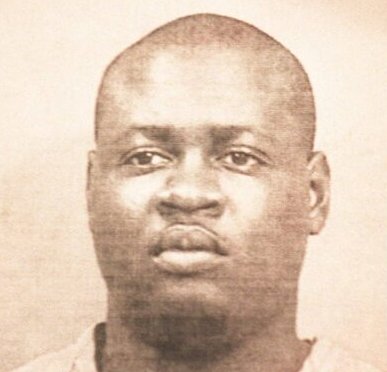
Nelson Serrano and the 1997 Erie Manufacturing Murders
Overview
Nelson Iván Serrano Sáenz was an Ecuadorian-born businessman who was convicted of murdering four people inside the Erie Manufacturing plant in Bartow, Florida, on December 3, 1997. The victims were Frank Dosso, Diane Patisso, George Patisso and George Gonsalves. Three belonged to the same extended family, while Gonsalves was one of Serrano’s former business partners.
The four victims were shot shortly after the manufacturing plant’s employees had left for the evening. Prosecutors described the killings as carefully planned executions arising from an increasingly hostile business dispute. Serrano maintained that he was in Atlanta, Georgia, when the murders occurred and continued to proclaim his innocence after his conviction.
The Business Dispute
Serrano had been an executive and part owner of Erie Manufacturing and an associated company involved in garment-conveyor equipment. His business relationship with George Gonsalves and Felice “Phil” Dosso deteriorated amid disagreements over company finances, control of corporate accounts and accusations of financial misconduct.
During 1997, the conflict escalated into lawsuits, disputed financial transactions and efforts to remove Serrano from the company. Serrano was ultimately forced out of his leadership position, and the locks at the Bartow plant were changed. His son, Francisco Serrano, had also been dismissed from the business. Prosecutors later argued that Nelson Serrano felt humiliated and financially threatened by his removal and blamed Gonsalves and the Dosso family for destroying his company and reputation.
Employees described the atmosphere between Serrano and his former partners as bitter and confrontational. Testimony presented at trial included statements attributed to Serrano expressing intense hostility toward Gonsalves. The prosecution portrayed this hostility as evidence that the murders were motivated by revenge.
The Murders on December 3, 1997
On Wednesday, December 3, 1997, employees began leaving Erie Manufacturing at approximately 5:00 p.m. Frank Dosso and George Gonsalves remained at the plant after most of the workforce had departed. George Patisso was also present.
Diane Patisso, an assistant state attorney in Polk County, left the Bartow courthouse at approximately 5:20 p.m. and traveled to the nearby factory. She was married to George Patisso and was Frank Dosso’s sister. Prosecutors believed she arrived while the attack was occurring or immediately afterward and was killed because she had seen or could identify the murderer.
The four victims were found in or near an office inside the plant. Each had been shot. Investigators concluded that more than one firearm had been used, and the positioning of the bodies suggested that the victims had been confronted separately as events unfolded inside the building.
At approximately 7:34 p.m., Phil Dosso called emergency services after discovering the bodies of his son, daughter, son-in-law and business partner. The first responding officer arrived within minutes. No murder weapon was recovered, and investigators found no immediately obvious physical evidence at the scene identifying the killer.
The Victims
- Frank Dosso – Murdered on December 3, 1997, inside Erie Manufacturing in Bartow, Polk County, Florida. He was the son of company partner Felice “Phil” Dosso and the brother of Diane Patisso. Frank had remained at the plant after most employees left for the evening.
- Diane Patisso – Murdered on December 3, 1997, inside Erie Manufacturing in Bartow, Florida. She was Frank Dosso’s sister, George Patisso’s wife and an assistant state attorney in Polk County. She had left the nearby courthouse and gone to the plant shortly before the murders were discovered.
- George Patisso – Murdered on December 3, 1997, inside Erie Manufacturing in Bartow, Florida. He was Diane Patisso’s husband and Frank Dosso’s brother-in-law.
- George Gonsalves – Murdered on December 3, 1997, inside Erie Manufacturing in Bartow, Florida. He was a company executive and one of Serrano’s former business partners. Prosecutors considered him a principal target because of his role in the dispute that resulted in Serrano’s removal from the company.
Serrano’s Atlanta Alibi
Serrano told investigators that he was approximately 450 miles away in Atlanta when the murders occurred. Surveillance cameras recorded him at a La Quinta hotel in Atlanta at approximately 12:21 p.m. on December 3. He was not recorded there again until approximately 10:17 p.m.
According to the prosecution, the long absence gave Serrano enough time to fly from Atlanta to Florida, drive to Bartow, commit the murders and return to Atlanta. Prosecutors alleged that he traveled under assumed names to conceal his movements. They contended that he used the name of another person on a flight from Atlanta to Orlando and later used another alias while returning from Tampa to Atlanta.
The state’s proposed timeline placed the arrival of the Atlanta-to-Orlando flight at approximately 3:05 p.m. A parking ticket issued at Orlando International Airport at 3:49 p.m. later became one of the most important pieces of evidence in the case. Investigators reported finding Serrano’s fingerprint on that ticket.
Prosecutors alleged that Serrano obtained a vehicle, drove from Orlando to Bartow and entered Erie Manufacturing before the killings. After leaving the factory, he allegedly traveled to Tampa International Airport, checked in under the name “John White” at approximately 7:28 p.m. and boarded an evening flight to Atlanta. That flight departed at approximately 8:20 p.m. and arrived at approximately 9:49 p.m., shortly before Serrano appeared again on the hotel’s surveillance system.
The Parking Ticket Evidence
The Orlando airport parking ticket was not discovered until years after the murders. Investigators maintained that Serrano’s fingerprint on a ticket stamped during the afternoon of December 3 directly contradicted his claim that he had remained in Atlanta throughout the day.
The defense challenged the reliability and circumstances of the ticket’s discovery. Attorneys questioned how the ticket had survived among a massive quantity of airport records and argued that its existence did not establish when or how Serrano had touched it. The defense also emphasized that no airport surveillance footage showed Serrano boarding or leaving the relevant flights.
Despite those objections, the prosecution used the ticket together with passenger records, hotel surveillance footage, witness testimony and evidence of Serrano’s business dispute to construct a circumstantial case. The state argued that Serrano had deliberately created the appearance of being in Atlanta while making a rapid trip to Florida to commit the murders.
Witness Accounts and Unresolved Questions
A witness working near the plant reported seeing an unfamiliar man outside Erie Manufacturing around the period in which the murders were believed to have occurred. Later litigation focused on statements suggesting that individuals who did not resemble Serrano may have been seen near or inside the building.
The defense argued that these accounts supported the possibility that another person or several people had committed the murders. Serrano’s attorneys also emphasized that investigators did not recover his DNA, blood, hair or clothing fibers from the crime scene. No firearm was conclusively connected to him, and no eyewitness testified that Serrano was the gunman.
The prosecution responded that the killings were planned to minimize physical evidence and that the absence of a direct eyewitness did not outweigh the travel evidence, the fingerprint, Serrano’s motive and his opportunity to carry out the attack.
Arrest and Return from Ecuador
Serrano eventually traveled to Ecuador, where he was arrested in 2002. His return to the United States became a major source of legal and diplomatic controversy. Ecuadorian authorities and Serrano’s attorneys argued that he had been removed from the country without a lawful extradition proceeding.
Serrano claimed that he was mistreated during his detention and transfer. Florida authorities disputed portions of that account. His defense sought to have the prosecution dismissed because of the circumstances under which he was brought back, but the court allowed the murder case to proceed.
Trial and Conviction
Serrano’s trial began nearly nine years after the killings. The prosecution presented the murders as the culmination of Serrano’s prolonged feud with his former partners. Jurors heard evidence concerning his removal from the businesses, statements reflecting hostility toward Gonsalves, his unexplained absence from the Atlanta hotel and the fingerprint found on the Orlando airport parking ticket.
The defense argued that the state had built its case around an unrealistic travel schedule and questionable circumstantial evidence. Serrano’s attorneys maintained that no one had seen him at the factory and that the government had failed to prove how he could have traveled through two major airports, obtained transportation, committed four murders and returned to Atlanta without being identified by witnesses or surveillance cameras.
In October 2006, a Polk County jury found Serrano guilty of four counts of first-degree murder. The jury recommended that he receive the death penalty. On June 26, 2007, Circuit Judge Susan Roberts imposed four death sentences, one for each victim.
Appeals and Claims of Innocence
Serrano continued to deny committing the murders. His attorneys pursued appeals challenging the evidence, the conduct of prosecutors, the handling of witness information and the legality of his removal from Ecuador. Supporters argued that the state’s timeline was too narrow and that the fingerprint evidence was insufficient to prove that Serrano had traveled through Orlando on the day of the murders.
Prosecutors and the victims’ families maintained that the evidence formed a coherent account of a carefully planned revenge attack. They argued that Serrano possessed the motive, knowledge and opportunity necessary to enter the factory, confront the victims and then attempt to preserve an alibi in Atlanta.
The conviction remained in effect, and Serrano spent the remainder of his life under a death sentence in Florida. He was never executed.
Death
Nelson Serrano experienced serious health problems during his later years in prison, including a reported brain tumor. He died in a Jacksonville, Florida, hospital on August 8, 2024, at the age of 85. His death ended the possibility of an execution but did not end the disagreement surrounding the case. His relatives and supporters continued to claim that he had been wrongfully convicted, while the four murder convictions remained legally intact.
Legacy of the Case
The Erie Manufacturing murders devastated a family and shocked the Bartow legal and business communities. Phil Dosso discovered that his son, daughter, son-in-law and business partner had all been killed in the same attack. Diane Patisso’s work as a local prosecutor made the crime especially personal for members of the Polk County justice system.
The case against Serrano became notable because it relied heavily on circumstantial evidence and an elaborate prosecution timeline rather than a confession, recovered weapon or eyewitness identification. For the state, the airport ticket, travel records and business motive exposed an intentionally manufactured alibi. For the defense, those same elements left substantial unanswered questions about how the murders were committed and whether investigators had focused on the correct suspect.
Regardless of the continuing controversy over Serrano’s guilt, Frank Dosso, Diane Patisso, George Patisso and George Gonsalves were the four people whose lives were taken at Erie Manufacturing on December 3, 1997. Their deaths remain the central and permanent tragedy of the case.