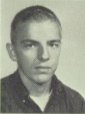
Leo Held and the 1967 Clinton County Shooting Rampage
Overview of the Massacre
On the morning of October 23, 1967, Leo Held carried out a carefully directed shooting rampage across Clinton County, Pennsylvania. The violence began inside the Hammermill Paper Company plant in Lock Haven, continued at the nearby Lock Haven Airport, and ended in the small community of Loganton, where Held attacked a neighboring family before exchanging gunfire with police. Six people were killed that day, six others were wounded, and another victim died several years later from complications associated with her injuries.
Held was a longtime Hammermill employee, a husband, and the father of four children. He had once been regarded as a dependable member of his community, serving as a school-board member, Boy Scout leader, volunteer firefighter, and churchgoer. Behind that respectable appearance, however, acquaintances later described a man who had become increasingly resentful and suspicious. He reportedly believed that coworkers were talking about him, that his employment was threatened, and that people around him were deliberately humiliating or mistreating him.
The attack shocked Lock Haven and the surrounding rural communities because Held did not fire randomly into a crowd. His movements suggested that he had selected particular people connected to workplace disagreements, personal resentments, or perceived insults. He moved quietly through the paper mill, firing at supervisors and coworkers before calmly leaving the building and driving to his next destination.
Leo Held Before the Shootings
Leo Held lived with his wife, Alda, and their four children in Loganton, approximately 17 miles southeast of Lock Haven. He had graduated from Sugar Valley High School in 1946 and later attended Lock Haven State College, where he studied chemistry. He also served in the United States Army as a clerk in Japan.
Held worked as a laboratory technician at Hammermill Paper Company for approximately 19 years. He was considered intelligent and technically capable, but he had apparently grown dissatisfied with his position. Several of the people he later attacked had supervisory authority over him or had received promotions while he remained in the laboratory.
In the period before the massacre, Held reportedly displayed signs of paranoia and increasing hostility. His physician later said that Held believed people at the plant were talking about him. He had also experienced conflicts with neighbors, including an argument with an elderly woman over a fallen tree limb and a dispute with Floyd Quiggle over smoke from burning leaves.
The Attack at Hammermill Paper Company
On October 23, 1967, Held watched his wife leave for work and his children depart for school. He then armed himself with a .45-caliber semiautomatic pistol and a Smith & Wesson .38-caliber revolver. An experienced marksman, Held carried one weapon in a shoulder holster and the other in a pocket before driving his station wagon to the Hammermill Paper Company plant in Lock Haven.
Held arrived shortly before 8:00 a.m. He parked carefully, removed both handguns, and entered the plant. His first target was Carmen H. Edwards, a supervisor. Held approached Edwards near an entrance leading toward the mill's engine-room area and shot him from behind. Edwards was struck through the heart and fatally wounded.
Held then climbed to the second-floor laboratory where he normally worked. Inside the laboratory, he shot Elmer E. Weaver, Allen R. Barrett Jr., and Richard Davenport. All three men were killed. Two other employees in the laboratory, Richard Carter and James Allen, were wounded.
Held continued through the facility without shouting or explaining his actions. Witnesses later emphasized his unnerving calmness. He reportedly maintained an ordinary walking pace and said little or nothing as the attack unfolded. One bullet struck a transformer, temporarily darkening part of the plant and adding to the confusion.
As he moved away from the laboratory, Held shot and wounded machine operator David Overdorf. He then entered the main office area and killed superintendent Donald V. Walden. Another manager, Woodrow Stultz, was wounded before Held left the building through the stock-preparation area.
The shooting inside the mill lasted approximately ten minutes. Held fired at least 30 rounds, and several victims were struck more than once. Five Hammermill employees were dead, and four others were wounded. Despite the violence behind him, Held reportedly behaved calmly as he returned to the parking lot. Some workers arriving at the plant did not immediately understand what had happened because Held did not appear hurried or visibly agitated.
The Shooting at Lock Haven Airport
After leaving Hammermill, Held drove to the Lock Haven Airport, now known as William T. Piper Memorial Airport. His apparent target there was Geraldine “Gerry” Ramm, a switchboard operator with whom he had previously shared a carpool.
Ramm had reportedly stopped riding with Held because she objected to his driving. Investigators later considered the end of the carpool a possible source of resentment. Held entered the airport office and fired repeatedly at Ramm. Contemporary accounts differed on the exact number of shots, but she was struck twice and seriously wounded.
Airport manager Howard Graves initially believed that Held was playing some kind of dangerous prank. Graves confronted him and forced or escorted him from the office without realizing that Ramm had been shot. Held did not attack Graves and returned to his vehicle.
The Threat to Sugar Valley School
Held next drove toward Loganton. Along the way, he passed Sugar Valley School, where three of his children were attending classes with hundreds of other students. Police had already alerted school officials about the shootings, and the building was placed under emergency protection.
The principal, William Harbach, staff members, and local residents prepared to defend the school in case Held attempted to enter. Held circled or passed the school but did not stop to attack it. His children were separated from the other students as officials tried to protect them and explain that their father was involved in a violent emergency.
Held's decision to approach the school created intense fear because no one knew whether he intended to harm his children, take them with him, or attack the building. He ultimately continued toward his home without firing at the school.
The Attack on the Quiggle Family
When Held reached Loganton, he went to the home of his neighbors, Floyd and Donna Quiggle, who lived across the street from the Held residence. Held and Floyd Quiggle had reportedly argued in the past, including a disagreement over smoke from burning leaves.
Held entered the Quiggle residence through an unlocked rear door. Floyd and Donna were still in bed when he entered their bedroom and opened fire. Floyd Quiggle was killed. Donna Quiggle was gravely wounded and left paralyzed from the shoulders down.
The Quiggles' young daughter, Joan, was in another bedroom. She hid under her bed and remained silent while Held moved through the house. He did not find or harm her. Before leaving, Held reportedly took additional weapons and ammunition from the Quiggle residence.
Donna Quiggle survived the immediate attack but lived with devastating injuries. She died on October 13, 1972, nearly five years after the shooting. Later accounts attributed her death to complications related to the wounds and paralysis she suffered during Held's attack. Her death raised the eventual number of victims killed as a result of the rampage to seven.
The Final Shootout
Police officers arrived in Loganton and surrounded the area near Held's residence. As Held emerged, officers ordered him to surrender his weapons. He refused. Contemporary accounts reported that he challenged officers to come and take the guns and declared that he was no longer willing to tolerate what he believed others had done to him.
Held's brother-in-law approached and pleaded with him to surrender. Held continued firing. During the exchange, police bullets struck him in the hands, shoulder, and leg. Even after one hand was disabled, he transferred a revolver to the other hand and continued shooting until he was incapacitated.
Held collapsed and was taken into custody. He was transported to Lock Haven Hospital in critical condition. Doctors initially believed he might survive, but his wounds and related complications proved fatal. Leo Held died at approximately 6:00 a.m. on October 25, 1967, two days after the massacre.
Held never provided investigators with a complete explanation. Shortly before his death, he reportedly thanked a nurse for water, asked about his oldest son, and said that he had “one more to go.” The identity of the additional person he may have intended to attack was never established with certainty.
People Killed
- Carmen H. Edwards, 62 — Killed on October 23, 1967, near the engine-room entrance at the Hammermill Paper Company plant in Lock Haven, Pennsylvania. Edwards was a supervisor and the first person Held fatally shot.
- Elmer E. Weaver, 37 — Killed on October 23, 1967, inside the second-floor laboratory at Hammermill Paper Company in Lock Haven.
- Allen R. Barrett Jr., 44 — Killed on October 23, 1967, inside the Hammermill laboratory in Lock Haven. Some historical reports spell his first name as Allan.
- Richard Davenport, 32 — Killed on October 23, 1967, inside the second-floor laboratory at Hammermill Paper Company in Lock Haven.
- Donald V. Walden, 31 — Killed on October 23, 1967, in the main office area of the Hammermill plant in Lock Haven. Walden was a superintendent.
- Floyd Quiggle, 27 — Killed on October 23, 1967, in the bedroom of his home in Loganton, Pennsylvania.
- Donna Quiggle, 31 at the time of the attack — Shot and paralyzed on October 23, 1967, at her Loganton home. She died on October 13, 1972, from complications associated with her injuries.
People Wounded
- Richard Carter, 40 — Wounded on October 23, 1967, in the laboratory at Hammermill Paper Company in Lock Haven.
- James Allen, 47 — Wounded on October 23, 1967, in the Hammermill laboratory. Allen was identified in contemporary accounts as a company superintendent.
- David Overdorf, 27 — Wounded on October 23, 1967, while working in or near the machine-room area at Hammermill Paper Company.
- Woodrow Stultz, 46 — Wounded on October 23, 1967, inside the Hammermill plant. He was identified as a company manager.
- Geraldine “Gerry” Ramm, 37 — Shot twice on October 23, 1967, at Lock Haven Airport after Held left the paper mill.
- Donna Quiggle, 31 — Critically wounded on October 23, 1967, in her Loganton home. She initially survived but remained paralyzed and died in 1972.
Possible Motives
No single motive fully explained Held's actions. Investigators found what appeared to be a pattern of accumulated grudges. Several Hammermill victims held authority over Held or had advanced within the company while he remained in the same position. Ramm had withdrawn from their carpool. Floyd Quiggle had been involved in a neighborhood disagreement with him.
Held also appeared to have developed paranoid beliefs. He reportedly suspected that coworkers were discussing him, that his telephone might be monitored, and that his job was in danger. These suspicions may have caused ordinary workplace decisions and personal disagreements to seem like parts of a coordinated campaign against him.
Some descriptions of the attack characterized it as a sudden breakdown, but the weapons, selected destinations, and orderly progression from one target to another indicated preparation. Held knew the Hammermill building, understood where his intended victims worked, and carried sufficient ammunition to continue attacking people at several locations.
Aftermath and Community Impact
The massacre left a lasting wound across Lock Haven, Loganton, and the rest of Clinton County. Families lost husbands, fathers, relatives, and coworkers within the span of little more than an hour. The six people who died in 1967 reportedly left dozens of surviving family members, while the wounded endured physical injuries and emotional trauma long after the gunfire ended.
Held's own wife and children were also left to live with the consequences of his actions. His children had spent the day under protection at their school while police hunted for their father. Two days later, he was dead, and the family name had become permanently associated with one of the worst crimes in the region's history.
Because Held died without giving a meaningful statement, there was no trial and no opportunity for prosecutors to question him publicly about the massacre. Investigators reconstructed his motives through statements from coworkers, neighbors, relatives, and medical professionals, but many questions remained unanswered.
The October 23, 1967, shootings are now remembered as the Clinton County shooting rampage. The case stands as an early example of targeted workplace mass violence extending into a wider community. Although Leo Held's name became widely associated with the tragedy, the enduring human story belongs to Carmen Edwards, Elmer Weaver, Allen Barrett, Richard Davenport, Donald Walden, Floyd Quiggle, Donna Quiggle, the surviving wounded, and the families whose lives were permanently changed.