Ian Stawicki and the 2012 Seattle Café Racer Shooting
Overview
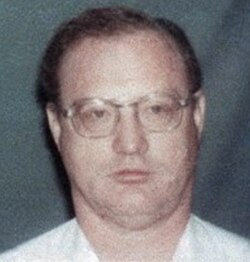
Ian Lee Stawicki carried out a deadly shooting spree in Seattle, Washington, on May 30, 2012. During a period of approximately five hours, he killed four people inside Café Racer, seriously wounded another man, murdered a woman while stealing her vehicle, and fled across the city. The violence ended in West Seattle when police located him and he fatally shot himself as officers closed in.
The attack began shortly before 11:00 a.m. at Café Racer, a small restaurant, bar, and gathering place for artists and musicians in Seattle's University District. Stawicki was familiar to employees and customers because he had visited the business before. Witnesses and people associated with the café later described him as argumentative, disruptive, and prone to making other patrons uncomfortable. He had reportedly been told that he was no longer welcome there.
Background of Ian Stawicki
Ian Lee Stawicki was born on September 16, 1971. He lived in Seattle and had a history of erratic behavior, anger, interpersonal conflict, and troubling encounters with people who knew him. His father, Walt Stawicki, later described him as a private and increasingly disgruntled man whose emotional condition appeared to deteriorate before the killings.
Police records indicated that officers had previously encountered Stawicki in connection with allegations involving assault, domestic violence, malicious mischief, and weapons. In February 2008, police responded to a reported domestic disturbance involving Stawicki and a girlfriend. According to accounts of the police report, the woman had a bloody nose and said Stawicki had struck her and damaged some of her belongings. She also described episodes in which he became enraged and broke objects.
Despite concerns expressed by relatives and others, Stawicki legally possessed several firearms. Authorities later determined that he owned multiple 9mm and .45-caliber handguns. He carried two .45-caliber semiautomatic pistols during the May 30 attack, including a Remington 1911 R1 and a compact Colt New Agent pistol.
The Café Racer Shooting
At approximately 10:57 a.m. on Wednesday, May 30, 2012, Stawicki entered Café Racer at 5828 Roosevelt Way Northeast. Several customers were inside, along with employees preparing food and serving patrons. Members of the staff recognized Stawicki and reminded him that he had previously been asked to leave the establishment.
Instead of immediately departing, Stawicki remained inside for several minutes. He eventually moved toward the entrance, creating the impression that he was leaving. He then drew a handgun and began firing at people inside the café. The sudden attack trapped customers in the confined room and created panic as those who could move searched for an exit or cover.
One person attempted to disrupt the gunman by throwing a bar stool. The resistance gave several people an opportunity to escape. Stawicki nevertheless continued firing at other patrons at close range. Police officials later characterized the shootings as deliberate and execution-like rather than random gunfire sprayed throughout the room.
Four people were fatally wounded inside Café Racer. A fifth victim, café chef Leonard Meuse, was critically injured but survived. Stawicki left the café after the shooting, reportedly taking a hat belonging to one of the victims. Responding officers found a devastating scene and began searching the surrounding neighborhood while paramedics attempted to help the wounded.
The Murder of Gloria Leonidas
After leaving Café Racer, Stawicki traveled south toward Seattle's First Hill neighborhood. Approximately 30 minutes after the café attack, he entered a parking lot near Town Hall Seattle at Eighth Avenue and Seneca Street. There he encountered 52-year-old Gloria Leonidas, who was near her black Mercedes-Benz sport utility vehicle.
Stawicki shot Leonidas during a carjacking and drove away in her vehicle. She was found critically wounded in the parking area and died as a result of the shooting. Investigators quickly connected the stolen Mercedes to the earlier killings and issued alerts describing the vehicle and the suspected gunman.
The murder of Leonidas demonstrated that the threat had moved beyond Café Racer. Police could not initially determine whether Stawicki intended to attack another location, escape from Seattle, or confront additional people. Schools and businesses in parts of the city took security precautions as officers searched for him.
The Citywide Manhunt
Seattle police released surveillance photographs of the Café Racer suspect and asked the public for assistance. Stawicki's family recognized him from the images and contacted authorities. His brother reportedly told police that the man shown in the photographs was Ian Stawicki and warned that he was armed and dangerous.
Officers recovered Gloria Leonidas's stolen Mercedes in West Seattle. Evidence indicated that Stawicki had abandoned the vehicle and continued traveling on foot. Police units, detectives, and tactical officers concentrated their search in the area while residents were advised to remain cautious.
Shortly before 4:00 p.m., a plainclothes detective saw Stawicki near 37th Avenue Southwest and Southwest Raymond Street. As uniformed officers approached and ordered him to stop, Stawicki placed a handgun against his head and fired. Officers did not shoot him. He was transported to Harborview Medical Center, where he died later that day.
His death ended the immediate danger but prevented prosecutors from bringing him to trial. Investigators were left to reconstruct his movements, examine his weapons and personal history, and search for an explanation for the violence.
Victims Killed on May 30, 2012
- Joseph Albanese, 52 — Killed at Café Racer, 5828 Roosevelt Way Northeast, Seattle. Known to friends as “Meshuguna Joe,” Albanese was a musician associated with the bands Mighty Sphincter and Circus Contraption.
- Andrew Keriakedes, 49 — Killed at Café Racer, 5828 Roosevelt Way Northeast, Seattle. Known by the performance name “Schmootzi the Clod,” he was a musician, entertainer, and member of the Café Racer artistic community.
- Kimberly Lynn Layfield, 36 — Killed at Café Racer, 5828 Roosevelt Way Northeast, Seattle. Layfield was remembered by friends as a caring woman who had become part of the community surrounding the café.
- Donald Largen, 57 — Killed at Café Racer, 5828 Roosevelt Way Northeast, Seattle. Largen was a regular customer who was inside the establishment when Stawicki opened fire.
- Gloria Leonidas, 52 — Shot and killed during the theft of her Mercedes-Benz in a parking lot near Town Hall Seattle at Eighth Avenue and Seneca Street on First Hill.
Surviving Victim
- Leonard Meuse, 46 — Critically wounded inside Café Racer. Meuse, who worked as the café's chef, survived after receiving emergency treatment and undergoing an extended recovery.
Investigation and Possible Motive
Investigators found no evidence that the victims had organized against Stawicki or that they had provoked the attack. The strongest apparent connection was his resentment toward Café Racer after being rejected by its staff and patrons. His anger may have intensified when employees again told him he was not welcome on the morning of the shooting.
Stawicki left no publicly established manifesto or detailed explanation that conclusively described his motive. Statements from relatives and acquaintances pointed to longstanding rage, paranoia, social isolation, and deteriorating behavior. His father said he believed his son was mentally ill, although no definitive medical finding could fully explain why he chose to murder five people.
The killing of Gloria Leonidas appeared to have been committed to obtain transportation while Stawicki fled. There was no known personal relationship between them. She became his fifth murder victim because she happened to be near a vehicle he wanted during his escape.
Community Impact
The killings deeply affected Seattle's music and arts communities. Café Racer was known as an unconventional neighborhood venue where musicians, performers, artists, and local residents gathered. Several of the victims were regular customers or performers whose friendships extended throughout the city.
Memorials, benefit performances, and public gatherings were organized for the victims and Leonard Meuse. Flowers, photographs, handwritten messages, and personal objects were placed outside Café Racer. Friends remembered the victims for their creativity, humor, kindness, and contributions to Seattle's artistic culture rather than solely for the manner in which they died.
The shooting also intensified public debate over firearm access and the difficulty of responding to people who display dangerous behavior without having been legally prohibited from owning weapons. Stawicki's relatives had reportedly worried about his conduct and his collection of firearms, but those concerns had not resulted in the removal of his guns before the attack.
Aftermath and Legacy
Café Racer eventually reopened after the killings, with supporters viewing its continuation as an act of resilience. The original Roosevelt Way location later closed, but the Café Racer name remained associated with Seattle's artistic community through other projects and locations.
The May 30, 2012, shootings are remembered as one of Seattle's most devastating episodes of mass violence. Five innocent people were murdered, another was seriously wounded, and numerous witnesses, relatives, first responders, and community members were left with lasting trauma.
Because Ian Stawicki killed himself before he could be questioned, many aspects of his thinking during the attack will never be known with certainty. What remains clear is that the violence developed from his own grievances and instability, not from any wrongdoing by the people he targeted. The lasting focus of the case remains on Joseph Albanese, Andrew Keriakedes, Kimberly Layfield, Donald Largen, Gloria Leonidas, Leonard Meuse, and the communities forced to endure the consequences of Stawicki's actions.