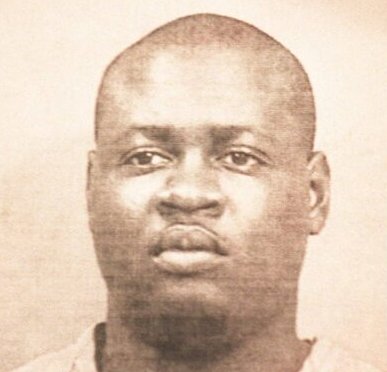
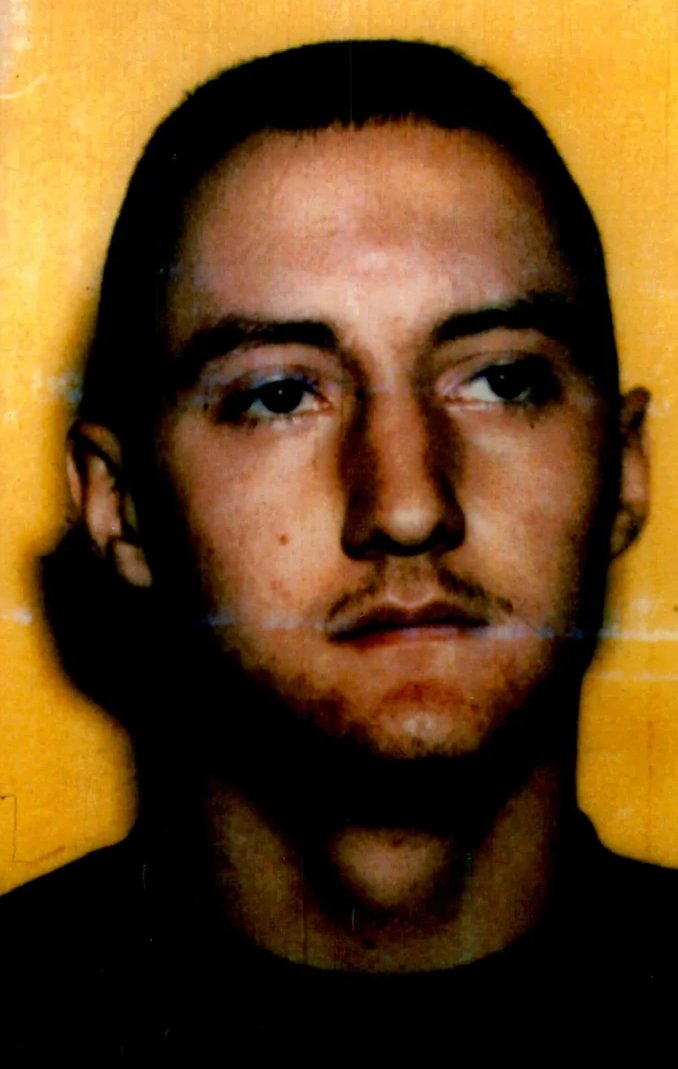
Abdelkrim Belachheb and the 1984 Ianni’s Nightclub Massacre
Background
Abdelkrim Belachheb was a 39-year-old Moroccan national living in the Dallas, Texas, area when he committed one of the deadliest mass shootings in the city’s history. Born on November 24, 1944, in French Morocco, Belachheb spent portions of his adult life in several countries before entering the United States. Accounts of his background described a long history of violent behavior, arrests, alcohol abuse and domestic violence.
Belachheb had reportedly been accused of stabbing a man in Casablanca in 1963 before leaving Morocco for Europe. He later lived in Belgium, where authorities recorded numerous incidents involving assault, illegal possession of a weapon and violence against members of his family. He was convicted in absentia after severely assaulting his wife and striking his daughter. Despite this history, he obtained a United States visa in 1980 and entered the country in April 1981.
After arriving in the United States, Belachheb married an American citizen and became a permanent resident in January 1984. The marriage was troubled, and his wife later described him as threatening and physically abusive. By June 1984, he was unemployed after leaving a restaurant job in the Dallas suburb of Addison. He had also recently purchased a Smith & Wesson Model 459 semiautomatic pistol from a pawnshop.
The Night of the Shooting
During the late evening of June 28 and early morning of June 29, 1984, Belachheb went to Ianni’s Restaurant and Club, an upscale nightclub located at 12801 Midway Road in Dallas. The establishment was crowded with patrons drinking, dancing and socializing when Belachheb became involved in an argument with Marcell Mae Ford, a woman with whom he had been dancing.
Witnesses said Ford rejected Belachheb’s attention and pushed him away on the dance floor. During the confrontation, she reportedly directed an insulting remark at him. Belachheb initially appeared to walk away from the dispute. He blew Ford a kiss, left the nightclub and went to his automobile.
Rather than leaving the area, Belachheb retrieved his recently purchased handgun from the vehicle. At approximately 12:15 a.m. on June 29, he returned to the club carrying the loaded weapon. He approached Ford and reportedly told her that he had endured enough of her behavior before shooting her at close range.
The Attack Inside Ianni’s
After shooting Ford, Belachheb turned toward other patrons seated along the bar. He moved through the club and fired repeatedly at people who had little or no connection to the original argument. Witnesses described him as disturbingly calm and deliberate rather than frantic or confused.
Belachheb shot several victims at extremely close range. Autopsy testimony later established that Janice Arbuckle Smith, Ligia Kozlowski and Joseph Minasi suffered contact gunshot wounds, meaning the muzzle of the pistol was pressed directly against or extremely close to their bodies when it was fired. The evidence demonstrated that these were deliberate shootings rather than victims being struck accidentally by uncontrolled gunfire.
Belachheb briefly walked out of the nightclub but returned and shot another man. As he finally fled the building, he fired at John McNeill, a 37-year-old Dallas resident. McNeill was seriously wounded but survived. Belachheb also reportedly discharged another shot toward an employee outside the club.
Six people were fatally wounded during the attack. Five died inside the nightclub, while Ford died as she was being transported to Parkland Memorial Hospital. The victims consisted of four women and two men ranging from 32 to 49 years old.
Victims
- Marcell Mae Ford, 32 – A resident of Grand Prairie, Texas. Ford was involved in the initial argument with Belachheb on the dance floor. He returned with a handgun and shot her at close range. She died while being transported to Parkland Memorial Hospital on June 29, 1984.
- Janice Arbuckle Smith, 46 – A resident of Dallas, Texas. Smith was shot at extremely close range while inside Ianni’s. Autopsy evidence showed that the gun was pressed against her when it was fired. She died at the nightclub on June 29, 1984.
- Frank Lance Parker, 49 – A resident of Arlington, Texas. Parker was one of the patrons shot during Belachheb’s movement through the club. He died at the scene on June 29, 1984.
- Linda Thomas Lowe, 43 – A resident of Garland, Texas. Lowe was seated inside Ianni’s when Belachheb opened fire on patrons who were not involved in his original dispute. She died at the nightclub on June 29, 1984.
- Ligia Kozlowski, 45 – A resident of Irving, Texas. Kozlowski was killed by a contact gunshot wound during the attack. Her body was later sent to Minnesota for funeral services. She died at the scene on June 29, 1984.
- Joseph Minasi, 37 – A resident of Garland, Texas. Minasi was shot after Belachheb returned to the club during the attack. Autopsy testimony established that he was killed by a contact gunshot wound. He died at the scene on June 29, 1984.
- John McNeill, 37 – A Dallas resident who was shot as Belachheb fled the nightclub. McNeill was critically injured but survived the attack.
Escape and Arrest
Belachheb left Ianni’s immediately after the shooting and drove away. During his escape, he crashed his vehicle into a telephone pole and abandoned it. Investigators traced the damaged automobile to him and began searching places where he might seek shelter.
Police located Belachheb at a friend’s home several miles from the crash site. He was arrested without further violence within hours of the massacre. Investigators recovered evidence connecting him to the abandoned vehicle and the shootings.
Belachheb was initially charged with Ford’s murder and held under a $500,000 bond. Authorities subsequently filed five additional murder charges and one count of attempted murder for the shooting of McNeill. He was placed under close observation in jail because officials feared that he might attempt suicide.
Trial and Insanity Defense
Belachheb’s trial began in Dallas County in 1984. He entered a plea of not guilty by reason of insanity. His defense attorneys argued that he suffered from serious mental illness and possible brain damage caused by earlier head injuries. One medical expert testified that Belachheb had paranoid schizophrenia and may have experienced a seizure during the shooting.
Other psychiatric experts disagreed with that conclusion. They described Belachheb as having an antisocial personality but testified that he remained capable of understanding right from wrong. Prosecutors emphasized his purposeful conduct: he left the nightclub, retrieved a gun, returned, selected victims, fled and sought refuge at a friend’s home. Those actions were presented as evidence that he understood both what he was doing and the criminal consequences.
The physical evidence was particularly damaging. The close-range and contact wounds showed that Belachheb deliberately aimed at individual victims. Witnesses also testified that he appeared controlled and methodical throughout the attack. The jury rejected the insanity defense and convicted him of all six murders and the attempted murder of McNeill.
Sentencing
On November 15, 1984, Belachheb received six consecutive life sentences for the murders. He was also given the maximum sentence of 20 years for attempted murder, to run consecutively with the life terms. The court imposed fines totaling $70,000 for the killings and an additional $10,000 for the attempted murder.
Although six people had been deliberately killed, prosecutors could not seek the death penalty. Texas law at the time did not automatically classify the murder of multiple people during one criminal episode as capital murder unless another legally defined aggravating circumstance applied. Each death was therefore prosecuted as a separate noncapital murder.
Belachheb reportedly appeared surprised by the verdict and sentence. He had expected that the insanity claim might result in his release or commitment to a psychiatric institution. His later appeals were unsuccessful, and the convictions and sentences remained in effect.
Changes to Texas Law
The inability to seek a death sentence generated public controversy. Legislators and prosecutors argued that a person who intentionally murdered several people during a single attack should be eligible for prosecution under the state’s capital-murder statute.
During the 1985 legislative session, Texas enacted a multiple-murder provision allowing prosecutors to pursue capital charges when a defendant murdered more than one person during the same criminal transaction or under a related course of conduct. The Ianni’s massacre was repeatedly cited during discussions of the change.
The case also prompted criticism of federal immigration screening. Belachheb had allegedly concealed his criminal history and previous mental-health treatment when applying to enter the United States. Relatives of several victims and survivor John McNeill later attempted to hold federal immigration authorities responsible for allowing him into the country, although their legal efforts did not succeed.
Death and Legacy
Abdelkrim Belachheb remained incarcerated in the Texas prison system for the rest of his life. He died of natural causes in prison on October 19, 2017, at the age of 72.
The Ianni’s Restaurant and Club massacre remained one of the most notorious crimes in Dallas history. Six people were killed because of a brief confrontation involving only one of them, while a seventh person survived serious injuries. The crime’s legal consequences extended beyond Belachheb’s convictions, directly influencing how Texas classified and punished the intentional murder of multiple victims.
The lasting significance of the case belongs primarily to the six people whose lives were taken: Marcell Ford, Janice Smith, Frank Parker, Linda Lowe, Ligia Kozlowski and Joseph Minasi. Their deaths transformed an ordinary night at a Dallas nightclub into a tragedy that altered state law and affected their families for generations.