Claudio Manuel Neves Valente and the 2025 Brown University Shooting
Overview
Claudio Manuel Neves Valente was identified by authorities as the gunman responsible for a December 2025 shooting at Brown University in Providence, Rhode Island, and the subsequent murder of Massachusetts Institute of Technology professor Nuno F. G. Loureiro in Brookline, Massachusetts. The attacks killed three people and wounded nine others, setting off a multistate investigation and a five-day search for the perpetrator.
Neves Valente was a 48-year-old Portuguese national who had once been enrolled in Brown University’s physics doctoral program. Investigators said he acted alone. He died from a self-inflicted gunshot wound before police located him inside a rented storage unit in Salem, New Hampshire. Although evidence established his responsibility for the attacks, authorities initially had no confirmed explanation for why he targeted a Brown classroom or why he later killed Loureiro.
Background of Claudio Manuel Neves Valente
Neves Valente was born in Portugal in 1977 and studied physics at Instituto Superior Técnico in Lisbon during the late 1990s. He was described as an academically gifted student and reportedly finished at or near the top of his class. Nuno Loureiro attended the same institution during approximately the same period, establishing a connection between the two men long before the 2025 attacks.
In September 2000, Neves Valente entered Brown University’s doctoral program in physics. He attended courses in the Barus and Holley Building, the same building that would become the site of the mass shooting more than two decades later. He took a leave of absence in April 2001 and eventually withdrew from the program without earning his doctorate.
By 2025, Neves Valente was a legal permanent resident of the United States whose last known residence was in Miami, Florida. Investigators determined that he traveled to the Boston area and rented a gray Nissan Sentra on December 1, 2025. Surveillance cameras later recorded the vehicle repeatedly near Brown University, suggesting that he had observed the campus and surrounding streets before carrying out the attack.
The Brown University Attack
At approximately 4:00 p.m. on December 13, 2025, students were attending an optional economics examination review session in Room 166 of Brown University’s Barus and Holley Building. The first-floor lecture hall was occupied by students preparing for final examinations when a masked and heavily concealed gunman entered.
Witnesses described the attacker as wearing dark clothing, gloves, a face covering and a hat. He reportedly entered as the review session was ending and began firing a 9mm handgun inside the lecture hall. Approximately 40 shots were reportedly discharged during the attack. Students attempted to take cover beneath desks, against walls and behind classroom furniture as the gunfire continued.
Two students were killed and nine others were wounded. The injured students were transported to Rhode Island Hospital. Some suffered serious gunshot wounds, while another reportedly sustained an injury from shrapnel. All nine surviving victims were eventually treated and released from medical care.
The gunman left the building before officers could surround the area. Brown University issued emergency warnings, instructed students and employees to shelter in place and canceled academic activities. The shooting occurred during final-examination week, when students had been preparing to complete the semester and return home for winter break.
Victims of the Attacks
- Ella Cook, 19 — Killed on December 13, 2025, inside Room 166 of the Barus and Holley Building at Brown University in Providence, Rhode Island. Cook was a sophomore from Mountain Brook, Alabama. She studied mathematics-economics and French and was active in her church and campus organizations.
- Mukhammad Aziz Umurzokov, 18 — Killed on December 13, 2025, inside Room 166 of the Barus and Holley Building at Brown University in Providence, Rhode Island. Umurzokov was a freshman from Virginia whose family had immigrated from Uzbekistan. He was studying biochemistry and neuroscience and hoped to become a physician or neurosurgeon.
- Nuno Filipe Gomes Loureiro, 47 — Shot on December 15, 2025, at or near his home in Brookline, Massachusetts, and pronounced dead from his injuries on December 16, 2025. Loureiro was an MIT professor of physics and nuclear science and engineering and the director of MIT’s Plasma Science and Fusion Center.
The Escape and Initial Investigation
Neves Valente escaped from Brown’s campus without being identified immediately. The location of the shooting presented investigators with significant challenges because parts of the building and the route used by the attacker had limited surveillance-camera coverage. Police collected shell casings, reviewed recordings from nearby properties and interviewed students who had seen the gunman before, during or after the attack.
Authorities released photographs showing a masked individual walking near the campus. The FBI offered a reward of up to $50,000 for information leading to the identification, arrest and conviction of the shooter. Investigators also examined DNA and fingerprint evidence reportedly recovered from items associated with the crime scene.
During the early investigation, another man was detained and questioned after authorities searched a residence. He was released after investigators determined that the available evidence did not connect him to the shooting. Officials publicly stated that there was no basis for continuing to regard him as a person of interest.
The Murder of Professor Nuno Loureiro
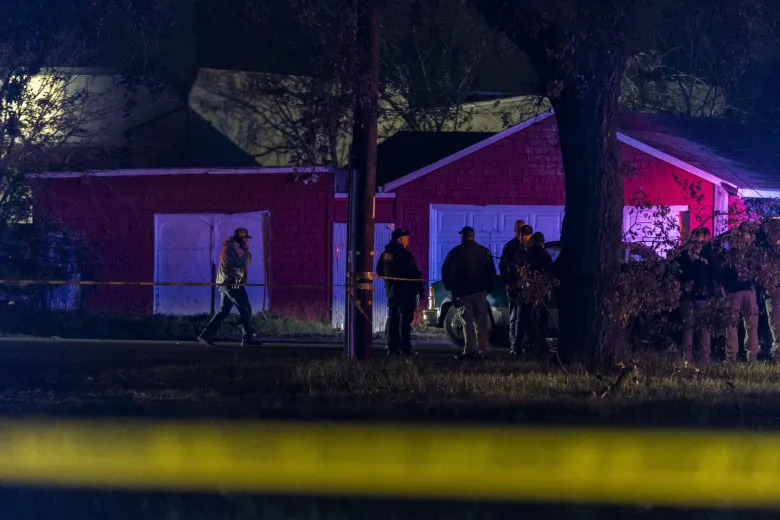
Two days after the Brown University shooting, Nuno Loureiro was shot at his residence in Brookline, Massachusetts. The attack occurred on the evening of December 15, 2025. Loureiro was transported for emergency treatment but died from his wounds the following day.
Loureiro was an internationally respected physicist whose work focused on plasma physics and nuclear fusion. He had studied at Instituto Superior Técnico in Lisbon during the same years that Neves Valente attended the institution. Investigators examined whether a personal, professional or academic grievance originating during that period may have contributed to the murder.
Surveillance evidence placed a gray Nissan Sentra resembling Neves Valente’s rental vehicle near Loureiro’s home. Investigators determined that the vehicle had been displaying a different license plate, an apparent attempt to avoid identification. Ballistic evidence later connected one of the firearms recovered with Neves Valente to Loureiro’s killing.
The Witness Who Helped Identify the Gunman
A major breakthrough came from a witness who had noticed Neves Valente behaving suspiciously near Brown University before the classroom shooting. The witness encountered him in or near a campus restroom approximately two hours before the attack and later watched him approach a gray Nissan Sentra with Florida license plates.
The witness became concerned because Neves Valente appeared to be avoiding observation and repeatedly moved toward and away from the vehicle. Information about the encounter and the car was posted online and eventually provided to investigators. Rhode Island officials later said the witness’s observations gave detectives the critical lead needed to identify the rental vehicle and trace it to Neves Valente.
Investigators discovered that the Sentra had been rented in Boston on December 1. Cameras had recorded it near Brown University numerous times in the days preceding the shooting. Additional footage allowed authorities to follow the vehicle’s movements through Rhode Island and Massachusetts and connect it to the area surrounding Loureiro’s home.
Discovery in New Hampshire
By December 18, investigators had identified Neves Valente and obtained evidence linking him to both attacks. Law-enforcement officers traced him to an Extra Space Storage facility in Salem, New Hampshire, close to the Massachusetts border.
When authorities entered the rented storage unit, they found Neves Valente dead from a self-inflicted gunshot wound. An autopsy reportedly indicated that he had died approximately two days before his body was discovered. This placed his death around December 16, shortly after the attack on Loureiro.
Two handguns were recovered with his body. Authorities also found ammunition, a ballistic or protective vest and other materials relevant to the investigation. Forensic testing connected the weapons and other evidence to the Brown University shooting and Loureiro’s murder.
Evidence of Planning
The repeated presence of Neves Valente’s rental car near Brown University indicated that the campus attack was planned rather than spontaneous. Surveillance recordings suggested that he had examined the area, studied possible routes and prepared for his escape. He wore clothing intended to conceal his appearance and entered a section of the building where camera coverage was limited.
His use of false or switched license plates following the Brown shooting also demonstrated an effort to prevent investigators from tracking the rental vehicle. After leaving Providence, he traveled into Massachusetts and approached Loureiro’s home before carrying out the second fatal attack.
Investigators later recovered recorded statements in which Neves Valente accepted responsibility for the killings and indicated that he had contemplated or planned the violence for an extended period. However, the statements did not provide authorities with a complete or verifiable motive.
Possible Motive
No evidence showed that Neves Valente personally knew Ella Cook, Mukhammad Aziz Umurzokov or the nine students wounded at Brown. The classroom appeared to have been selected because it was located inside a building associated with his unsuccessful period in Brown’s physics program rather than because of the individual students attending the economics review session.
The killing of Nuno Loureiro appeared more personally targeted. Both men had studied physics at the same Portuguese institution, and Loureiro went on to establish a prominent international academic career. Neves Valente’s academic ambitions did not develop in the same way after he left Brown’s doctoral program.
Investigators considered whether resentment, jealousy, professional disappointment or an unresolved grievance may have influenced the attacks. Those possibilities remained theories rather than established conclusions. Authorities cautioned that the available evidence did not justify attributing the killings to any single motive without additional proof.
Aftermath
The Brown University shooting brought the campus to a standstill. Final examinations were canceled or postponed, students were sent home early and vigils were held for the dead and wounded. Memorials honored Cook and Umurzokov as promising students whose lives had been taken during an ordinary study session.
MIT and the scientific community mourned Loureiro as an accomplished researcher, teacher and leader in the study of plasma science and fusion energy. His death was felt across universities and research institutions in the United States, Portugal and other countries where he had worked with fellow scientists.
Because Neves Valente died before he could be arrested, there was no criminal trial and no opportunity for prosecutors to question him in court. The case was instead reconstructed through surveillance footage, forensic testing, witness statements, vehicle records, digital evidence and Neves Valente’s own recorded admissions.
Conclusion
Claudio Manuel Neves Valente’s crimes unfolded across three New England states in December 2025. He killed two Brown University students during a classroom shooting, wounded nine others, escaped from Providence and then fatally shot MIT professor Nuno Loureiro at his Brookline home. He died by suicide while hiding inside a New Hampshire storage unit, leaving investigators and the victims’ families without a complete explanation for his actions.
The evidence showed preparation, concealment and a deliberate effort to avoid capture. The attack on Brown appeared connected to Neves Valente’s history at the university, while Loureiro’s murder suggested a grievance involving their shared academic past. Despite those connections, the precise motive remained uncertain, and the most enduring consequences were the deaths of three people, the injuries suffered by nine students and the lasting trauma inflicted upon their families, classmates, colleagues and communities.