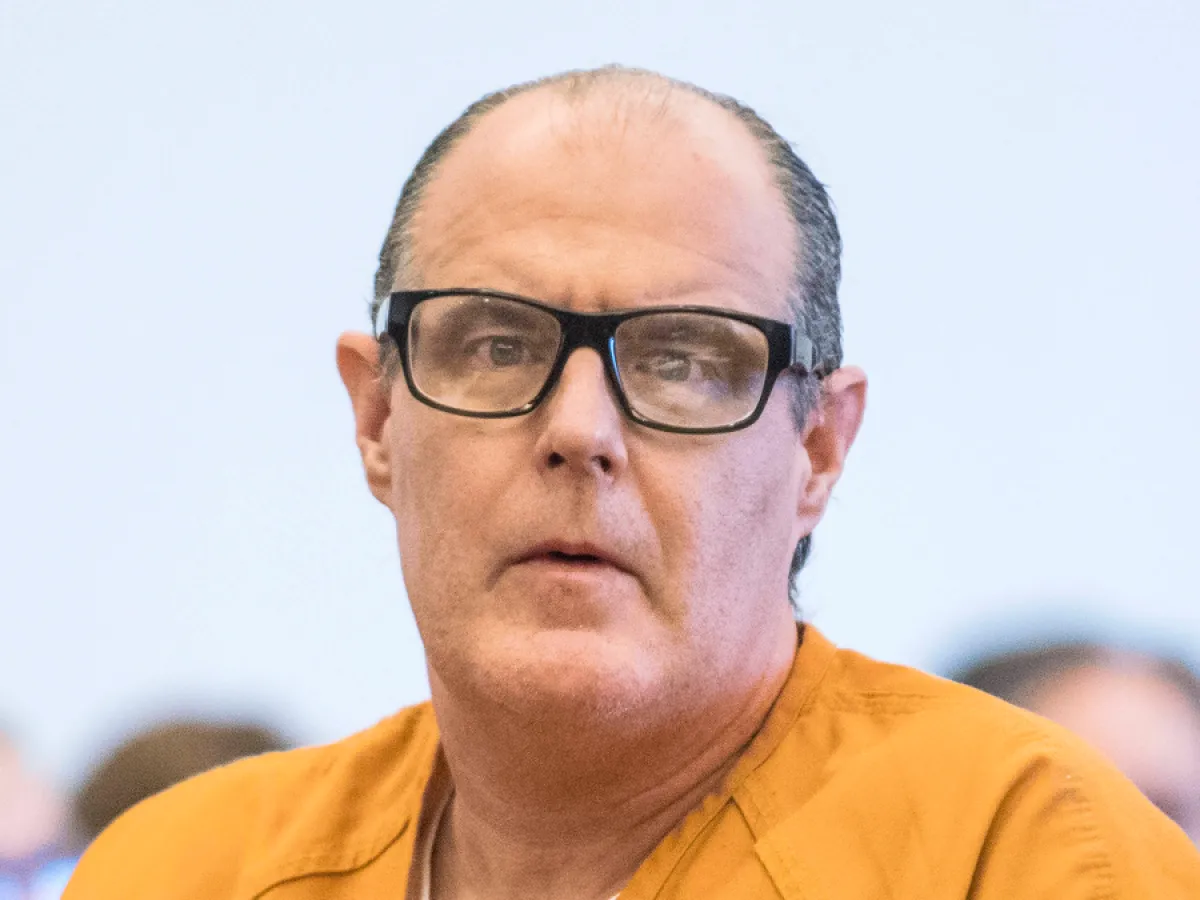
Zane Floyd and the 1999 Las Vegas Supermarket Massacre
Background
Zane Michael Floyd was born on September 20, 1975, in Estes Park, Colorado. He later moved with his family to Nevada and attended school in the Las Vegas area. In 1994, Floyd enlisted in the United States Marine Corps, where he attained the rank of lance corporal. He was honorably discharged in July 1998 after approximately four years of service.
After leaving the military, Floyd returned to Las Vegas and worked at different times as a security guard and nightclub bouncer. His personal circumstances deteriorated during the period leading up to the murders. He reportedly drank heavily, lost his security job and was forced to leave his apartment. By early June 1999, the 23-year-old was living in a room at his parents' home.
Investigators later learned that Floyd had developed violent fantasies and had spoken about wanting to experience killing another person. His actions during the early morning of June 3, 1999, demonstrated that the supermarket attack was not a spontaneous argument or workplace dispute. He armed himself with a 12-gauge pump-action shotgun and deliberately targeted people who had no meaningful connection to him.
Sexual Assault Before the Murders
During the early morning hours of June 3, 1999, Floyd contacted an escort agency and requested that a woman come to the residence where he was staying. A 20-year-old woman arrived at approximately 3:30 a.m.
Once she was inside, Floyd produced his shotgun, restrained her and sexually assaulted her. He threatened her life throughout the encounter. He eventually gave the woman a brief opportunity to escape, reportedly telling her that she had 60 seconds to run before he would kill her. She fled the residence and survived.
Floyd then took his shotgun and ammunition and began walking through Las Vegas. His destination was an Albertson's supermarket located at 3864 West Sahara Avenue, near South Valley View Boulevard. The business was open around the clock, and several overnight employees were still working inside.
The Albertson's Supermarket Shooting
At approximately 5:15 a.m. on June 3, 1999, Floyd entered the Albertson's supermarket carrying the shotgun. He began moving through the store and firing at employees without warning. The victims were selected according to opportunity rather than because of any personal grievance against them.
Floyd first encountered employee Thomas Darnell and shot him in the back. He then continued through the store and shot manager Carlos “Chuck” Leos in the face and neck. Employee Dennis Troy Sargent was shot in the chest.
Twenty-one-year-old employee Zachary T. Emenegger saw Floyd pointing the shotgun and attempted to escape. Emenegger ran through the produce area and tried to conceal himself beneath a produce table. Floyd pursued him and fired, striking him in the upper chest and puncturing one of his lungs. Floyd fired at him again after noticing movement.
Emenegger remained motionless and pretended to be dead. Floyd believed that he had killed him and continued walking through the supermarket. Despite suffering critical wounds, Emenegger remained conscious and survived the attack.
Floyd eventually found 60-year-old clerk Lucille Alice Tarantino near the rear portion of the store. He approached her and fatally shot her at close range. She was the fourth person murdered during the rampage.
The shooting lasted approximately seven minutes. Floyd discharged seven shotgun shells, killing four employees and critically wounding a fifth. Surveillance cameras inside the supermarket recorded significant portions of the attack and later provided powerful evidence during his trial.
Victims of the June 3, 1999, Attack
- Thomas Darnell, 40 – Murdered on June 3, 1999, inside the Albertson's supermarket at 3864 West Sahara Avenue in Las Vegas, Nevada. Darnell was an employee of the store and was shot in the back.
- Carlos “Chuck” Leos, 41 – Murdered on June 3, 1999, inside the West Sahara Avenue Albertson's in Las Vegas. Leos was a store manager and was shot in the face and neck.
- Dennis Troy Sargent, 31 – Murdered on June 3, 1999, inside the Albertson's supermarket in Las Vegas. Sargent was a store employee and was shot in the chest.
- Lucille Alice Tarantino, 60 – Murdered on June 3, 1999, near the rear of the Albertson's supermarket at 3864 West Sahara Avenue. Tarantino was a clerk and was shot at close range.
- Zachary T. Emenegger, 21 – Critically wounded on June 3, 1999, inside the same supermarket. Emenegger was shot in the upper chest and suffered a punctured lung, but survived by remaining still and pretending to be dead.
Police Response and Arrest
An employee who was in an upstairs section of the building heard the gunfire and contacted police, initially believing that a robbery was taking place. Las Vegas Metropolitan Police Department officers arrived while Floyd was still in or near the supermarket.
Floyd attempted to leave through one set of doors but saw police outside. He returned through the building and tried another exit. Officers quickly surrounded the shopping center, preventing him from escaping.
Floyd placed the shotgun against his own head and threatened to kill himself. Police officers spoke with him during an approximately eight-minute standoff. He eventually lowered the weapon and surrendered without exchanging gunfire with officers.
During questioning, Floyd confessed to the supermarket shootings. He described a longstanding desire to learn what it felt like to shoot and kill someone. His statements, the surviving victim's testimony, physical evidence and the supermarket surveillance recordings left little question about his identity as the gunman.
Charges and Trial
Floyd was prosecuted in Clark County, Nevada, for the four supermarket murders, the attempted murder of Zachary Emenegger and the crimes committed against the woman before the shooting. Prosecutors argued that the sequence of events showed planning, deliberation and an intention to kill multiple innocent people.
His trial began in July 2000. Jurors heard testimony from witnesses, including Emenegger, and were shown the supermarket's surveillance recordings. The prosecution also presented Floyd's statements to investigators and evidence concerning the kidnapping and sexual assault.
On July 13, 2000, the jury found Floyd guilty of four counts of first-degree murder with the use of a deadly weapon. He was also convicted of attempted murder with a deadly weapon, first-degree kidnapping with a deadly weapon, burglary while possessing a firearm and four counts of sexual assault with a deadly weapon.
Death Sentence
During the penalty phase, prosecutors presented the calculated nature of the murders and the suffering caused to the victims and their families. The defense introduced information about Floyd's upbringing, alcohol use, psychological condition and military history in an effort to obtain sentences of life imprisonment rather than death.
On July 21, 2000, the jury imposed a death sentence for each of the four murders. The jurors concluded that the aggravating circumstances surrounding the killings outweighed the mitigating evidence offered by the defense.
On August 31, 2000, the court formally sentenced Floyd to death. He also received consecutive maximum prison terms for the attempted murder, kidnapping, sexual assaults and burglary. Restitution totaling more than $180,000 was ordered in connection with the crimes.
Appeals and Continuing Legal Proceedings
Floyd appealed his convictions and death sentences to the Nevada Supreme Court. In March 2002, the court upheld the verdicts and sentences. The United States Supreme Court declined to review the case in 2003.
Additional state and federal appeals followed. Floyd's attorneys challenged aspects of his trial, legal representation and sentencing, but his convictions remained in effect. Federal courts also rejected his principal attempts to overturn the death sentences.
Nevada officials obtained an order scheduling Floyd's execution for July 26, 2021. The execution was stayed by a federal judge while Floyd's attorneys challenged Nevada's proposed lethal-injection protocol. Further litigation and difficulties involving the state's execution procedures prevented the sentence from being carried out at that time.
Legacy of the Case
The June 3, 1999, Albertson's massacre became one of the most notorious mass murders in Nevada history before the much larger Las Vegas Strip shooting of 2017. The attack was particularly disturbing because Floyd had no personal dispute with the people he killed. They were employees performing routine early-morning duties when he entered the store and began shooting.
The survival of Zachary Emenegger provided investigators and jurors with a firsthand account of the attack. The supermarket surveillance recordings also documented Floyd's movements and demonstrated the methodical nature of the shootings.
Thomas Darnell, Carlos “Chuck” Leos, Dennis Troy Sargent and Lucille Alice Tarantino were remembered by relatives and coworkers as individuals whose lives were taken without reason. Their murders, the critical wounding of Emenegger and the assault committed shortly before the massacre formed the basis of one of Nevada's longest-running death-penalty cases.