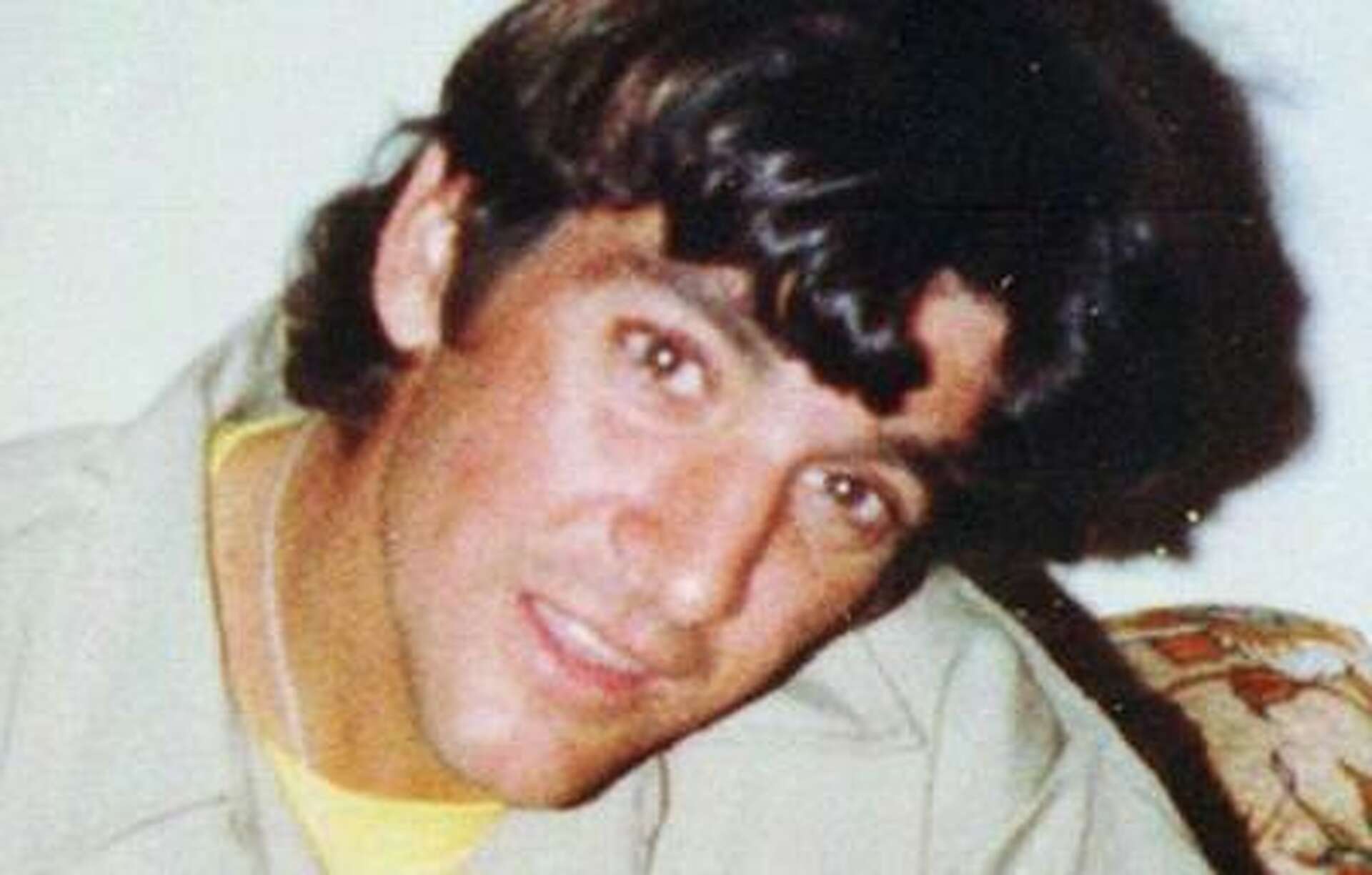
Richard Wade Farley and the 1988 ESL Massacre
Background
Richard Wade Farley was a former computer technician whose prolonged stalking of a female co-worker culminated in one of the most notorious workplace mass murders of the 1980s. On February 16, 1988, Farley entered an ESL Incorporated office building in Sunnyvale, California, carrying several firearms and more than 1,000 rounds of ammunition. He killed seven employees and wounded others during an attack that developed into a lengthy armed standoff with police.
Farley was born on July 25, 1948, at Lackland Air Force Base in Texas. His father served in the United States Air Force, and the family moved frequently before settling in Petaluma, California. Farley graduated from high school, attended junior college and enlisted in the United States Navy in 1967. During approximately ten years of military service, he worked as a cryptologic maintenance technician responsible for classified electronic equipment.
After leaving the Navy in October 1977, Farley began working for Electromagnetic Systems Laboratory, commonly known as ESL. The company was a defense contractor with offices in Sunnyvale. Farley initially worked in California and later spent several years as a field service engineer in Australia. He returned to the Sunnyvale facility in 1984.
Stalking of Laura Black
During 1984, Farley met Laura Black, a younger co-worker at ESL. He quickly developed an intense and unwanted fixation on her. Although Black repeatedly declined his requests for dates and made it clear that she did not want a romantic relationship, Farley continued pursuing her.
His conduct included repeated telephone calls, letters, gifts and uninvited appearances at places Black visited. He attended her aerobics classes, gathered information about her schedule and secretly learned details about her home, relatives and personal life. Farley later acknowledged that he obtained copies of keys to Black’s office, desk and residence. He also altered or arranged photographs to create the false appearance that the two had a personal relationship.
Black reported the harassment to ESL. Company officials attempted to stop Farley’s conduct and required him to undergo counseling. His behavior nevertheless continued, and he reacted angrily when supervisors intervened. Farley also made threatening statements concerning employees whom he believed were interfering with his pursuit of Black.
ESL terminated Farley’s employment in May 1986. The dismissal did not end the stalking. He continued contacting and following Black while working for another technology company, Covalent Systems Corporation. His conduct became increasingly intrusive and frightening, causing Black to alter her routine and take additional security precautions.
The Restraining Order
On February 2, 1988, Black obtained a temporary restraining order directing Farley to stay away from her. A court hearing concerning a longer injunction was scheduled for February 17. Evidence later presented at Farley’s trial showed that, during the approximately two weeks between the issuance of the temporary order and the scheduled hearing, Farley purchased a semiautomatic shotgun, obtained substantial quantities of ammunition, practiced at shooting ranges and began putting his personal affairs in order.
On February 15, Farley visited a public shooting range in Santa Clara County and attempted to obtain ammunition for one of his rifles. He also rented a motor home. On the morning of February 16, he went to his employer’s accounting department seeking his paycheck earlier than usual. A company employee testified that Farley said he needed the money to buy a gun.
The February 16, 1988 Attack
At approximately 2:50 p.m. on Tuesday, February 16, 1988, Farley arrived at ESL’s offices in a rented motor home. He had equipped himself with multiple firearms, ammunition belts, a large knife, protective equipment and hundreds of additional cartridges. The weapons recovered after the attack included shotguns, a scoped rifle, revolvers and semiautomatic pistols.
Farley approached ESL’s two-story M-5 building carrying a shotgun, with additional firearms strapped to his body. In the parking lot, he shot and killed employee Lawrence Kane. He also fired at Randell Hemingway, who escaped injury by taking cover behind a vehicle.
Farley fired through the glass of a secured entrance and entered the building. He proceeded through offices, hallways and stairwells, shooting employees and firing at company equipment. Witnesses described him moving methodically through the facility rather than acting in a brief or uncontrolled burst.
Inside the building, Farley killed six additional employees. Among the first people killed indoors was Wayne “Buddy” Williams Jr., who was shot near the lobby. Farley continued toward the area where Black worked, killing employees he encountered along the way.
When Farley reached Black’s office, she attempted to close the door against him. Farley fired through the door, striking her in the shoulder and causing a collapsed lung. Black fell unconscious and was initially believed by Farley to have been killed. She survived after receiving emergency medical treatment.
Other employees were wounded by gunfire or injured while attempting to escape. Numerous workers hid in offices, climbed through windows or fled across the grounds while police surrounded the building.
Fatal Victims
- Lawrence J. Kane, 46 — Killed on February 16, 1988, in the parking lot outside ESL’s M-5 building in Sunnyvale, California.
- Wayne “Buddy” Williams Jr., 23 — Killed on February 16, 1988, near his work area inside the lobby of the M-5 building.
- Ronald G. Doney, 36 — Killed on February 16, 1988, inside the ESL facility in Sunnyvale.
- Joseph Lawrence Silva, 43 — Killed on February 16, 1988, inside the ESL facility.
- Glenda Moritz, 27 — Killed on February 16, 1988, in a hallway inside the M-5 building.
- Ronald Steven Reed, 26 — Killed on February 16, 1988, inside the ESL building.
- Helen Lamparter, 49 — Killed on February 16, 1988, inside the ESL facility in Sunnyvale.
Wounded and Other Intended Victims
- Laura Black — Shot in the shoulder inside her ESL office on February 16, 1988. The gunshot caused serious injuries, including a collapsed lung, but she survived.
- Gregory Scott — Shot and seriously wounded inside the ESL building on February 16, 1988.
- Richard Townsley — Shot and seriously wounded inside the ESL building on February 16, 1988.
- Patricia “Patty” Marcott — Injured while attempting to escape from the building during the attack.
- Randell Hemingway — Fired upon in the ESL parking lot but escaped by taking cover behind a vehicle.
- William Drake — Survived an attack for which Farley was later convicted of attempted murder.
- Karen Mackey — Survived an attack for which Farley was later convicted of attempted murder.
Standoff and Surrender
After the shootings, Farley remained inside the building as heavily armed police officers established a perimeter. During the standoff, he used an emergency telephone line to communicate with authorities and ESL security personnel. He acknowledged that he was responsible for the shootings and connected his actions to Black, her attorney and the restraining-order proceedings.
Police negotiators maintained contact with Farley for several hours. Officers evacuated survivors and searched portions of the large facility while trying to determine how many employees remained trapped. Farley eventually agreed to surrender. At approximately 8:30 p.m., about five and a half hours after the attack began, he walked backward from the building with his hands raised and was taken into custody.
Investigators recovered a large arsenal from the building and Farley’s possessions. In addition to several loaded firearms, they found ammunition pouches, a vest containing hundreds of rounds, a hunting knife and a smoke device. Additional weapons and thousands of rounds of ammunition were discovered during searches conducted after the massacre.
Trial and Convictions
Farley admitted that he had caused the seven deaths but claimed that he had not entered ESL with a premeditated plan to murder employees. Prosecutors argued that his weapons purchases, shooting practice, preparations, threats and deliberate actions inside the building demonstrated planning and intent.
On October 21, 1991, a Santa Clara County jury convicted Farley of seven counts of first-degree murder for the deaths of Joseph Silva, Wayne Williams, Glenda Moritz, Ronald Reed, Helen Lamparter, Ronald Doney and Lawrence Kane.
He was also convicted of the attempted murders of Greg Scott, Richard Townsley, Randell Hemingway, William Drake and Karen Mackey. Additional convictions included assault with a firearm upon Laura Black, burglary and felony vandalism. The jury found that the attempted murders were willful, deliberate and premeditated and that Farley had personally used firearms during the crimes.
Following a separate penalty phase, the jury recommended death. On January 17, 1992, Santa Clara County Superior Court Judge Joseph F. Biafore Jr. formally sentenced Farley to death. He was subsequently transferred to California’s death-row system.
Appeals and Later Proceedings
Farley’s death sentence received the automatic appellate review required in California capital cases. On July 2, 2009, the California Supreme Court affirmed his convictions and death sentence in their entirety. The court rejected arguments seeking reversal of the verdicts or penalty.
Decades after the massacre, Santa Clara County prosecutors considered proceedings that could have replaced Farley’s death sentence with life imprisonment without the possibility of parole. Relatives of several victims opposed reducing the sentence. In March 2025, a judge declined to resentence Farley, leaving the death judgment in effect.
Impact of the Case
The ESL massacre became an important early example of the connection between stalking, workplace threats and mass violence. Black had repeatedly rejected Farley, reported his conduct to their employer and obtained a court order, yet the legal and workplace systems available at the time were unable to prevent him from acquiring weapons or approaching the ESL facility.
The case drew national attention to the dangers of persistent stalking before stalking was clearly defined as a separate criminal offense in many jurisdictions. California enacted the first specific anti-stalking law in the United States in 1990. The Farley case was frequently cited in public discussions about the need to recognize threatening patterns before they escalate into physical violence.
The February 16, 1988 massacre left seven families grieving, several survivors with serious injuries and an entire workplace traumatized. Although Farley’s obsession with Laura Black was central to his motive, most of the people he killed were employees who happened to be in his path. The attack remains one of California’s most significant workplace mass murders and a lasting example of how sustained harassment, threats and retaliatory grievance can develop into planned lethal violence.