Brian Nichols and the 2005 Atlanta Courthouse Murders
Background and Criminal Proceedings
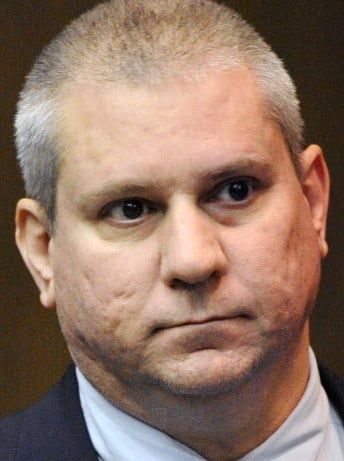
Brian Gene Nichols was responsible for a deadly escape and crime spree that began at the Fulton County Courthouse in Atlanta, Georgia, on March 11, 2005. Nichols, who was 33 years old at the time, was being held without bond while facing charges that included rape, kidnapping, aggravated assault and burglary involving a former girlfriend.
Nichols had already undergone one trial before Fulton County Superior Court Judge Rowland W. Barnes. That proceeding ended with the jury unable to reach a verdict on several of the most serious charges. A second trial was underway in March 2005. Prosecutors alleged that Nichols understood that he could receive a lengthy prison sentence if convicted and had begun considering ways to escape.
Two improvised metal weapons were reportedly discovered in Nichols’s shoes shortly before his escape. Despite that discovery and concerns about courthouse security, Nichols was brought to the courthouse on the morning of March 11 under the supervision of a single deputy while he prepared to return to Judge Barnes’s courtroom.
Attack on Deputy Cynthia Hall
On the morning of March 11, 2005, Fulton County Sheriff’s Deputy Cynthia Hall escorted Nichols to a holding area on the eighth floor of the courthouse. Nichols was permitted to change from jail clothing into civilian clothes that he was expected to wear during his trial.
While Hall was removing Nichols’s restraints, he suddenly attacked her. He beat the deputy severely and took her department-issued .40-caliber Glock handgun. Hall suffered critical injuries and was left unconscious. She survived, but the assault caused lasting physical and neurological damage.
After taking Hall’s firearm, Nichols moved through restricted areas of the courthouse. He confronted several courthouse employees and an attorney, holding them at gunpoint while attempting to reach Judge Barnes. Fulton County Sheriff’s Sergeant Grantley White tried to intervene but was overpowered. Nichols forced White and other people into an office and had them restrained before continuing toward the courtroom.
Murders Inside the Fulton County Courthouse
At approximately 9:00 a.m., Nichols entered the courtroom where Judge Rowland Barnes had just completed another legal matter. Without warning, Nichols shot the judge. Barnes, who had presided over Nichols’s criminal proceedings, died in the courtroom.
Nichols then shot court reporter Julie Ann Brandau. Brandau was seated near the judge’s bench performing her regular courthouse duties. She was critically wounded and died from her injuries. Attorneys and courthouse employees fled or attempted to hide as Nichols moved calmly through the area with the stolen handgun.
Nichols escaped from the courtroom and ran down a stairwell. Fulton County Sheriff’s Sergeant Hoyt Teasley pursued him toward the courthouse exit. When Teasley reached the area outside the building, Nichols shot him. Teasley died while attempting to stop the escape.
Escape Through Atlanta
After leaving the courthouse at 136 Pryor Street SW in downtown Atlanta, Nichols began a series of carjackings, robberies and attempted kidnappings. He forced motorists from their vehicles at gunpoint and repeatedly changed vehicles to make it more difficult for authorities to follow him.
The courthouse killings triggered an enormous manhunt involving the Atlanta Police Department, Fulton County Sheriff’s Office, Georgia law-enforcement agencies, the Federal Bureau of Investigation and other federal authorities. Government buildings and schools increased security while officers searched roads, parking areas and neighborhoods throughout metropolitan Atlanta.
Despite the rapidly expanding search, Nichols managed to travel away from downtown Atlanta. During the following hours, he attempted to obtain transportation, money, weapons and a place to hide. He also approached a woman near a fitness center and attempted to force her into a vehicle. The attempt failed after the woman resisted, her boyfriend intervened and a call was placed to emergency services.
Murder of Special Agent David Wilhelm
Later on March 11, Nichols entered a house under construction in the Buckhead area of Atlanta. The property belonged to David G. Wilhelm, a special agent with the United States Immigration and Customs Enforcement agency. Wilhelm was off duty and working at the property when Nichols encountered him.
Nichols shot and killed Wilhelm inside the residence. Evidence presented during Nichols’s trial indicated that Wilhelm was in a vulnerable position when he was shot and had not initiated an armed confrontation. Nichols took Wilhelm’s handgun, federal credentials, wallet and blue pickup truck before leaving the property.
Wilhelm’s death was not immediately connected to the courthouse escape. His body was discovered after concerned relatives and associates were unable to contact him. Investigators then determined that Nichols had taken his truck and personal property, widening the search into suburban areas north and east of Atlanta.
Hostage Taking in Duluth
During the early morning hours of March 12, 2005, Nichols followed Ashley Smith to her apartment at the Bridgewater Apartments in Duluth, Georgia. He confronted Smith at gunpoint as she arrived home and forced his way inside.
Nichols held Smith hostage for approximately seven hours. During that period, Smith spoke with him about his actions, her own personal struggles and the possibility that he still had a purpose beyond the violence he had committed. She read portions of a religious book to him and encouraged him to surrender peacefully.
Smith later prepared food for Nichols and gradually persuaded him to allow her to leave to visit her young daughter. Once outside the apartment, Smith contacted authorities and reported Nichols’s location. Police surrounded the apartment complex while Smith provided information about his weapons and behavior.
Capture
On the morning of March 12, 2005, Nichols walked out of Smith’s apartment and surrendered to members of the Gwinnett County Police Department. His capture ended a manhunt that had continued for approximately 26 hours.
Officers recovered weapons, stolen property and items belonging to Special Agent Wilhelm. Nichols was transported to an FBI facility and later questioned by investigators. He gave a recorded statement describing portions of his escape and the killings.
Victims
- Judge Rowland Wayne Barnes — Killed on March 11, 2005, inside his courtroom at the Fulton County Courthouse, 136 Pryor Street SW, Atlanta, Georgia. Barnes was 64 years old and had served as a Fulton County Superior Court judge since 1998.
- Julie Ann Brandau — Killed on March 11, 2005, inside Judge Barnes’s courtroom at the Fulton County Courthouse in Atlanta. Brandau was the court reporter assigned to the proceedings.
- Sergeant Hoyt Teasley — Killed on March 11, 2005, near the entrance of the Fulton County Courthouse in downtown Atlanta. The Fulton County sheriff’s sergeant was pursuing Nichols as he fled the building.
- Special Agent David G. Wilhelm — Killed on March 11, 2005, at a house under construction in the Buckhead area of Atlanta. Wilhelm was an off-duty federal immigration and customs enforcement agent.
Surviving Victims and Other Crimes
Deputy Cynthia Hall survived the initial attack but suffered devastating injuries. Nichols was also accused of kidnapping or restraining courthouse employees, threatening motorists, committing multiple carjackings, attempting to abduct another woman and holding Ashley Smith hostage.
Authorities ultimately connected Nichols to dozens of separate criminal acts committed during the escape. These included murder, felony murder, kidnapping, armed robbery, aggravated assault, aggravated battery, carjacking, theft, escape and possession of firearms during the commission of felonies.
Trial and Conviction
On May 5, 2005, a Fulton County grand jury indicted Nichols on 54 criminal counts. District Attorney Paul Howard announced that prosecutors would seek the death penalty. The case became exceptionally complicated because of the number of charges, the extensive evidence and disputes over funding for Nichols’s court-appointed defense team.
Nichols’s attorneys did not seriously dispute that he had committed the shootings. Instead, they argued that he was suffering from severe delusions and should be found not guilty by reason of insanity or guilty but mentally ill. Prosecutors maintained that his conduct demonstrated planning, awareness and deliberate efforts to avoid capture.
The trial began in September 2008. Jurors heard testimony from surviving witnesses, law-enforcement officers, medical specialists and mental-health experts. Prosecutors introduced physical evidence, surveillance material, recorded statements and information about Nichols’s actions before, during and after the escape.
On November 7, 2008, the jury found Brian Nichols guilty on all 54 counts. The proceeding then moved into a separate sentencing phase. Prosecutors asked the jury to impose death sentences for the four murders.
Sentencing
Under Georgia law, a death sentence required a unanimous jury decision. The jurors were unable to agree unanimously on capital punishment. Because of that deadlock, Nichols was spared execution.
On December 13, 2008, Judge James G. Bodiford imposed the maximum available prison sentences. Nichols received multiple consecutive sentences of life imprisonment without the possibility of parole, along with additional consecutive sentences for the kidnappings, assaults, robberies, carjackings and other offenses.
The sentences ensured that Nichols would remain imprisoned for the rest of his life. The case also produced civil litigation over alleged security failures at the Fulton County Courthouse and led to increased examination of prisoner transportation, staffing, surveillance and emergency procedures in courthouses throughout Georgia.
Legacy of the Crimes
The March 2005 murders became one of the most notorious courthouse attacks in American history. Four people were killed, a deputy was critically injured and numerous other people were threatened or held against their will. The violence exposed serious failures in the handling of a prisoner who had already shown signs that he might attempt to escape.
Judge Barnes, Julie Ann Brandau, Sergeant Hoyt Teasley and Special Agent David Wilhelm were remembered by relatives, colleagues and public officials for their service and dedication. Memorials and courthouse observances were established to honor them, while the circumstances of their deaths continued to influence discussions about courthouse security and the protection of judicial employees.