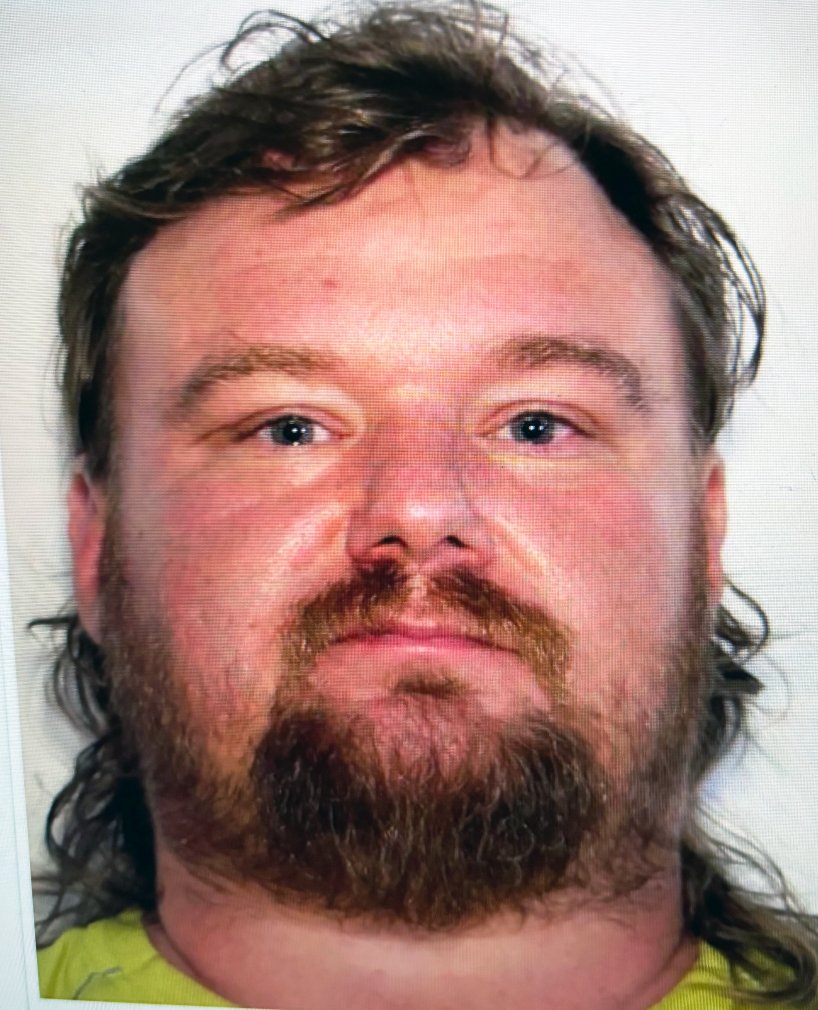
Connor Betts and the 2019 Dayton Mass Shooting
Overview of the Attack
Connor Stephen Betts was the 24-year-old perpetrator of the mass shooting that occurred during the early morning of August 4, 2019, in Dayton, Ohio. Armed with a high-powered, AR-style firearm and a 100-round drum magazine, Betts opened fire on people gathered in the city’s Oregon Historic District, a popular nightlife area filled with bars, restaurants and late-night crowds. He killed nine people and wounded 17 others with gunfire before Dayton police officers shot and killed him. Ten additional people suffered other injuries while escaping or reacting to the attack.
The shooting began at approximately 1:05 a.m. near East Fifth Street, close to Blind Bob’s bar, the Ned Peppers nightclub and a taco stand. Betts fired 41 rounds in less than 30 seconds while advancing toward the entrance of Ned Peppers. Six Dayton police officers stationed nearby immediately confronted him. Betts was struck by police gunfire and stopped approximately 32 seconds after firing his first shot. Authorities later stated that the officers’ rapid response likely prevented him from entering the crowded nightclub and killing many more people.
Events Before the Shooting
During the evening of August 3 and the early morning of August 4, Betts traveled to Dayton’s Oregon District with his 22-year-old sibling, Megan Betts, and a friend. The three visited Blind Bob’s, a bar on East Fifth Street. At approximately 12:13 a.m., Connor Betts separated from the other two. He later spent time inside Ned Peppers before leaving the area and returning to his vehicle, which was parked behind the nearby Thai 9 restaurant.
At the vehicle, Betts retrieved the firearm, ammunition and protective equipment he had brought with him. He wore body armor, hearing protection, a dark jacket and a mask that concealed part of his face. He carried an Anderson Manufacturing AR-style pistol chambered in .223 caliber and fitted with a 100-round drum magazine. Investigators also found a 12-gauge shotgun in his vehicle, but it was not used during the attack.
Betts walked through an alley near Blind Bob’s and spent several minutes preparing the weapon. Investigators later recovered a live cartridge from that area. He then approached East Fifth Street, where his sibling, their friend and numerous other people were gathered near a taco stand and outside the surrounding businesses.
The Shooting on East Fifth Street
At approximately 1:05 a.m. on August 4, Betts began firing as he emerged from the alley. Saeed Saleh was among the first people struck. Gunfire also killed Megan Betts and wounded the friend who had accompanied the siblings to the Oregon District. Investigators were unable to determine conclusively whether Betts intentionally targeted Megan or knew precisely where Megan was standing when he began shooting.
Betts continued east along East Fifth Street and fired into groups of people on the sidewalk. Lois Oglesby was fatally wounded during this portion of the attack. Betts then moved between parked vehicles and shot Derrick Fudge. He continued across and along the street, discharging repeated bursts toward people attempting to flee, hide or reach nearby businesses.
As Betts advanced toward Ned Peppers, he fired into the crowd outside the nightclub. Logan Turner, Nicholas Cumer, Thomas McNichols, Monica Brickhouse and Beatrice Warren-Curtis were killed in this final portion of the attack. Numerous other people were wounded. Some victims collapsed on the pavement, while others sought shelter inside bars, behind vehicles or in nearby doorways.
Betts then ran toward the entrance of Ned Peppers, where a large number of patrons were attempting to escape or take cover. Dayton police officers were already positioned in the district as part of routine weekend security. They engaged Betts almost immediately. He fell only a short distance from the nightclub entrance and was pronounced dead at the scene.
Victims Killed on August 4, 2019
- Megan Betts, 22 – Killed near the taco stand and Blind Bob’s on East Fifth Street in Dayton’s Oregon Historic District. Megan was Connor Betts’s sibling and was a biological sciences student at Wright State University.
- Monica Brickhouse, 39 – Killed outside Ned Peppers on East Fifth Street. Brickhouse was visiting Dayton from Virginia and was with her close friend, Beatrice Warren-Curtis.
- Nicholas Cumer, 25 – Killed near the entrance of Ned Peppers. Cumer was a graduate student at Saint Francis University and was completing an internship in Dayton connected to cancer care.
- Derrick Fudge, 57 – Killed near parked vehicles on East Fifth Street. Fudge lived in Springfield, Ohio, and had traveled to Dayton with members of his family.
- Thomas McNichols, 25 – Killed outside Ned Peppers. McNichols, who was known to relatives and friends as “TeeJay,” was a father and a resident of Dayton.
- Lois Oglesby, 27 – Killed on the sidewalk near Blind Bob’s. Oglesby was a mother of two, a nursing student and a childcare worker.
- Saeed Saleh, 38 – Killed near the taco stand at the beginning of the attack. Saleh was a father who had immigrated to the United States and was living in the Dayton area.
- Logan Turner, 30 – Killed near Ned Peppers shortly after celebrating his 30th birthday. Turner was an engineer and machinist from Springboro, Ohio.
- Beatrice Warren-Curtis, 36 – Killed outside Ned Peppers with her friend Monica Brickhouse. Warren-Curtis was visiting the Oregon District from Virginia.
Weapons and Preparation
The firearm used by Betts was legally assembled from components and configured as an AR-style pistol. It was equipped with a stabilizing brace and a 100-round double-drum magazine capable of supplying far more ammunition than a standard magazine. Betts also carried additional ammunition. Police later reported that the weapon’s design, ammunition capacity and compact configuration allowed him to fire rapidly while moving through the crowded district.
A friend of Betts, Ethan Kollie, had previously purchased body armor, the drum magazine and an accessory for the firearm on Betts’s behalf. Kollie told investigators that the equipment had been stored away from Betts’s home because Betts wanted to conceal it from his parents. Federal authorities said they found no evidence that Kollie knew Betts intended to conduct a mass shooting or that he participated in planning the attack. Kollie was separately prosecuted for making false statements on a federal firearms form involving a different weapon.
Background and Warning Signs
Betts was born on October 28, 1994, and lived with his family in Bellbrook, Ohio, south of Dayton. He attended Bellbrook High School and later took classes at Sinclair Community College. Former classmates reported that he had displayed disturbing behavior during high school. School officials suspended him after discovering writings and lists involving students he allegedly wanted to harm or sexually assault. Police investigated those reports, but Betts was not criminally charged.
People who knew Betts described a long-standing fascination with violence, firearms, mass killings and death. Former friends and romantic partners reported that he sometimes spoke about violent fantasies and threatening ideas. Investigators later found writings and electronic evidence showing that he had contemplated mass murder and murder-suicide for years before the Dayton attack.
Betts also participated in a musical group associated with extremely violent lyrical themes. Authorities examined his political statements, social-media activity, personal relationships and interest in violent ideologies. Although his online activity included strong political opinions, investigators found no evidence that the Dayton shooting was ordered by an organization or committed to advance a specific political cause.
Investigation of the Motive
The Dayton Police Department and Federal Bureau of Investigation conducted an extensive investigation into Betts’s actions and possible motive. Investigators reviewed surveillance recordings, text messages, online accounts, witness statements, financial records, firearm purchases and material recovered from his home and vehicle.
The FBI ultimately concluded that Betts acted alone. Investigators found no accomplice who knowingly helped him plan or conduct the shooting. They also found no evidence that he was directed by a terrorist organization or formally aligned with an extremist group. His precise reason for selecting the Oregon District and the particular night of the attack remained inconclusive.
The investigation determined that Betts had developed an enduring fascination with mass violence and had experienced homicidal and suicidal thoughts. Authorities believed that mental-health problems, personal difficulties and his long-term preoccupation with killing contributed to the attack. However, they could not identify a single event or grievance that fully explained why he carried out the massacre on August 4, 2019.
One major unanswered question concerned Megan Betts. Because Megan was killed in the opening seconds of the shooting, investigators examined whether Connor had deliberately targeted his sibling. Evidence showed that Connor knew Megan and their friend were in the area, but the available recordings and physical evidence did not establish beyond doubt that Megan was the intended target. The FBI therefore did not reach a definitive conclusion about whether the killing was intentional or whether Megan was struck as Betts indiscriminately fired into the crowd.
Police Response
The presence of uniformed Dayton officers in the Oregon District was critical to ending the attack. Officers heard the initial gunfire and moved toward Betts as people fled in the opposite direction. Six officers fired at him as he approached Ned Peppers. Police estimated that Betts was only seconds away from entering the nightclub, where hundreds of people could have been exposed to gunfire in a confined space.
Betts was struck repeatedly and died at the scene. The Montgomery County coroner later determined that he had cocaine, alcohol and antidepressant medication in his system. Those findings documented his condition during the shooting but did not provide a complete explanation for his actions.
Investigators determined that Betts fired 41 rounds during the attack. Seventeen people were wounded by gunfire, and ten others were injured while fleeing or during the chaos. The entire shooting lasted approximately 32 seconds, making it one of the fastest and most concentrated mass shootings in United States history.
Aftermath and Community Impact
The Dayton massacre occurred only hours after a mass shooting at a Walmart in El Paso, Texas. The two attacks brought renewed national attention to high-capacity magazines, assault-style firearms, warning signs of planned violence and the ability of law enforcement agencies to intervene before an attack occurs.
Memorials were established throughout the Oregon District, and thousands of residents attended vigils honoring the nine people killed. Local organizations created funds to assist survivors and victims’ families. Businesses in the district temporarily closed, while residents placed flowers, photographs and handwritten messages along East Fifth Street.
The attack left survivors with serious physical injuries and long-term psychological trauma. Families lost parents, children, siblings and close friends during what had begun as an ordinary Saturday night in a busy entertainment district. Although the gunman was stopped within seconds, the speed and destructive capacity of his weapon allowed him to kill nine people and injure many others before officers could reach him.
Legacy of the Dayton Shooting
The August 4, 2019, Dayton shooting remains one of the deadliest crimes in Ohio history. It demonstrated how rapidly a heavily armed attacker could inflict mass casualties in a crowded public area. The police response was widely credited with preventing an even greater loss of life, but the attack also raised difficult questions about Betts’s earlier threats, his access to weapons and equipment, and the opportunities that may have existed to recognize his escalating danger.
The nine victims are remembered individually rather than merely as a number associated with the crime. Their families and the Dayton community have continued to honor their lives while confronting the lasting consequences of the attack. Connor Betts died at the scene and never faced trial, leaving investigators and the victims’ families without a definitive personal explanation for why he committed the massacre.